
Summary
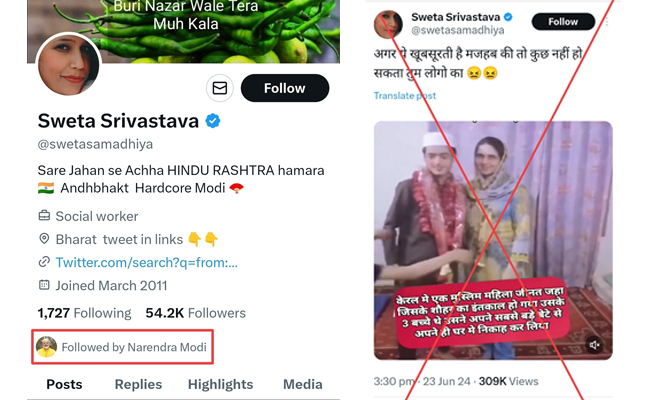
Fact-checker Mohammed Zubair has recently exposed a false claim circulating on social media regarding a alleged incident in Kerala where a woman was purportedly said to have married her own son after her husband’s death. The claim, made by the X user @swetasamadhiya, was debunked as a misleading representation of a video that actually showed a mother congratulating her son after he completed the recitation of the Quran.
Misleading Narratives on Social Media
The disinformation was spread via a video shared by Sweta Srivastava, who brands herself as an “Andhbhakt” and a “Hardcore Modi” supporter in her X bio. The video, when viewed in context, does not support the claim being made; instead, it celebrates a religious milestone. Mohammed Zubair highlighted the manipulation of content as a tactic that has gained traction in recent times, notably among accounts aligned with right-wing ideologies.
Past Instances of Misinformation
This is not the first time such controversial assertions have emerged on social media. Zubair referenced a prior incident where edited photographs purportedly depicted a father marrying his own daughter, which was said to provoke the mother to marry her son. That claim too was debunked by Alt News, revealing a pattern of misrepresentation that seeks to incite societal unrest based on fabricated narratives. Such misleading information often exploits cultural sensitivities, further complicating communal relations in India.
Implications for Political Discourse
The fact that these misleading assertions have gained traction highlights a concerning trend within social media where misinformation can have significant political ramifications. The fact that Narendra Modi follows accounts that propagate such claims raises questions about the impact of leadership and influence in perpetuating or combating such narratives. Misinformation, particularly in a diverse nation like India, can lead to polarization and distrust among communities.
Why This Matters
The political significance of this issue hinges on the fabric of Indian society, which is already rife with communal tensions. False claims that exploit cultural issues have the potential to incite real-world consequences, leading to mob violence and other severe repercussions. As social media continues to be a dominant platform for the dissemination of news, the responsibility for the authenticity of shared information falls heavily on both individuals and influential figures, including government officials. Political agents must be held accountable for their digital footprints, as these claims can affect public opinion and electoral sentiment.
Frequently Asked Questions
What was the false claim made by Sweta Srivastava?
The claim suggested that a woman in Kerala had married her own son after the death of her husband, which was later debunked.
What does the video actually depict?
The video shows a mother congratulating her son after he completed reciting the Quran, not marrying him.
Who is Mohammed Zubair?
Mohammed Zubair is a prominent fact-checker known for debunking misinformation on social media, particularly related to political narratives in India.
Why is this issue significant in Indian politics?
Misinformation can have serious implications, contributing to communal tensions and influencing public opinion, thereby impacting the political landscape.