
Summary
The recent trend of BJP leaders publicly engaging with Prime Minister Narendra Modi’s “Mann Ki Baat” broadcasts has sparked curiosity and debate. Observers are questioning whether this practice represents a new expectation within the party or signifies something more significant in the political landscape.
The BJP and ‘Mann Ki Baat’
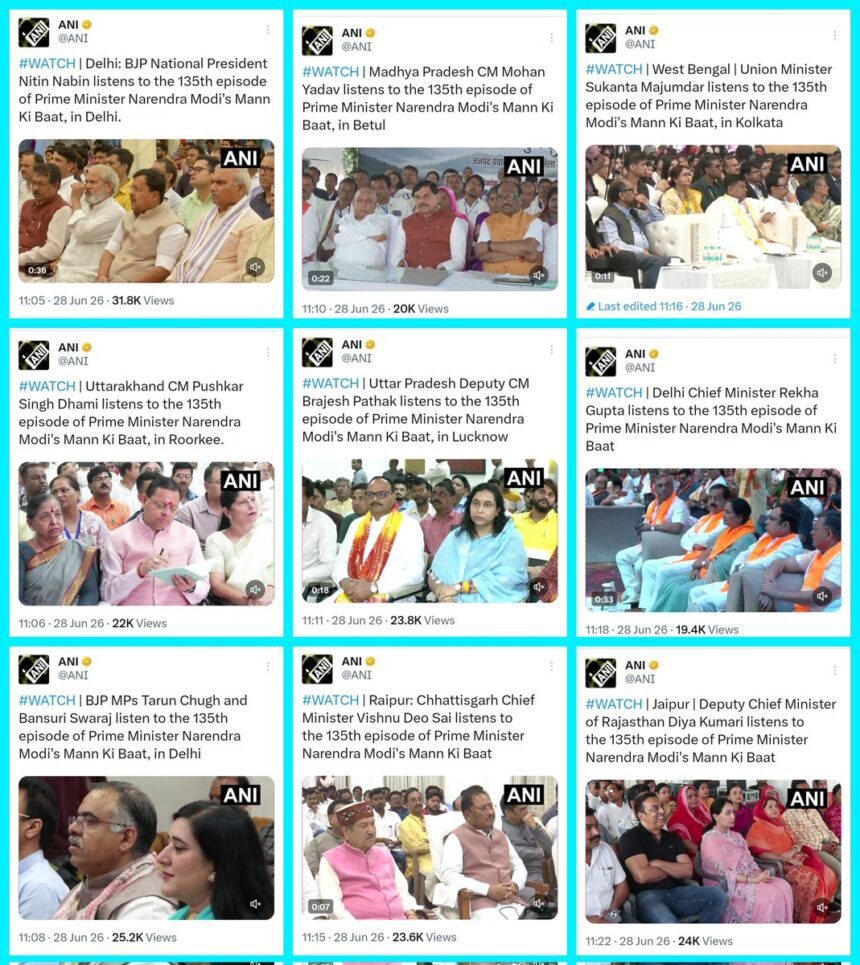
“Mann Ki Baat,” a monthly radio broadcast where PM Modi shares thoughts on various topics, has gained immense popularity since its inception. Each episode is viewed as an opportunity for the Prime Minister to connect with citizens across India. In recent months, however, it has become common for BJP leaders to be filmed attending these sessions, raising speculation about the motives behind this practice.
The visual representation of leaders attentively listening to Modi has transformed into a kind of event itself, with media outlets like ANI, PTI, and IANS promoting these moments as breaking news. Leaders in attendance often showcase their loyalty and support, reinforcing party unity and aligning with Modi’s vision.
The Question of Compulsion
Critics and observers are left wondering if attending “Mann Ki Baat” has turned into an unwritten rule for BJP leaders. Some speculate that participation might be a compulsory expectation, akin to a loyalty test, where leaders are either displaying their dedication to the party or fulfilling an implied obligation to the Prime Minister.
Such practices indicate a culture of conformity within the BJP, where visible support for Modi can sometimes overshadow individual leadership qualities or past mistakes. The symbolism of publicly listening to the Prime Minister broadcasts a message of unity while perhaps distracts from pressing issues within the party.
Media Amplification
The role of media in amplifying these events cannot be underestimated. By constantly covering the attendance of BJP leaders at “Mann Ki Baat,” media outlets contribute to the perception that these gatherings are significant, further normalizing this behavior within the political dialogue. Videos and images of leaders intently listening to Modi allow for an image of collective allegiance to flourish, which can overshadow dissent or criticism within the party.
Simultaneously, this media focus raises concerns about narrative control, as the portrayal may skew public perception toward viewing the BJP leadership as uniformly aligned with the Prime Minister. It raises questions about the independence of the media and its relationship with political entities, especially when such narratives are constructed around loyalty rather than critical discourse.
Why This Matters
Understanding the dynamics surrounding “Mann Ki Baat” and its impact on BJP leaders is crucial for grasping current political narratives in India. This phenomenon symbolizes both a consolidation of power within the party and the potential suppression of dissent. As the BJP continues to navigate various challenges, including corruption allegations and electoral pressures, the emphasis on loyalty and public support for Modi through these broadcasts exemplifies how the party seeks to maintain cohesion.
The image of BJP leaders gathered for “Mann Ki Baat” serves not only as a public relations strategy but also as a tool of political branding. For Indian readers, deciphering the motivations behind this trend is vital for evaluating the BJP’s political strategies and the implications for democratic discourse in the country.
Frequently Asked Questions
Is it necessary for BJP leaders to attend “Mann Ki Baat”?
While there is no official mandate requiring attendance, participation may be viewed as a demonstration of loyalty to the party and the Prime Minister.
Why is the media covering these gatherings extensively?
The media coverage serves to reinforce the perception of unity within the BJP and highlights the importance of Modi’s leadership in the party’s agenda.
What impact do these gatherings have on public perception?
Public perception may be shaped to view the BJP as a cohesive unit, overshadowing internal dissent and presenting a united front to the electorate.
Does listening to “Mann Ki Baat” absolve leaders from past mistakes?
While it may not function as a formal absolution, public support for Modi could mitigate the scrutiny faced by leaders embroiled in controversies.