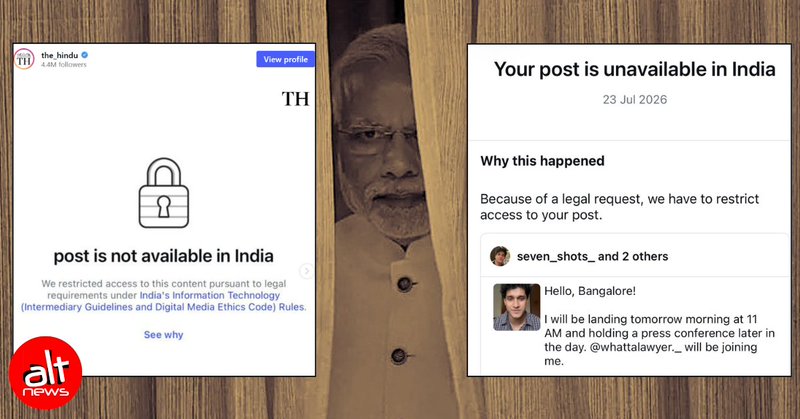

Recent reports indicate that following the protests organized by the Citizens for Justice and Peace (CJP), there has been a significant government push to impose censorship on social media, specifically targeting Instagram accounts. This coordinated effort has raised concerns over the governmental control of discourse surrounding pivotal political events.
Background of the CJP Protests
The CJP protests emerged as a response to concerns regarding justice and human rights in India, particularly focusing on issues affecting marginalized communities. Over the past weeks, these protests mobilized a considerable amount of public interest and solidarity through social media platforms. The effectiveness of these channels has underscored the importance of online activism in contemporary political movements. Yet, this visibility has also put these platforms in the crosshairs of government scrutiny, leading to a clampdown on dissenting voices.
Government Actions and Censorship Trends
In recent weeks, multiple journalists, activists, and news organizations have reported an uptick in the number of Instagram accounts facing restrictions. These actions appear to coincide with government orders aimed at curbing the spread of what is deemed “anti-government” content. Critics argue that this censorship is a strategic move to silence voices that challenge the status quo and to prevent the further mobilization of dissent. Questions arise as to the transparency of these censorship directives and the criteria being used to identify accounts for restriction.
The Role of Social Media in Modern Activism
Social media has emerged as a vital tool for activists and opposition political figures in India to galvanize support and facilitate dialogue. Platforms like Instagram and Twitter provide a space for marginalized voices, allowing for the dissemination of information often overlooked by mainstream media. However, the recent wave of account restrictions raises concerns about the freedom of expression and the ability of individuals to express their dissent—core tenets of a democratic society. The implications of this censorship ripple beyond individual accounts, affecting the broader civic discourse in India.
Why This Matters
The implications of the government’s censorship drive extend far beyond the immediate impact on affected individuals. By limiting access to platforms where dissent is voiced, the government can shape the narrative surrounding social issues and reduce public scrutiny. In an era where digital platforms play a critical role in shaping public opinion, this trend poses a significant threat to the foundational democratic principles of free speech and open discourse. For Indian readers, understanding this landscape is crucial as it affects their own rights and the future of political engagement in the country.
Frequently Asked Questions
What triggered the recent wave of protests by the CJP?
The protests were sparked by growing concerns regarding human rights issues, particularly affecting marginalized communities in India. They highlighted the need for justice and accountability in the face of ongoing societal challenges.
What actions has the government taken against Instagram accounts?
The government has ordered a series of takedowns and restrictions on Instagram accounts, particularly targeting those considered to be spreading dissent or anti-government sentiment. Many independent creators and journalists have reported these actions affecting their ability to communicate and share information.
How does censorship impact social activism?
Censorship significantly hampers the ability of activists to mobilize support and share vital information. When dissenting voices are silenced, it reduces public awareness of critical issues and diminishes the overall effectiveness of grassroots movements.
What can individuals do in response to this censorship?
Individuals can advocate for transparency and accountability from the government regarding censorship efforts. Supporting independent journalism and utilizing alternative platforms for discourse can also help ensure that diverse voices are still heard.