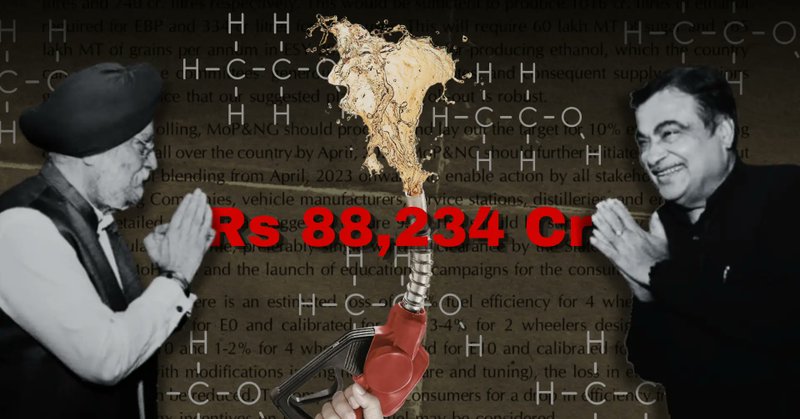

Recent investigations by The Reporters’ Collective reveal that Indian motorists have collectively paid Rs 88,234 crore extra over three years due to mileage losses attributed to ethanol-blended petrol under the Modi government’s initiative. This costly experiment raises significant concerns among citizens regarding rising fuel bills, especially after Ministers Nitin Gadkari and Hardeep Puri dismissed these complaints as “insignificant” and “bullshit.”
Government’s Ethanol Initiative: A Costly Experiment
The government’s push for ethanol-blended fuels, like the E20 mix, is part of a broader strategy to promote renewable energy and reduce dependence on crude oil. While the initiative aims to create a sustainable energy future, the financial burden on consumers has sparked outrage. The Reporters’ Collective’s investigation highlights that the actual costs incurred by motorists went largely unaddressed until now, raising questions about the transparency of such government projects.
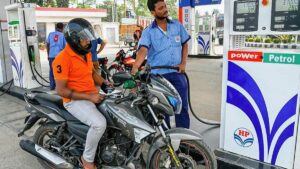
Reports indicate that between 2020 and 2023, the added costs associated with using ethanol-blended petrol led to a staggering Rs 88,234 crore in additional expenses for Indian drivers. Motorists had expected savings due to a more sustainable fuel source, but they are increasingly frustrated by the reality of decreased mileage—forcing them to visit fuel stations more frequently than ever before.
Reactions from Officials and the Public
Ministers Gadkari and Puri’s remarks about the complaints being “insignificant” have only intensified public dissatisfaction. Their dismissive attitude suggests a disconnect between the government and ordinary citizens concerned about the economic implications of such policies.
Critics have argued that the government should prioritize consumer interests before pushing for ambitious green initiatives. Many motorists feel that their experiences and concerns have been overlooked in favor of broader policy goals. This raises essential questions regarding the adequacy of consumer protection mechanisms and the effectiveness of communication strategies employed by the government.
Consumer Impact and Economic Analysis
As rising fuel costs become an increasingly pressing issue, it is crucial to examine the broader economic implications of the ethanol experiment. The exponential cost incurred by citizens underlines the necessity for thorough evaluations before introducing policy changes that impact everyday life.
Investments in sustainable energy are essential, but the execution must also ensure fairness and transparency. Many experts suggest that the government needs to implement measures to mitigate the financial strain on motorists, possibly through subsidies or improved technology that can enhance the efficiency of ethanol fuel use.
Moreover, ongoing public backlash could have repercussions for the political landscape, especially as elections loom. If the government does not address these concerns satisfactorily, it may face significant challenges in gaining public trust in future initiatives.
Why This Matters
The implications of rising fuel costs and governmental policy on ethanol blending are vast for Indian society. As the middle class struggles with continually increasing living expenses, the perception of government indifference could lead to political disengagement or opposition. The effectiveness of policies aimed at sustainability must concurrently address citizens’ financial realities to maintain public support and ensure long-term success.
As India moves toward ambitious climate goals, balancing economic sustainability with environmentally friendly policies will be crucial. Failure to do so could result in greater public dissent and a detrimental effect on the ruling party’s standing in the upcoming elections.
Frequently Asked Questions
What is E20 fuel?
E20 fuel is a blend of 20% ethanol and 80% petrol, intended to reduce emissions and reliance on fossil fuels. However, it has led to complaints from motorists about decreased mileage.
What are the financial implications for motorists?
Motorists have reportedly paid an additional Rs 88,234 crore over three years due to increased fuel costs associated with ethanol blending, as revealed in the recent investigation.
How have government officials responded to public complaints?
Ministers Nitin Gadkari and Hardeep Puri have labeled public complaints about rising fuel prices as “insignificant,” indicating a disconnect with consumer concerns.
Why should citizens be concerned about these developments?
The financial burden on motorists underscores the need for government policies to prioritize consumer welfare alongside environmental initiatives, to prevent potential erosion of public trust and support.