
Rising Concerns Over Content Restrictions in India
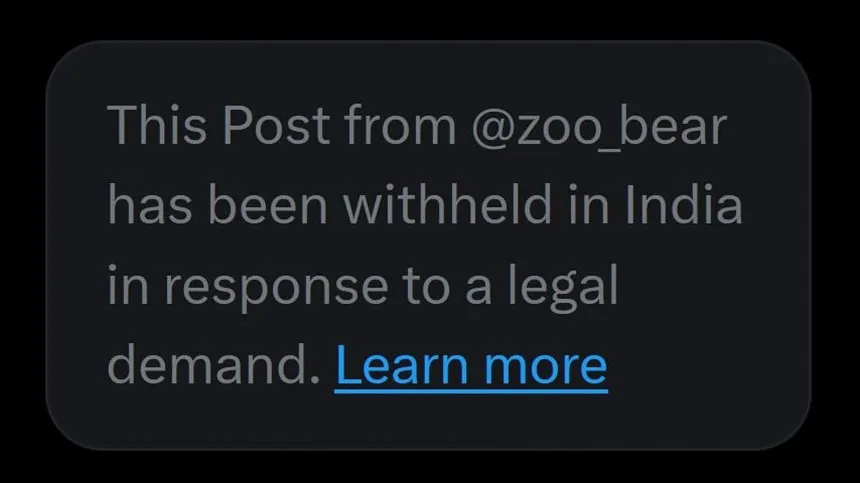
Recent actions by Meta have seen the restriction of several prominent Facebook pages in India, including those of Molitics, National Dastak, and satirist Rajeev Nigam. Users reported seeing notices stating that content from these pages was unavailable due to legal requests, raising concerns about freedom of expression and censorship in the digital space.
Background on the Restrictions
Molitics, a platform dedicated to public-interest journalism and scientific awareness, faced a sudden restriction without clear justification. Editor Neeraj Jha expressed frustration about the lack of transparency regarding the decision. Similarly, National Dastak, which focuses on issues faced by marginalized communities, was also restricted under Section 79(3)(b) of the IT Act, despite having a robust following of over 1.4 million users.
Satirist Rajeev Nigam, known for his humorous content, shared that he was unaware of which specific post triggered the restriction on his page. Previously, he had posted an AI-generated video but deleted it upon receiving a notification regarding its unavailability in India. This time, however, he noted that he received an official government directive regarding the restriction, marking an escalation in the censorship of content on social media platforms.
Financial Impact on Content Creators and Journalists
The ripple effects of such restrictions extend beyond just individual users; they also significantly impact content creators and journalists. Following a wave of account blocks on March 18, 2026, prominent satirical accounts and activists—including @Nehr_who, @DrNimoYadav, and @Doc_RGM—were affected. These accounts often engage in political commentary and satire, challenging government narratives and policy decisions.
The Internet Freedom Foundation (IFF) has raised alarms about these takedowns, highlighting that many affected accounts were merely exercising their right to free speech. Users frequently receive generic notifications when accounts are blocked, which obscures the reasons for censorship and squelches critical discussions surrounding governmental policies. The crackdown notably included the withholding of a viral parody video critiquing Prime Minister Narendra Modi’s foreign interactions, showcasing how even popular comedic formats are now under scrutiny.
The Broader Implications of Censorship
Similar restrictions have plagued various humorists and commentators, with notable incidents like cartoonist Satish Acharya’s works being blocked. Users, including academics and regular citizens, report that critiques of government policies and political developments have been met with censorship under Section 69A. This creates a chilling effect on free expression as even discussions surrounding censorship have been targeted.
The continuance of such widespread restrictions threatens the very pillars of democracy in India, pushing dissenting voices further into silence and limiting the discourse necessary for an informed citizenry. It fosters an environment of fear and hesitance among content creators, journalism platforms, and everyday users who might think twice before expressing their views.
Why This Matters
The implications of content restrictions in India are far-reaching. They touch upon issues of freedom of expression, the role of social media as a platform for dissent, and the power dynamics between the government and its citizens. For Indian readers, these developments signify a worrying trend in the erosion of democratic ideals and civil liberties, necessitating scrutiny and advocacy to protect the freedom to communicate openly and critically about governance.
Frequently Asked Questions
What are the specific legal grounds for these restrictions?
The restrictions have been cited under various sections of the IT Act, including Section 79(3)(b) and Section 69A, which provide the government the authority to block content deemed harmful or unlawful.
How do these restrictions affect content creators?
Content creators face a chilling effect where the fear of censorship may deter them from posting critical or satirical content. The uncertainty surrounding what constitutes “acceptable” material leads to self-censorship.
What can individuals do to support free speech in India?
Individuals can support free speech by raising awareness about censorship issues, advocating for clearer policies regarding content moderation, and supporting organizations like the Internet Freedom Foundation that work to defend digital rights.
Are these actions part of a larger trend?
Yes, the recent wave of restrictions aligns with a growing trend in India where the government is utilizing legal frameworks to control online discourse, particularly around sensitive political issues.