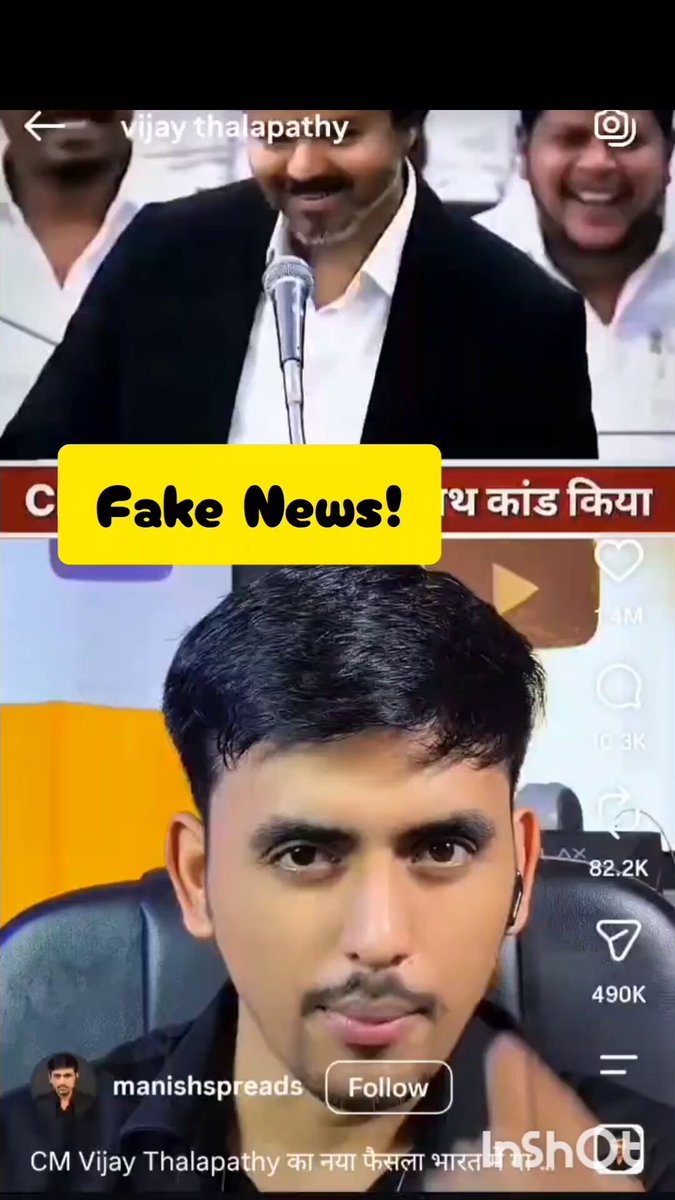

Recent claims circulating among Hindi influencers on social media allege that Tamil Nadu Chief Minister Joseph Vijay is appealing to the High Court to prevent cow slaughter in Tamil Nadu. However, these claims have been debunked as fake news, with the actual situation being quite the opposite—where the state government itself challenged a court-ordered ban on cow slaughter.
Unpacking the False Claims
The recent surge of misleading videos and articles generated around this topic features numerous influencers parroting a similar narrative. The core assertion is that Thalapathy Vijay has taken legal action to ban cow slaughter in Tamil Nadu. This sensational claim has garnered millions of views and likes, showcasing a troubling trend of misinformation. Upon closer examination, it is evident that the CM did not solicit a ban; instead, he countered a legal ruling that imposed such restrictions.
The Court Context
In the backdrop of Tamil Nadu’s politics, the issue of cow slaughter is a contentious topic that garners significant public attention. The Indian state has a complex legal framework regarding animal rights and slaughter, heavily influenced by cultural sentiments. While certain groups advocate for bans on cow slaughter due to religious beliefs, others argue for the rights of livestock owners. The Tamil Nadu government, recently reacting to a restrictive court ruling, moved to challenge that ban. This has been misinterpreted and misrepresented by influencers, who ignore the government’s rationale and focus instead on sensational headlines.
The Role of Influencers and Misinformation
The prevalence of social media has transformed how political narratives are shaped and communicated. Influencers, especially from the Hindi-speaking demographic, have significant clout over their followers, many of whom may not verify claims before sharing. The repetition of these erroneous claims reflects a concerning trend where misinformation spreads rapidly, relying on emotional appeal rather than factual accuracy. This incident serves as a critical lesson about media literacy and the importance of verifying claims before disseminating them across platforms.
Why This Matters
The implications of this misinformation are far-reaching, especially in a country like India, where communal sentiments and political affiliations are tightly interwoven. Understanding the legal nuances around animal rights and cow slaughter is critical for citizens, particularly as these issues often spark heated debates and sometimes even unrest. With state governments taking proactive stances in court, it is essential for the electorate to grasp the complexity of these matters rather than rely on simplified, sensational narratives. Misinformation can lead to misguided public sentiments that may affect real-world policies and communal harmony.
Frequently Asked Questions
What is the real situation regarding cow slaughter in Tamil Nadu?
The Tamil Nadu government recently challenged a court-ordered ban on cow slaughter rather than impose one. This legal action indicates a pro-active stance by the state to ensure its policies align with local practices and community needs.
What does Thalapathy Vijay have to do with this issue?
Thalapathy Vijay, widely recognized in the Tamil film industry, has been erroneously implicated in claims suggesting he initiated legal measures against cow slaughter. In reality, he is not politically active in this regard.
Why do influencers spread misinformation?
Misinformation spreads for various reasons, including the desire for engagement and views, the tendency to follow popular narratives without verification, and sometimes, a lack of understanding of complex political issues.
How can I verify claims made on social media?
To verify claims, cross-check with reputable news sources, consult fact-checking organizations, and analyze information from multiple perspectives to ensure a balanced understanding of the issue.