
Finnish multinational Wartsila has established itself as a key player in the supply of large diesel and gas-fired generators, which serve to power ships and act as standby electricity sources for various industries.
As the reliance on diesel diminishes due to economic and environmental factors, Wartsila is adapting to the changing energy landscape by positioning itself as a grid balancer, supporting renewable energy sources.
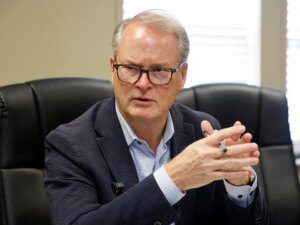
R. Venkatesh, Managing Director of Wartsila Energy India, emphasizes that the company is redefining its role from traditional energy supplies for industries to providing flexible utility grid balancing solutions. He articulated this shift during an interview with businessline: “We have changed our profile from industry captive energy suppliers to utility grid balancing, flexible solutions.”
Wartsila’s strategy is to encourage industries to use its engines to stabilize electrical grids, with the capability to activate within minutes to compensate for dips in solar or wind energy generation.
Currently, Wartsila has installed 3.5 GW of engine capacity in India, which includes 1.2 GW of gas-fired generation. Venkatesh noted the company sells between 120 to 150 MW generators annually, highlighting that the North-East region is becoming a significant market for them.
Addressing concerns regarding the volatility of gas prices, Venkatesh pointed out that such fluctuations are generally short-term, with prices stabilizing over the long run.
When questioned about competition with Battery Energy Storage Systems (BESS), he stated that both technologies are essential for maintaining grid stability, asserting, “It is not either-or.” Wartsila does manufacture BESS but is currently not doing so for the Indian market.
Beyond energy solutions, Wartsila also produces marine engines and recognizes India as a promising market. Its manufacturing facility in Maharashtra currently specializes in producing balance-of-plant components for global distribution.
The company’s ongoing evolution reflects its commitment to meeting the demands of a more sustainable energy future while addressing the diverse needs of the market.
Published on May 11, 2026.