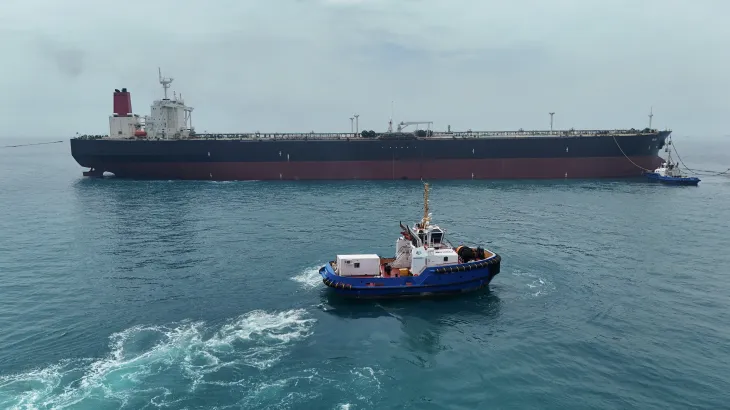

Escalating Tensions in the Strait of Hormuz
The United States and Iran have reached a critical juncture following a missile strike by Iran on two oil tankers owned by the UAE, escalating long-standing hostilities. The incident, which left one Indian crew member dead and several other crew members injured, has intensified military responses from the US while increasing global concerns about stability in the vital Strait of Hormuz.
Details of the Attack
On July 14, Iranian cruise missiles struck the tankers Mombasa and Al Bahiyah while they were navigating through Omani territorial waters. The attack resulted in the death of one Indian national aboard the Mombasa, with six Indians and two Ukrainians suffering injuries, including four serious cases.
The UAE Ministry of Defence reported that both tankers sustained extensive damage and caught fire, although the crews managed to extinguish the flames. In response, the UAE Ministry of Foreign Affairs condemned the deadly attack, describing it as acts of “piracy and economic blackmail.” The ministry urged Iranian authorities to halt such actions and swiftly reopen the crucial shipping lane.
Iran’s Justification and US Response
The Iranian Islamic Revolutionary Guard Corps (IRGC) justified the attack by claiming the tankers ignored multiple warnings after choosing an allegedly illegal route, purportedly advocated by US military forces. Iran has warned that any further cooperation with its adversaries would result in continued closure of the Strait and potentially disrupt global energy supplies.
In retaliation, the US engaged in a series of airstrikes targeting Iranian installations. President Donald Trump announced significant military actions aimed at diminishing Iran’s capacity to threaten commercial shipping routes. According to Trump, US operations have reportedly destroyed 98% of Iran’s missile systems and 92% of its drone manufacturing capabilities. He also emphasized that a diplomatic resolution remains a viable option if Iran complies with international calls for peace.
Furthermore, Iran’s response included targeted drone and missile strikes on US assets located in Kuwait and a naval vessel, and explosions were reported in various regions within Iran, raising alarms for regional stability.
International Consequences and Fears of Broader Conflict
The developments in this ongoing saga have generated heightened fears of a broader regional conflict, especially given the strategic significance of the Strait of Hormuz, which serves as a critical passageway for global oil transit. With both the US and Iran signaling intentions for further military actions, analysts are increasingly concerned about the potential for escalated hostilities that could compromise security not only in the Gulf region but also across international markets reliant on oil shipping.
Why It Matters
This escalatory cycle poses significant implications for economic stability, particularly in the energy sector. The Strait of Hormuz is a vital shipping route for oil—approximately one-fifth of the world’s oil supply transits through this chokepoint. Disruptions in this area could lead to soaring oil prices affecting economies globally, from consumers to industries reliant on fossil fuels. Moreover, the increased military presence from the US in the region raises geopolitical tensions that could have long-term consequences for international relations.
Frequently Asked Questions
What led to the missile strike on the oil tankers?
The missile strike was justified by Iran’s IRGC as a response to claims that the tankers were using an illegal route advised by US military forces, ignoring multiple warnings before the attack.
What is the significance of the Strait of Hormuz?
The Strait of Hormuz is crucial for global oil transit, with about 20% of the world’s oil supply passing through it. Any disruption in this waterway can have far-reaching effects on global oil prices and economic stability.
How has the US responded to the attack?
The US has conducted airstrikes aimed at reducing Iran’s military capabilities and has reinforced its military presence in the region to secure maritime routes.
What are the implications of this conflict for regional stability?
The escalating hostilities between the US and Iran heighten the risk of a broader regional conflict, which could destabilize the Gulf and disrupt international oil markets, affecting global economies.