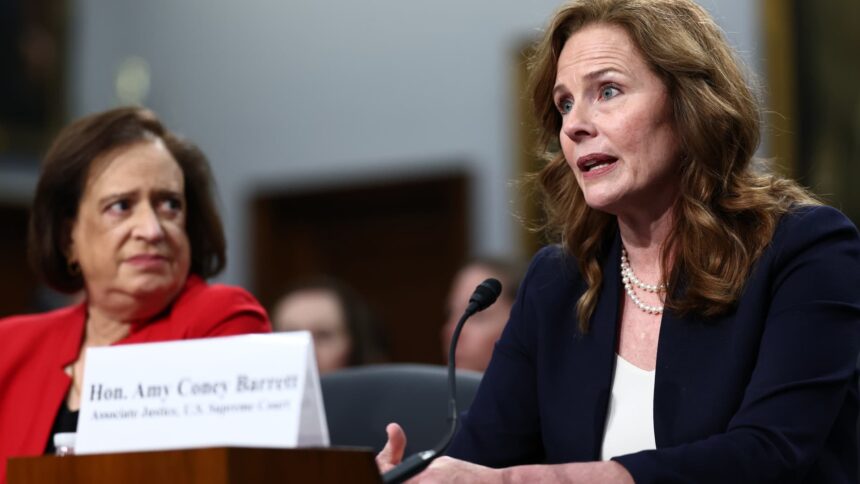

In a significant testimony, U.S. Supreme Court Justices Elena Kagan and Amy Coney Barrett highlighted rising threats against federal judges while presenting the court’s fiscal year 2027 budget request. They reported alarming statistics on threats and violence faced by judges, underscoring the urgent need for increased security funding.
Rising Threats to Federal Judges
During their testimony before the House Appropriations Committee, Justice Amy Coney Barrett expressed concerns over “the threat level” faced by federal judges, which she described as “really high.” The report indicated a notable uptick in threat investigations, with a startling 512 investigations reported by the U.S. Marshals Service since the beginning of 2026. In comparison, there were 807 investigations for the entire year of 2025.
This sharp increase in incidents of threats against judges draws attention to the growing danger in the political landscape of the U.S., marking a critical issue for the justice system. Justice Barrett also shared personal experiences of danger, including receiving a bulletproof vest and surviving a “swatting” attack that falsely reported a shooting at her home, illustrating the personal toll of the job.
Fiscal Year 2027 Budget Request
The Supreme Court is seeking $228.4 million in appropriations for the fiscal year 2027, reflecting nearly a 10% increase from the previous year’s $207.8 million. The proposed budget places a significant emphasis on enhanced security measures for justices amid escalating safety concerns. Both Justices Kagan and Barrett reaffirmed the necessity of these funds to ensure their safety and the effective functioning of the judiciary.
The Supreme Court last had justices testify before Congress in 2019, emphasizing how infrequently judicial funding and safety issues are addressed on a congressional platform. Kagan and Barrett are paving the way for more transparency regarding the unique challenges faced by the federal judiciary.
The Impact of Political Climate
The surge in threats follows several highly publicized decisions by the Supreme Court, particularly regarding the reversal of Roe v. Wade, which had guaranteed a constitutional right to abortion. This ruling has ignited intense political and social debates, increasing animosity toward judicial figures. The public discourse surrounding such contentious topics, combined with the division in political sentiments, has led to a rise in violence targeting judicial members.
As Barrett noted, “Those statistics sound abstract, but being on the receiving end of them is not,” emphasizing that the danger is not merely numerical—it’s a daily reality faced by justices. The dialogue on the need for judicial safety funds is not just about numbers but also about the preservation of law and order in a democracy.
Why This Is Trending
Interest in this topic has surged in India due to rising global discussions about judicial independence and safety, particularly in the face of political extremism. With many Indians keenly observing shifts in worldwide politics, including the U.S. Supreme Court’s decisions, the implications for justice systems resonate. Furthermore, as India faces its own challenges concerning judicial autonomy and freedom of expression, the focus on the safety and security of judges abroad becomes particularly pertinent. As Indian citizens access global news, such testimonies highlight shared challenges faced by courts across different jurisdictions.
Frequently Asked Questions
What specific measures are being requested by the Supreme Court for their safety?
The Supreme Court justices are requesting increased funding aimed at enhancing security measures, including investments in personnel and infrastructure to protect against violent threats.
How does the situation in the U.S. relate to India?
Both countries face challenges related to judicial independence, safety, and political pressures, making developments in one jurisdiction relevant to discussions in the other.
What has been the response to the Supreme Court’s budget request?
The budget request for higher funding reflects a recognition of the increasing dangers faced by judges, indicating a push from Congress to address these urgent security needs.
Why did Justices Barrett and Kagan testify together?
Both justices are the first members of the Supreme Court to testify before Congress since 2019. Their joint appearance underscores the serious shared concerns regarding threats to judicial safety and the court’s budget needs.