
A Canadian judge has dismissed drug smuggling charges against an Indian-origin truck driver, citing egregious violations of his Charter rights during a strip search. The case has raised significant concerns surrounding the training practices of the Canada Border Services Agency (CBSA) regarding search protocols.
Legal Decision Based on Charter Rights Violations
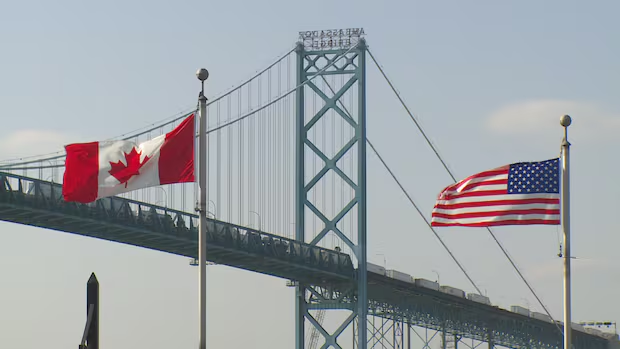
The Superior Court ruling revolves around Harinder Singh Saini, who faced serious drug-related charges after 121 bricks of cocaine were found in his trailer during a secondary inspection at the Ambassador Bridge in Windsor, Ontario. Judge Jennifer Bezaire concluded that Saini’s Charter rights were violated on multiple occasions during his detention, warranting a stay of proceedings. This drastic measure prevents the Crown from re-filing charges against him.
In her extensive 37-page decision, Bezaire highlighted that the primary violations stemmed from the manner in which CBSA officers conducted the strip search. The search, deemed unreasonable, not only lacked reasonable grounds but also subjected Saini to degrading treatment. The judge stated, “I find that the officers conducted the strip search in the most degrading and humiliating manner,” pointing to the absence of necessary supervisory approval and record-keeping.
Inadequate Training at CBSA
One of the most alarming aspects of the ruling was the judge’s criticism of the CBSA’s strip search policies and training practices. Bezaire discovered that the officers involved had outdated knowledge of CBSA protocols, which had recently been updated to align with Canadian laws. This raises serious questions about the effectiveness of training programs within the agency.
Despite updates being implemented in 2024, officers testified in early 2026 without being aware of these policy changes. Bezaire described the situation as “highly concerning,” attributing it to a systemic issue within the CBSA. “The evidence points to a very serious and concerning training and policy issue within CBSA,” she stated, emphasizing that the current practices are not just outdated but also counterproductive to upholding individuals’ rights under the law.
Impact on the Judicial System and Public Perception
This case is particularly impactful as it underscores the importance of maintaining the integrity of the judicial system. Judge Bezaire noted that while the alleged offenses were severe, the failure to uphold fundamental rights outweighed the seriousness of the crimes involved. “The seriousness of the alleged offences made this decision very difficult,” she remarked. This ruling serves as a potent reminder that law enforcement agencies, such as the CBSA, must operate within the boundaries set by law, particularly in that they respect individuals’ rights during detentions and inspections.
As the media coverage develops, this case may lead to increased scrutiny of border agency practices not only in Canada but also in countries like India where similar issues may arise, particularly affecting international travelers and truck drivers.
Why This Is Trending
This story resonates with Indian audiences for several reasons. With a significant diaspora in Canada, many Indian nationals are concerned about the implications this case has on their rights and treatment under Canadian law. Furthermore, it highlights ongoing issues in law enforcement practices that border on misconduct and misinterpretation of legal duties. As more people travel cross-border for work or personal reasons, the necessity for transparent and just procedures concerning searches and detentions becomes imperative.
Frequently Asked Questions
What were the charges against Harinder Singh Saini?
Harinder Singh Saini was charged with drug smuggling after 121 bricks of cocaine and cash were found in his trailer during a CBSA inspection.
Why were the charges dismissed?
The charges were dismissed due to egregious violations of Saini’s Charter rights during a strip search, which lacked reasonable grounds and involved degrading treatment.
What did the judge criticize about CBSA practices?
Judge Bezaire criticized CBSA for inadequate training, outdated policies concerning strip searches, and the degrading nature of the search conducted on Saini.
What implications could this ruling have for future cases?
This ruling may prompt further scrutiny and reform of CBSA practices, emphasizing the importance of respecting individuals’ rights and upholding the integrity of the judicial system.