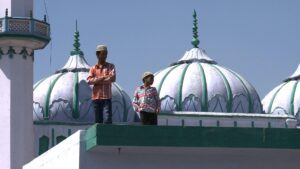

Demolition of Mosque and Mazar at Kashi Railway Station Raises Concerns
The recent demolition of the Azgaib Shaheed Mazar and a mosque at Kashi Railway Station has ignited concerns regarding the treatment of religious minority groups in India, particularly Muslims. This action, taken amid heavy security and following a court ruling, highlights ongoing disputes over land ownership involving structures claimed to be of historical significance.
Context of the Demolition
On Wednesday, officials confirmed the demolition occurred after a court order regarding the ownership of the land. The Muslim community asserts that the mosque has existed for several hundred years, indicating its cultural and historical importance. Contrarily, government officials maintain that the land has always been part of Railway property and has been encroached upon over time.
Law enforcement agencies, including the Police, Provincial Armed Constabulary (PAC), and Railway Protection Force (RPF), were heavily deployed to ensure order during the demolition, but the operation reportedly concluded without incident.
Legal and Administrative Proceedings
The dispute arose during a land survey for the Kashi Model Railway Station project, set for launch in 2024. This survey revealed discrepancies in land records, prompting the issuance of notices to occupants of the site. When occupants failed to vacate, the case escalated to court, which recently ruled against the claims to the religious site. Following this ruling, the Railways issued an eviction notice that was not complied with, leading to the swift demolition of the structures.
Officials noted that a Hanuman temple had previously existed on the same site but was removed due to encroachment, adding another layer of complexity to the analysis of land usage in this area.
Broader Implications for Minority Communities
The demolition raises questions about the treatment of Muslim communities and historical religious structures in India, especially in the context of rising nationalism and religious polarization. Similar events have occurred in other areas where mosques and shrines have faced demolition or alteration amid claims of land encroachment or redevelopment. Such actions often lead to feelings of exclusion among minority populations, fueling societal divisions.
This instance is indicative of broader trends under the current government, where policies and actions may disproportionately impact minority communities, raising concerns about discrimination, social exclusion, and the preservation of cultural heritage. Vigilance from civil society and international observers continues to be crucial in assessing and responding to these developments.
Why It Matters
The demolition of religious sites, particularly in a diverse country like India, signifies more than just a local property dispute; it encapsulates the ongoing tension surrounding religious identity, minority rights, and land ownership. For developers and policymakers, it underscores the need for inclusive practices that respect historical sites and promote community cohesion. The international community must monitor such actions to ensure adherence to human rights and the protection of cultural heritage, particularly in politically sensitive environments.
Frequently Asked Questions
What were the reasons for the demolition of the mosque and shrine?
The demolition was conducted following a court ruling that deemed the land as part of Railway property, which the authorities claimed had been encroached upon over the years.
How did the authorities ensure order during the demolition?
Law enforcement, including Police, PAC, and RPF, were deployed in large numbers to maintain law and order during the demolition process, but no incidents of violence occurred.
What is the historical significance of the structures that were demolished?
The Muslim community claims that the mosque and Mazar have existed for several hundred years, highlighting their cultural and historical importance to local Muslims.
How does this event relate to broader issues facing Muslims in India?
This demolition reflects ongoing tensions regarding the treatment of religious minorities in India, contributing to a climate of social exclusion and raising concerns about the preservation of minority rights amidst increasing nationalism.