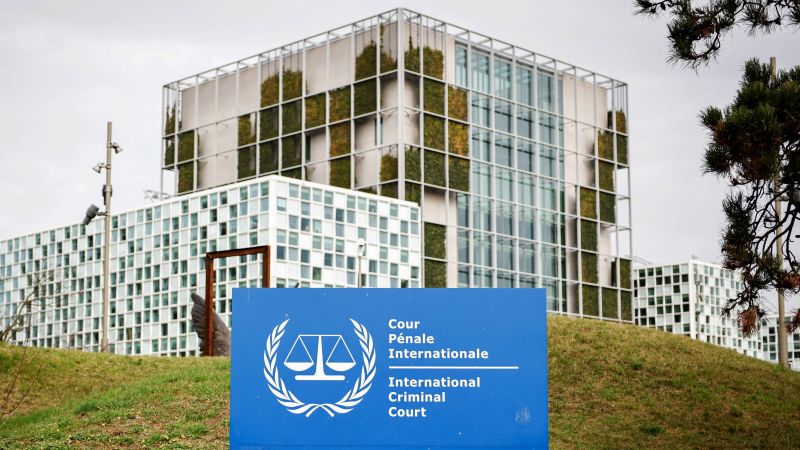

US Secretary of State Marco Rubio has intensified a campaign against the International Criminal Court (ICC) by imposing new sanctions on its officials. These actions have raised eyebrows as they suggest a broader U.S. strategy to undermine international legal frameworks, especially in relation to allegations against the U.S. and its allies.
Sanctions Imposed on ICC Officials
On Tuesday, Secretary of State Marco Rubio announced sanctions targeting ICC President Tomoko Akane and senior trial lawyer Abdoulaye Seye. Rubio stated, “These individuals have directly engaged in efforts by the ICC to investigate, arrest, detain, or prosecute officials whose government has not consented to ICC jurisdiction.” This move is part of Rubio’s larger plan to “dismantle” the ICC, a controversial institution that has faced criticism from various nations, including the U.S. for its perceived bias.
Reactions from the ICC and Global Responses
The ICC swiftly condemned the recent sanctions, declaring they “undermine the rule of law.” In response, the court emphasized its independence, stating, “The Court remains undeterred and stands firmly behind its personnel and behind victims of unimaginable atrocities.” This development is not an isolated incident; previous U.S. administrations, including that of Donald Trump, have imposed similar sanctions, particularly aimed at ICC officials investigating U.S. war activities abroad.
The U.S. Campaign Against the ICC
Rubio’s administration has initiated a “whole-of-government campaign” against the ICC, seeking to persuade allies to withdraw from the court. The U.S. is pressuring nations to reject ICC’s jurisdiction particularly when it comes to American nationals. Countries that align with U.S. military presence or security partnerships are being called to join this initiative. Rubio remains optimistic, suggesting that “more countries to join our campaign by ending their funding and participation in this politicized and unaccountable court.”
Why This Is Trending
The topic is gaining traction in India partly due to geopolitical interests and the complex web of international laws that govern nations’ conduct. With growing discussions about international justice and the ICC’s efficacy, Indian netizens are showing an increasing curiosity about how global powers engage with international law. Furthermore, India’s strategic positioning amid these developments warrants attention, especially given its own historical context with international bodies.
Frequently Asked Questions
What prompted the sanctions against the ICC officials?
The sanctions were a response to ICC officials’ work in investigating, arresting, or prosecuting individuals from governments that have not consented to ICC jurisdiction, which the U.S. views as an infringement on its sovereignty.
How has the ICC responded to these sanctions?
The ICC denounced the sanctions stating they “undermine the rule of law,” and reiterated its commitment to its mandate, emphasizing the need for independence and impartiality in its investigations.
What broader implications do these sanctions have for international law?
The sanctions could diminish the ICC’s authority and reflect a trend where major powers disregard international legal frameworks for political purposes, potentially thereby weakening global accountability mechanisms.
Why should India be concerned about these developments?
India, as a non-member of the ICC with its own array of international legal challenges, needs to engage critically with these events. Sustainable international justice frameworks affect its diplomatic relations and responses to claims of human rights violations in various contexts.