
By Our Correspondent
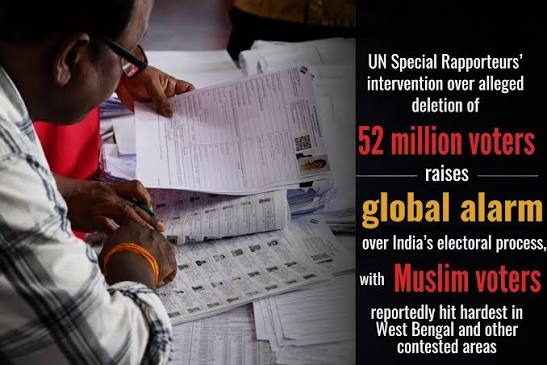
NEW DELHI: Three independent United Nations human rights experts have raised urgent concerns regarding the mass exclusion of voters from electoral rolls in India, particularly affecting Muslims and other minorities. They cited serious violations of international law linked to the ruling Bharatiya Janata Party’s (BJP) electoral practices, emphasizing the need for accountability and action from the Indian government.
Alarming Voter Roll Cancellations
The U.N. Special Rapporteurs on minority issues, freedom of opinion and expression, and freedom of religion or belief issued a formal communication on May 1, 2026, detailing their findings on the Special Intensive Revision (SIR) process. This process has led to the removal of approximately 5.20 crore names across 12 states and union territories, raising alarms about its potential discrimination against minority groups. The Rapporteurs – Nicolas Levrat, Irene Khan, and Nazila Ghanea – highlighted the disproportionate impact on Muslims, especially in regions such as West Bengal, where it was reported that 95% of those affected in certain constituencies were Muslim, despite them making up only 25% of the electorate.
Discriminatory Rhetoric and Political Narratives
The report points out that the SIR process coincides with a surge of discriminatory rhetoric against minorities by senior politicians, including the Union Home Minister. Phrasing that equates legitimate Indian Muslim citizens with “illegal Bangladeshi immigrants” not only stigmatises the Muslim community but also raises substantial questions about the intentions behind such narratives. Terms like “Detect, Delete and Deport” have surfaced in public discourse, leading to a climate of fear and insecurity among minority populations as they face potential disenfranchisement.
International Implications and Legal Obligations
India is a signatory to several international human rights treaties, including the International Covenant on Civil and Political Rights (ICCPR), which enshrines the right to non-discrimination and participation in public affairs. The communication from U.N. experts flags potential violations of these commitments, especially considering the claims that many voters, including those with valid documents, have been inexplicably removed from electoral rolls based on minor inconsistencies. The lack of transparency and due process in managing objections and appeals further compounds the issue, creating a scenario ripe for discrimination and marginalisation of vulnerable populations.
Why It Matters
The ongoing disenfranchisement of key demographic segments, particularly Muslims, presents not only a threat to India’s democratic fabric but also a significant concern for international observers and human rights advocates. The SIR process and its implications reflect broader socio-political trends that enable systemic discrimination. This situation necessitates a global dialogue on protecting minority rights and ensuring equitable participation in democratic processes. Failure to address these issues could set a precedent for similar practices in other democratic contexts, fundamentally challenging the principle of inclusive governance.
Frequently Asked Questions
What is the Special Intensive Revision (SIR) process?
The SIR process is an electoral exercise conducted by the Election Commission of India aimed at updating electoral rolls. However, it has raised concerns about mass deletions of voter names, particularly affecting Muslim and minority populations.
What specific allegations have been made regarding the SIR process?
Allegations include the disproportionate deletion of Muslim voters, the use of opaque criteria for removals, and discriminatory political narratives framing voters as illegal immigrants, thus contributing to their social exclusion.
How has the international community responded to India’s electoral practices?
The U.N. Special Rapporteurs have formally communicated their concerns to the Indian government, urging a clarification within a 60-day timeline about the processes and rationale behind the voter deletions, while emphasizing compliance with international human rights laws.
What are the potential consequences of these actions for minority communities in India?
Ongoing disenfranchisement may lead to reduced political representation, increased marginalization, and social tensions among communities, undermining the principles of democracy and inclusivity within Indian society.