Summary
Recent revelations from Gujarat, India, have raised serious concerns regarding the state’s law enforcement strategies targeting Muslim communities. An internal police manual outlines controversial criteria that could lead to widespread monitoring and profiling of individuals based on everyday religious practices, sparking fears of state-sanctioned discrimination.
Controversial Police Manual Exposed
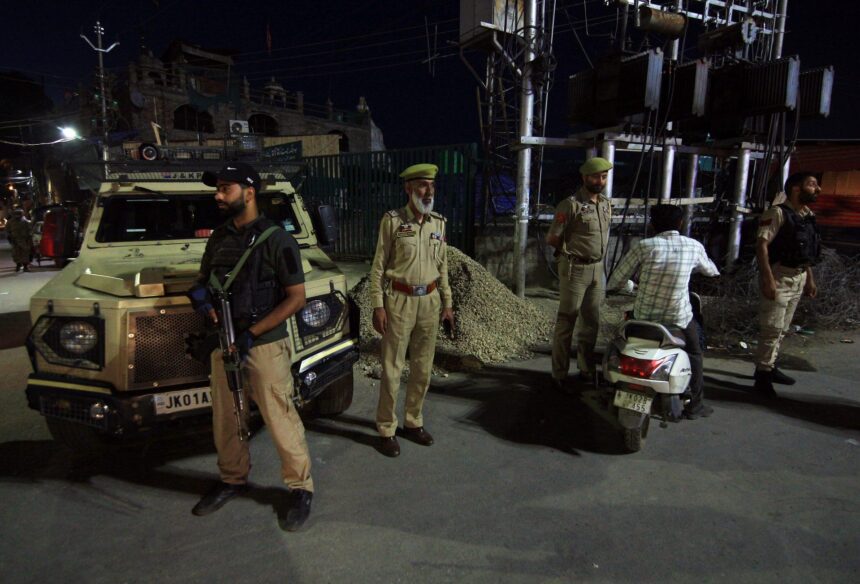
An internal Standard Operating Procedure (SOP) from the Gujarat Police, leaked by journalist Sahal Qureshi, has caused alarm among civil rights advocates. Issued on June 16, 2026, by the State Intelligence Bureau, the manual instructs law enforcement to identify individuals deemed “radicalized” based on various indicators, many of which are common Muslim practices. According to the SOP, the newly formed Anti-Radicalization Cells (ARC) are responsible for monitoring individuals who exhibit signs such as growing facial hair, wearing the niqab, or articulating concerns about global issues affecting Muslims.
Critics argue that these criteria blur the line between legitimate security concerns and the constitutional rights to religious expression and freedom of speech. The SOP also encourages police units to compile intelligence on religious gatherings and to surveil community members, which many perceive as a strategy of communal profiling that undermines the principles of equality and religious freedom protected under Indian law.
Implications for Civil Rights
The introduction of such a manual has significant implications for civil rights, especially in the context of increasing tensions between the Indian state and its Muslim population. Shabnam Hashmi, a prominent human rights activist, condemns the document as an institutionalized attempt to marginalize Muslims under the pretext of national security. As Hashmi asserts, it legitimizes the targeting of ordinary expressions of religious identity, thereby creating an environment where surveillance is normalized.
Legal experts have raised questions about the compatibility of the SOP with India’s constitutional framework, particularly concerning the guarantees of equality, freedom of expression, and the right to privacy. The manual’s guidelines are feared to lead to an increase in discriminatory practices that disproportionately affect the Muslim community, exacerbating existing socio-political divides.
Surveillance State under the BJP
The emergence of this SOP comes amid a backdrop of rising concerns regarding the expansion of surveillance and counterterrorism measures in India, particularly under Prime Minister Narendra Modi’s Bharatiya Janata Party (BJP) government. Human rights organizations have documented a pattern of increased monitoring and policing strategies being employed against Muslims, activists, and dissenters, leading to fears that these measures are being used as tools of suppression rather than for protecting national security.
The implications extend beyond mere surveillance; they foreshadow a broader campaign of exclusion that could manifest in social, economic, and cultural marginalization. Activists warn that these policies could result in community-wide disenfranchisement, leading to economic boycotts and social exclusion, thereby deepening the rifts within Indian society.
Why It Matters
This unfolding situation in Gujarat reflects significant trends in governance that could impact civil liberties both in India and globally. As surveillance technologies become increasingly sophisticated, the stakes for communities, especially minority groups, are higher. It illustrates the delicate balance between maintaining security and respecting constitutional rights, a conundrum that resonates beyond national borders. The methods currently being employed could set a precedent for similar policies in other regions, raising concerns about how technologies and legislation are integrated in ways that may infringe on fundamental rights.
Frequently Asked Questions
What are the key points of the leaked police manual in Gujarat?
The manual outlines criteria for identifying “radicalized” individuals, which include common Muslim practices like growing a beard or wearing a niqab, and expressing concern over issues affecting Muslims globally. It also calls for establishing Anti-Radicalization Cells to monitor these individuals.
Why is this police manual controversial?
Critics argue that it institutionalizes communal profiling, equating ordinary religious expressions with potential extremism, thus infringing on constitutional rights like freedom of expression and religious observance.
What impact could this have on Muslim communities in India?
The guidelines could lead to increased surveillance and profiling of Muslim individuals, fostering an environment of fear and suspicion, and potentially resulting in wider social and economic exclusion.
How has the international community reacted to this development?
While international reactions may vary, human rights organizations have expressed alarm over the potential for discrimination and the erosion of civil liberties, emphasizing that such policies can have far-reaching implications for human rights across different nations.