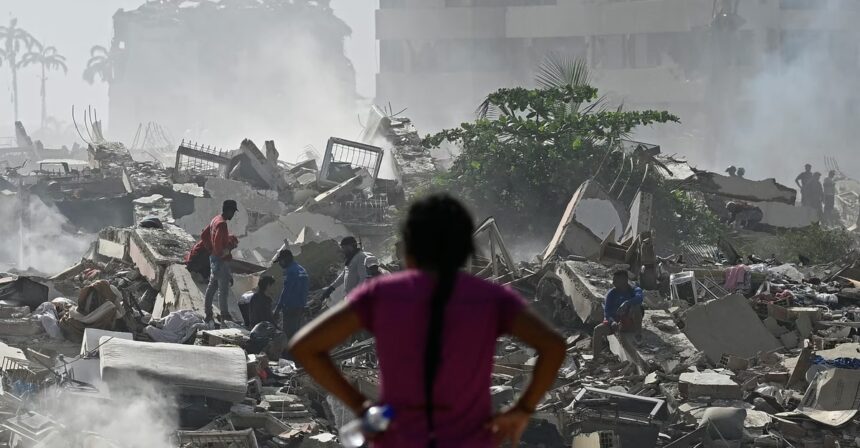

Following a devastating earthquake that left significant casualties in Venezuela, the U.S. has expanded its humanitarian efforts while grappling with complex diplomatic ties. This has raised questions about the implications for both Venezuelan citizens and U.S. foreign policy in the region, especially given the historical tensions between the two nations.
Earthquake Crisis and Humanitarian Response
The humanitarian impact of the recent earthquakes in Venezuela is staggering, with reports estimating over 4,490 dead and close to 18,000 individuals left homeless. In the wake of this tragedy, U.S. Marines have been deployed to assist as air traffic controllers and are helping manage relief efforts at the port of La Guaira. The U.S. State Department is also distributing humanitarian aid boxes emblazoned with the American flag, which have garnered a mixed response among Venezuelans.
While many have welcomed the assistance, there is palpable concern about the U.S.’s evolving relationship with the Venezuelan regime, led by President Nicolás Maduro. James Story, the last chargé d’affaires prior to the embassy closure in 2019, highlighted fears for American diplomats’ safety amid the politically charged atmosphere. The urgency of the current humanitarian mission may lead to unintended political ramifications that could complicate the path toward democracy.
Complexity of Diplomatic Relations
In an unexpected twist, U.S. officials, including Chargé d’Affairs John Barrett and General Francis Donovan, recently met with Diosdado Cabello, the Venezuelan interior minister with a history of human rights abuses. This meeting sparked outrage among Venezuelan citizens who have suffered under the repressive regime and raises questions about U.S. intentions. Critics argue that engaging with figures who have overseen brutal tactics against political opponents undermines the credibility of American diplomatic efforts.
Historically, U.S. diplomatic strategy focused on forming alliances with opposition leaders and promoting democratic values in Venezuela. However, the ground situation has shifted significantly, complicating efforts for democracy when the interim government shows signs of capitulation. With no clear date for democratic elections, American and Venezuelan officials now face the challenge of balancing immediate humanitarian needs with long-term democratic goals.
Consequences for Venezuelans and U.S. Policy
Venezuelans, still reeling from the earthquakes, have criticized their government for failures in disaster response, including looting among military personnel and bureaucratic obstacles hindering foreign aid. Political opposition figures like María Corina Machado are concerned that the U.S. relationship with the current regime could delay meaningful change in Venezuela.
As the U.S. invests heavily in relief efforts, approximately $310 million so far, questions arise about America’s long-term commitment and strategy in Venezuela. Former diplomats express fears that focusing on stability over democracy could lead to a dangerous precedent, compromising efforts to bring meaningful change to the country. Thus, many are witnessing a critical juncture in U.S.-Venezuelan relations.
Why This Is Trending
The ongoing crisis in Venezuela is capturing attention in India due to its implications for global politics and humanitarian efforts. As India’s own foreign policy interests evolve, understanding the U.S.’s approach toward such nations can be crucial. Additionally, many are curious about the humanitarian disaster’s fallout and how global powers are navigating the political complexities intertwined with aid.
Frequently Asked Questions
What was the cause of the recent earthquakes in Venezuela?
The earthquakes are geological events that resulted from shifting tectonic plates, leading to significant infrastructure damage and loss of life in affected areas.
How has the U.S. responded to the crisis in Venezuela?
The U.S. has deployed military personnel to assist with humanitarian efforts and has provided financial aid and resources to help with disaster relief.
What are the implications of U.S. officials meeting with Venezuelan leaders?
Such meetings may indicate a shift in U.S. diplomatic strategy, raising concerns about legitimizing a regime known for human rights abuses while potentially complicating efforts for democratic reforms.
Why are Venezuelans concerned about U.S. involvement now?
Many Venezuelans fear that the current cooperation between the U.S. and the Maduro government could hinder progress towards a free and democratic society, especially as the regime has a history of brutal repression against opposition movements.