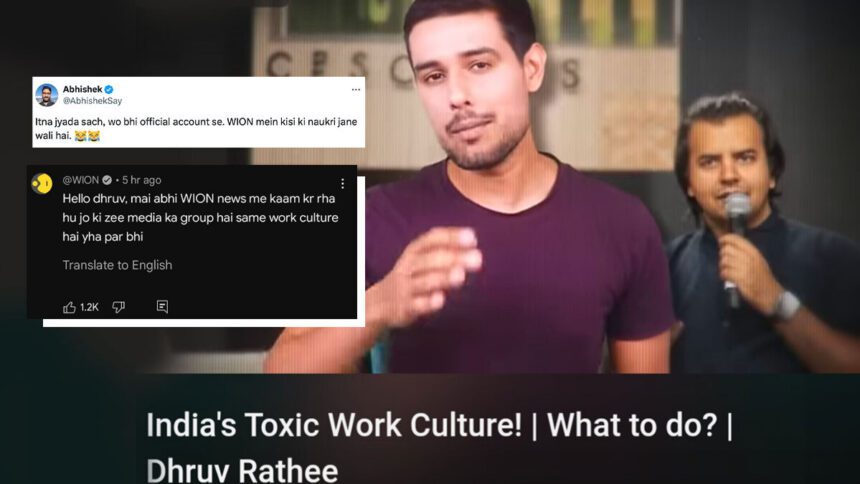

YouTuber Dhruv Rathee’s latest video discussing India’s toxic work culture has ignited significant discourse surrounding the management practices at Zee Media House. This criticism follows after a disgruntled Wion employee shared a troubling experience on the company’s official YouTube account, shedding light on a work environment that many claim is detrimental to employee well-being.
Context: A Deteriorating Work Environment
The issue of toxic work culture in India has gained traction, especially following the tragic incident where a young employee at EY passed away due to stress-related cardiac arrest. The sentiment around excessive work hours has been echoed by industry leaders like N.R. Narayana Murthy of Infosys and Bhavish Aggarwal of Ola, who advocate for the controversial idea of a 70-hour work week. Such remarks add to the unease among workers, prompting fears that practices mimicking Western corporate standards are overtaking the localized understanding of work-life balance.
Responses from the Public and Industry
After Dhruv Rathee’s video went viral, reactions from the public and industry insiders flooded social media. An anonymous comment from Wion’s verified account noted a similar toxic work culture, accumulating over a thousand likes before it was redacted. This allegation has prompted widespread concern about the repercussions that might befall the employee who shared their experience. Several Twitter users, like @AbhishekSay, expressed their belief that job security might be at stake for the whistleblower, stressing the need for transparency and accountability within the media outlet.
Media’s Role in Cultivating Discourses
Zee Media, through its various platforms, has been criticized for perpetuating communal disharmony. This environment raises questions about the ethical responsibilities of media companies, particularly in relation to their internal culture. When a prominent media house exhibits toxic traits within its organization, it casts a shadow on its credibility as a truth-teller. The implications are severe: if journalists and reporters are subject to unreasonable stress and working conditions, the quality and integrity of the news being produced may be compromised, leading to misinformation and public disillusionment.
Why This Matters
The discussion surrounding work culture in Indian companies is more than just an employment issue; it reveals critical insights into the socio-political climate of the nation. In a country where labor laws are continuously challenged, the call for a more humane workplace is fundamental to improving the quality of life for employees. Furthermore, it highlights the pressing need for corporate accountability. The allegations against Wion and the supporting narrative from Dhruv Rathee signal a larger societal demand for systemic changes, including labor rights and work-life balance.
Frequently Asked Questions
What sparked the discussion on toxic work culture in India?
The topic gained momentum following the viral video by YouTuber Dhruv Rathee and the unfortunate death of an EY employee due to work-related stress.
What has been the public response to the allegations at Wion News?
Many Twitter users expressed concern for the employee who shared the comments about toxic work culture and feared for their job security.
How do industrial leaders justify long work hours?
Notable industrialists like N.R. Narayana Murthy and Bhavish Aggarwal have suggested that a 70-hour work week could enhance productivity, dismissing weekends as a ‘Western concept.’
Why is media accountability important in this context?
The credibility of news outlets is at stake when they exhibit internal toxic environments. It raises concerns about the integrity and quality of the news produced by such organizations.