
As many as 41 social media handles, including Siasat.com, have received notices from the Telangana Police to delete a video showing an alleged assault on a school principal accused of teaching Urdu. The police claim this was necessary to maintain public order, raising concerns about the suppression of press freedom around what many consider a hate crime.
Context of the Incident
On June 27, a group affiliated with the Bharatiya Janata Party (BJP) attacked Amer Khan, the principal of Bharat Chandra School in Armoor, Nizamabad, for reportedly teaching Urdu to students. The assailants claimed that the curriculum included “Urdu songs” and religious texts, alleging that these practices could pose a threat to their children’s education. The incident unfolded in the presence of police officers, highlighting the tensions surrounding communal issues in the region.
The Police Response
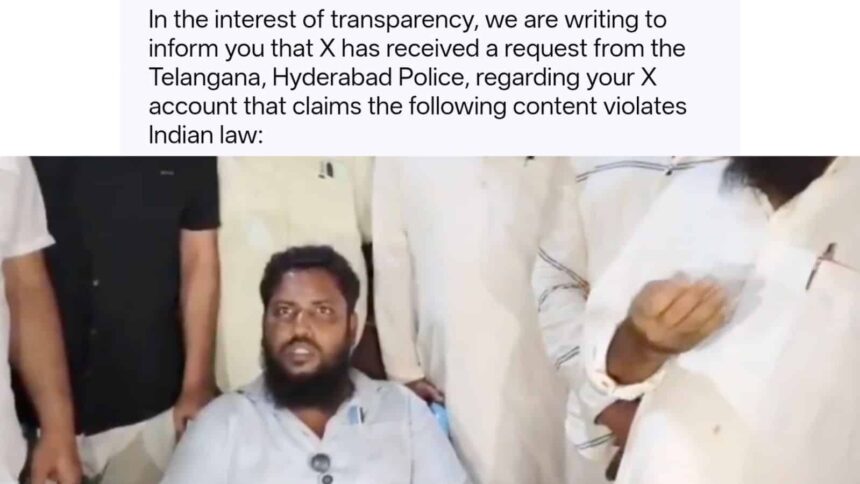
The Telangana Police, citing “disturbing public order,” issued takedown notices under Section 79(3)(b) of the Information Technology Act, 2000. This section removes legal immunity for platforms like X if they fail to act upon “unlawful content” in a timely manner. The police identified 41 specific posts to be removed, which included those from news outlets and individual journalists reporting on the attack.
Potential Consequences for Press Freedom
Following the issuance of the notices, many of the recipients, including Siasat.com, have pushed back against the police’s request to delete the footage. Critics argue that this action sets a dangerous precedent for press freedom and could deter journalists from reporting on communal violence. The situation has sparked a dialogue about the responsibilities of media outlets in covering sensitive issues and the role of law enforcement in regulating such coverage.
Why This Matters
The political implications of this incident and the subsequent police response are significant for Indian society. It raises questions about the protection of minority rights and the role of government in regulating freedom of expression. The incident reflects a growing climate of fear among journalists and media platforms that challenge the status quo, particularly regarding communal issues in a country known for its diverse cultures and languages. The tension between media freedom and the potential for communal unrest reveals broader societal divides that need to be addressed in the quest for an inclusive India.
Frequently Asked Questions
What sparked the assault on the school principal?
The assault occurred after the principal, Amer Khan, was accused by BJP members of teaching Urdu in a manner they deemed inappropriate, alleging that it included religious content.
What legal framework did the Telangana Police invoke?
The police invoked Section 79(3)(b) of the Information Technology Act, citing the need to remove content that could potentially disturb public order and incite communal tension.
What has been the response from the media outlets involved?
Many affected platforms, including Siasat.com, have refused to delete the video, arguing that it represents an infringement on press freedom and a misuse of police power to silence dissent and critical reporting.
How has the public reacted to the incident?
Public reactions have been mixed, with significant concern about the implications for freedom of expression and the safety of journalists reporting on communal issues. Many activists and other journalists have expressed solidarity with those targeted by the takedown notices.