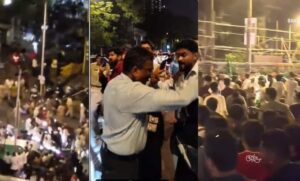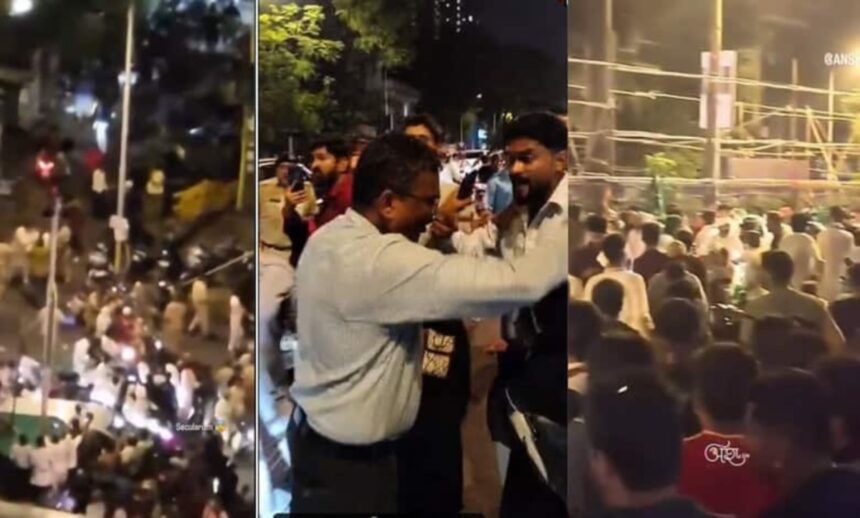

On August 26, a communal clash erupted in Parel, Mumbai, involving three Muslim men who were subsequently booked. The incident coincided with a Milad-un-Nabi procession passing through a predominantly Hindu neighborhood, escalating tensions between the communities. This incident underscores ongoing societal issues related to discrimination and communal strife in India.
Background of the Incident
The clash in Mumbai’s Parel locality has brought to light the complexities of inter-community relations in India, particularly surrounding religious processions. Local authorities identified the accused as Rehan Masood Sayyad, Adil Khan Ahmed Khan, both 19 years old, and 18-year-old Miraj Mohammad Firoz Rais. They are currently on the run, with police intensifying efforts to apprehend them and further examine the dynamics of the altercation.
Reports indicate that the violence escalated after both communities began trading slogans, which led to increased hostility. Videos from the incident show law enforcement using lathis to disperse the confrontational crowd, illustrating the challenges faced by police in maintaining public order during religious events.
Claims and Counterclaims
The events leading up to the clash involved conflicting narratives from the two communities. Hindu observers reported that participants in the Milad-un-Nabi procession raised provocative slogans and initiated stone pelting. Conversely, Muslim participants claim that Hindutva supporters disrespected a religious flag carried during the procession, sparking the verbal and physical altercation.
Local media further illustrated the confrontation by sharing videos showcasing Muslim individuals being coerced into apologizing, performing sit-ups with their ears held, and chanting “Jai Shri Ram” under duress. Witnesses reported instances of verbal abuse, with members of Hindutva groups encouraging violence against Muslims. These allegations signify a broader pattern of discrimination and the marginalization of Muslim communities in India.
The Broader Context of Discrimination
The clash in Parel is symptomatic of a larger trend observed in India, particularly in areas where religious and cultural identities often collide. Over recent years, reports of social exclusion, economic boycotts, and discrimination against Muslims have become increasingly commonplace. The rise of far-right nationalist sentiments has emboldened such instances, creating an atmosphere where incidents like the one in Parel can escalate rapidly.
In recent times, Muslims in India have often faced vilification through media portrayals and public narratives that paint them as antagonists in communal conflicts. This stigmatization not only affects social cohesion but also economic opportunities, leading to marginalization and a climate of fear and mistrust.
Why It Matters
This incident and others like it highlight the socio-political dynamics in India that affect religious minorities, particularly Muslims. The implications extend beyond communal relations; they touch on issues of civil rights, social justice, and democratic values. The ability to engage in religious celebrations without fear of violent backlash is fundamental to the ethos of a pluralistic society. For developers and users in the AI industry, monitoring such socio-political climates is essential for creating algorithms and platforms that accurately reflect realities without reinforcing biases. Engaging in responsible AI can contribute to more inclusive societies and foster dialogue aimed at healing divisions.
Frequently Asked Questions
What triggered the Parel communal clash?
The clash was reportedly triggered by an exchange of slogans between participants of a Milad-un-Nabi procession and local Hindus, which escalated into stone pelting and physical violence.
Who are the individuals booked in connection with the clash?
The police have booked three young Muslim men: Rehan Masood Sayyad (19), Adil Khan Ahmed Khan (19), and Miraj Mohammad Firoz Rais (18), who are currently at large, prompting a manhunt.
What reactions have emerged regarding the incident?
Reactions have been polarized, with accusations from both communities regarding provocative actions during the procession. Video evidence has surfaced showing various confrontational behaviors, highlighting the tensions present in the community.
Why is this incident significant for societal relations in India?
This incident reflects the ongoing challenges related to communal harmony in India, particularly concerning the treatment and perception of Muslim communities. It signals a need for improved dialogue and conflict resolution strategies to foster inclusivity.