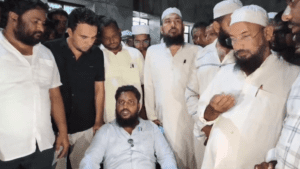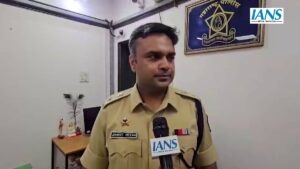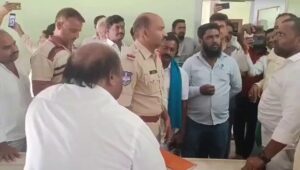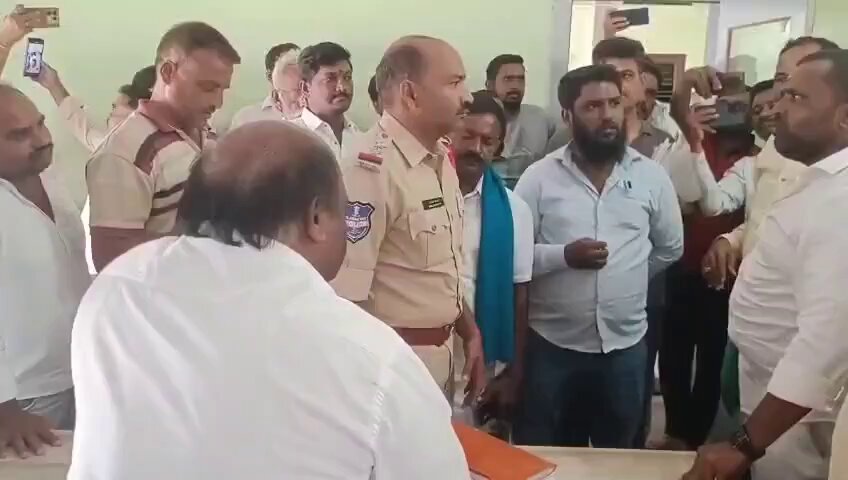

Recent incidents in Telangana have spotlighted serious concerns regarding police response and the response to violence perpetrated by political leaders. A victim of an attack by a BJP leader was detained instead of the aggressor, raising questions about law enforcement impartiality in politically sensitive situations.
Context of the Incidents
In a troubling turn of events, Amer Khan, who was reportedly attacked by the BJP Armoor Town President Mandela Balu, found himself in a precarious situation. The attack occurred in the presence of law enforcement officers, who not only failed to arrest the assailant but also took action against Khan himself, filing a case against him. This incident raises eyebrows about the protection offered to citizens and the role of police in safeguarding justice.
Incident Involving the Urdu Teacher
Another alarming episode involved a Muslim Urdu teacher who was reportedly slapped by a BJP leader for teaching Urdu, which is recognized as the second official language in Telangana. This incident also took place in the presence of police officers. Instead of intervening to protect the teacher, the police chose to detain him, demonstrating a troubling trend where victims face additional criminalization rather than support.
Political Implications
The two incidents collectively signal a worrying trend where law enforcement appears to be siding with political leaders over citizens. Such actions could foster an environment where political actors feel emboldened to act without fear of repercussion, undermining the democratic values of the state. The lack of accountability and fairness could lead to further marginalization of minority communities, thereby straining communal relationships and trust in public institutions.
Why This Matters
These occurrences highlight serious issues regarding civic safety and police neutrality in India, especially in the context of the politically charged environment. The perceived biases in law enforcement raise ethical concerns, not only for the affected individuals but also for the broader societal framework of justice. If citizens cannot rely on police protection, it threatens the democratic principle of equal treatment under the law. This situation calls for scrutiny from both civil society and political leaders to ensure accountability and to protect the rights of all citizens, regardless of political affiliations.
Frequently Asked Questions
What happened to Amer Khan?
Amer Khan was allegedly attacked by BJP leader Mandela Balu, and instead of the assailant being arrested, the Telangana police filed a case against Khan himself.
Why was the Urdu teacher slapped?
The Urdu teacher was reportedly slapped by a BJP leader for teaching Urdu, a language that is an officially recognized second language in Telangana.
What has been the response from Telangana police?
The Telangana police have been criticized for not taking action against the assailants in both cases and instead detaining the victims, raising concerns about bias and accountability.
What does this indicate about law enforcement in Telangana?
These incidents suggest potential biases within the police force, wherein victims of political violence may not receive protection, thereby undermining public trust in their ability to uphold law and order fairly.