
Political Tensions Erupt in Nizamabad Over Urdu Education
The district of Nizamabad, Telangana, is currently facing escalating political and communal tensions following an alleged assault on a school principal, Amer Khan, who has become a focal point in a controversy surrounding the teaching of Urdu in local schools. In response to the incident, several organizations have declared a district-wide bandh, further complicating the social climate.
Allegations of Assault and Community Response
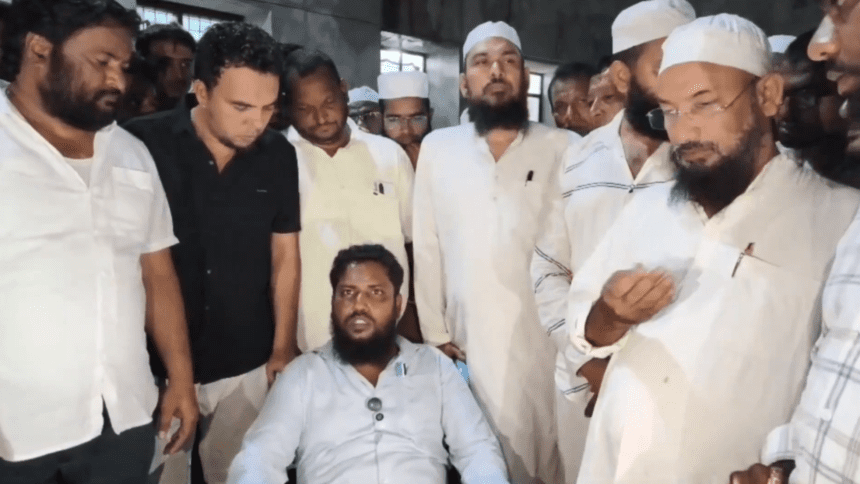
Amer Khan, principal of the Bharat Chandra School, claims he was confronted and assaulted by a group of Bharatiya Janata Party (BJP) workers who objected to the inclusion of Urdu language classes for students. According to Khan, this decision was made in response to requests from parents who wished their children to learn the language. He explained the school management’s efforts to establish a dedicated Urdu section were misunderstood when a newly appointed teacher inadvertently conducted mixed-language classes, leading to the confrontation.
Khan reported feeling further humiliated at a local police station, where he and another teacher were made to sit on the floor for hours without immediate action taken against their assailants. This treatment has intensified calls for accountability and support for educators facing backlash for their teaching choices.
Responses from Political Leaders and Community Organizations
The backlash has drawn a wide range of responses from social, minority, and teachers’ organizations that have united to demand stricter action against those involved in the assault. Political leaders such as Amjed Ullah Khan have publicly condemned the attack, urging for a transparent investigation. Meanwhile, militia and pro-BJP organizations like Bajrang Dal, Akhil Bharatiya Vidyarthi Parishad (ABVP), and Rashtriya Swayamsevak Sangh (RSS) have pushed back against the narrative proposed by Khan’s supporters. They claim the school is imposing religious practices, alleging that Hindu students were pressured to participate in namaz, thereby stoking communal tensions.
Concerns are mounting as protests emerge, particularly from parents questioning the legal basis for instituting Urdu classes at the school. This contentious atmosphere has led to a division among community members, setting the stage for potentially broader conflicts within the region.
The Broader Implications of Cultural Exclusion
The ongoing dispute reflects a troubling trend in India where educational policies and cultural practices intersect with rising political mobilization. In regions where community tensions are already sensitive, such incidents can exacerbate existing divides, prompting reactions from both the local community and the government. This creates a precarious situation for educators and students alike, as questions of inclusion and religious identity become focal points in community discourse.
The handling of this case by local authorities will likely impact how similar situations are addressed in the future, raising concerns about the potential marginalization of particular cultural practices, particularly in light of recent socio-political narratives that appear to favor specific ideologies over others.
Why It Matters
The events in Nizamabad are indicative of larger systemic issues of discrimination and social exclusion facing Muslim communities in India, reflecting ongoing struggles against cultural marginalization. Understanding this dynamic is crucial for developers and organizations working toward solutions that promote diversity and inclusion, particularly in educational frameworks. As AI and technology continue to play a role in education, the implications of such community tensions may affect the development and implementation of inclusive educational technologies. The need for sensitive, context-aware solutions has never been more pressing, highlighting the importance of fair representation in AI models.
Frequently Asked Questions
What led to the assault on the principal in Nizamabad?
The assault was triggered by a confrontation between the principal, Amer Khan, and a group of BJP workers who were upset about the introduction of Urdu classes in a school, claiming it pressured Hindu students.
What actions have community organizations taken in response?
Various community and minority organizations have called for a district-wide bandh to demand justice for the principal and adequate protections for educators, reflecting widespread outrage over the incident.
What is the political significance of this incident?
This incident highlights the growing communal tensions in India and raises questions about how minorities, particularly Muslims, are treated within educational and political systems influenced by the ruling party’s ideology.
What might happen next in Nizamabad?
The situation remains tense, with expectations of continued protests and possible interventions from local authorities, as well as calls for impartial inquiries into the alleged assault and the broader implications for educational policies.