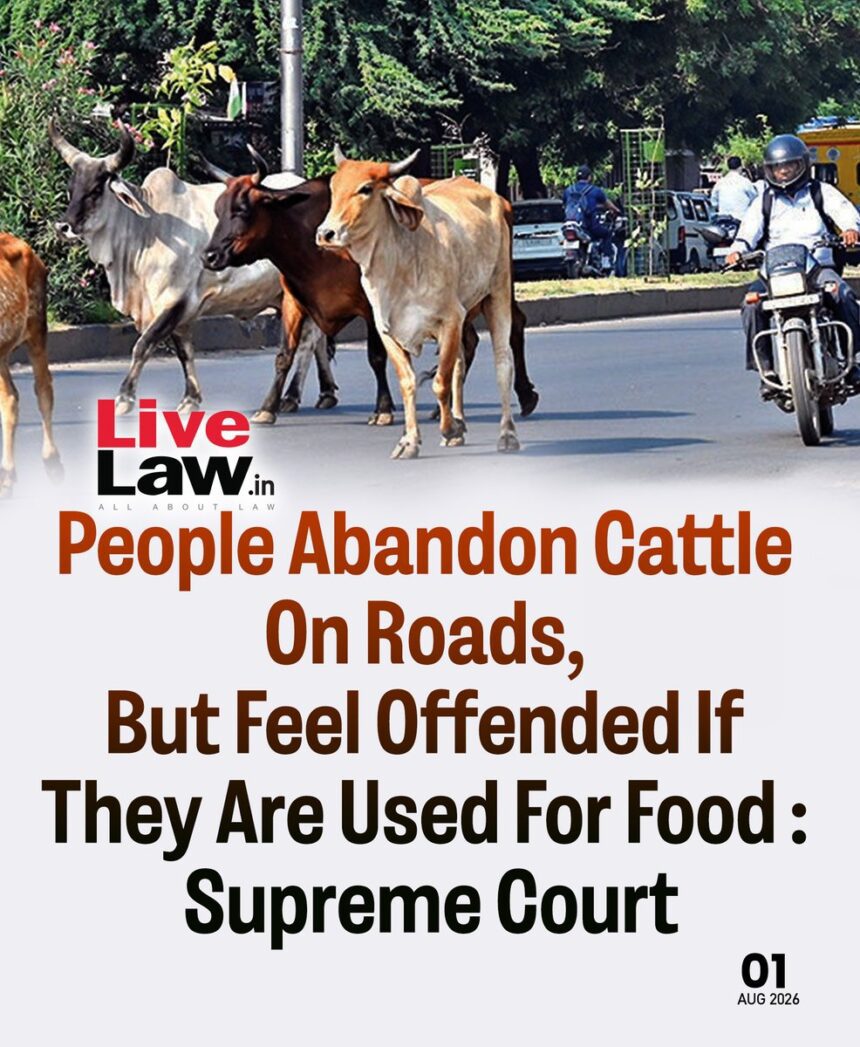

The Supreme Court of India recently highlighted a societal contradiction regarding the treatment of cattle. While it observed that many people abandon cattle once their economic usefulness wanes and allow them to roam freely in unsafe conditions, there is a strong backlash against their use as food. This dichotomy raises critical questions about societal values and the ethics of animal treatment in India.
Context of the Supreme Court’s Observation
The Supreme Court’s remarks came in the backdrop of increasing concerns over the welfare of stray cattle in India. As urbanization accelerates, many cattle are left to wander the streets, resulting in hazardous situations for both animals and humans. This observation reflects a broader issue of how society interacts with animals, particularly those deemed economically beneficial at certain times.
India’s Cultural Perspective on Cattle
Cows hold a revered status in Hindu culture, often symbolizing prosperity and motherhood. Consequently, any form of cattle slaughter is met with strong opposition from various segments of society. The Supreme Court’s comments evoke a sense of contradiction within this reverence. While there is an aversion to harming cattle for food, the welfare of these animals often receives inadequate attention once they outlive their utility, raising moral and ethical questions that challenge traditional beliefs.
Legal Framework and Challenges
India’s legal structure surrounding animal rights is multifaceted, with various laws at both the state and national levels aimed at protecting cattle. However, enforcement remains a significant challenge. The Supreme Court’s remarks add urgency to the need for reforms within this legal framework to ensure both humane treatment and safety. There is a need for better policies that protect stray cattle while considering the realities of urban living and economic considerations.
Why This Matters
The Supreme Court’s observation has significant political implications, especially in a country where animal rights intersect deeply with cultural and religious sentiments. As debates around agriculture, food security, and urbanization intensify, this issue can influence public policy, legislative acts, and community engagement. It could also spark discussions on balancing economic realities with ethical treatment of animals, urging policymakers to develop comprehensive strategies that address both welfare and cultural aspects.
Frequently Asked Questions
What prompted the Supreme Court’s remarks on cattle treatment?
The Supreme Court’s remarks were prompted by concerns over the welfare of stray cattle and inconsistencies in societal attitudes towards cattle, particularly regarding their economic utility versus their status as revered animals.
How does India’s cultural perspective influence the treatment of cattle?
Cattle, particularly cows, are considered sacred in Hindu culture, which creates a societal aversion to their slaughter. This reverence exists alongside widespread issues regarding the abandonment and neglect of stray cattle once they are no longer economically beneficial.
What legal measures exist to protect stray cattle in India?
There are various laws aimed at protecting cows and other cattle in India, including the Prevention of Cruelty to Animals Act. However, enforcement is often inconsistent, leading to challenges in ensuring their welfare.
What implications could this issue have for Indian society?
The Supreme Court’s comments may ignite discussions about animal rights and welfare in urban planning and agricultural policies, urging a re-examination of societal values regarding livestock and their treatment as both economic assets and living beings.