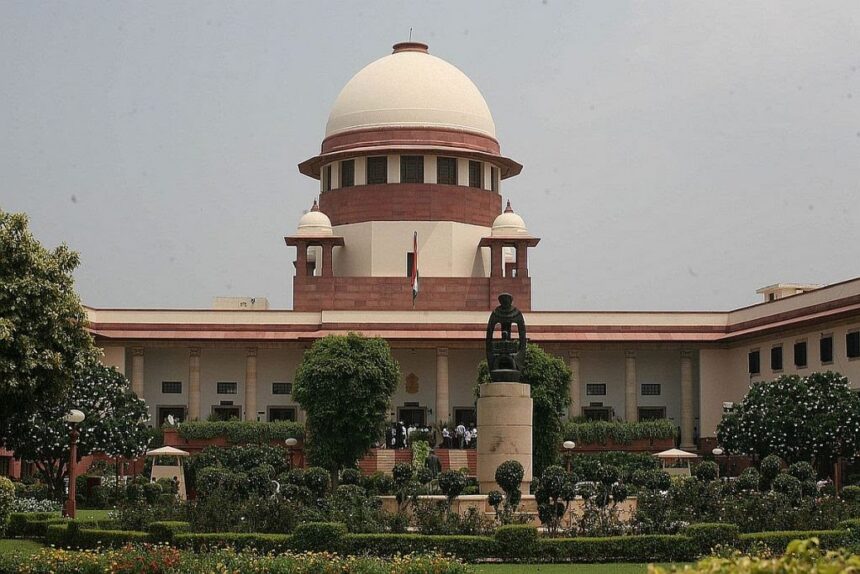

In a significant legal challenge, five activists have petitioned the Supreme Court of India to declare polygamy among Muslims unconstitutional, seeking to eliminate the exemption that allows Muslim men to marry multiple wives. This move comes nearly nine years after the Court invalidated instant triple talaq and highlights ongoing debates about gender equality and personal laws in India.
Context of the Challenge
The activists have requested that polygamy be criminalized under Section 82 of the Bharatiya Nyaya Sanhita (BNS), which imposes a maximum sentence of seven years for marrying again while a spouse is alive. Currently, the provision is not uniformly applicable to Muslim men due to the Muslim Personal Law (Shariat) Application Act, 1937, which provides specific exemptions. This legal framework raises questions about the equality of rights among different religious communities in India.
The petitioners argue that the exemption violates fundamental rights enshrined in Articles 14, 15, and 16 of the Indian Constitution, which guarantee equality before the law and prohibit discrimination on the grounds of religion, race, caste, sex, or place of birth. They are also calling for compulsory registration of Muslim marriages to ensure legal documentation of marital status, potentially preventing subsequent marriages while an existing spouse is alive.
Legal Precedents and Current Developments
Previous court rulings have touched on issues related to marriage laws without addressing the constitutionality of polygamy itself. In landmark judgments like Sarla Mudgal (1995) and Lily Thomas (2000), the Supreme Court underscored that a Hindu man could not convert to Islam solely to remarry while an existing marriage was intact. This bench of rulings illustrates the complex interplay between personal laws and constitutional rights, setting the stage for the current challenge to polygamy.
In a recent hearing, the Supreme Court sought the Indian Government’s response to these new petitions, which also challenge the existing practices around nikah halala—another controversial aspect of Muslim personal law. The Court’s decision will not only determine the fate of polygamy but could also influence broader discussions surrounding religious freedom and personal law reform in India.
Religious Freedom versus Equality
A crucial question at the heart of this legal debate revolves around whether polygamy qualifies as an essential religious practice protected under Article 25 of the Indian Constitution. The petitioners assert that it does not meet the criteria, referring to Surah An-Nisa (4:3) from the Quran, which allows multiple marriages under strict conditions favoring justice. This interpretation positions polygamy as a conditional permission rather than a religious obligation, challenging the foundation of the current legal exemptions.
As the court navigates these contentious issues, it must balance the tenets of religious freedom against the constitutional rights to equality, dignity, and gender justice, making this a pivotal moment for Indian society. The outcome may also inspire further scrutiny of other personal laws affecting various religious communities in India.
Why It Matters
The implications of this case extend beyond religious communities; they touch upon the core principles of justice and equality in India. The Supreme Court’s decision could pave the way for legal reforms that address systemic discrimination against women within Muslim personal law, setting a precedent for the treatment of similar issues across various religious groups. For global observers, this case serves as a lens through which to view India’s ongoing struggle for gender equity against a backdrop of religious plurality and political changes under the current government. The ruling may also influence international perceptions of India’s commitment to human rights and gender justice.
Frequently Asked Questions
What is the main objective of the petitioners in the Supreme Court?
The petitioners aim to declare polygamy among Muslims unconstitutional and seek to have it criminalized under Indian law, specifically under Section 82 of the Bharatiya Nyaya Sanhita.
Why is polygamy exempt from the BNS for Muslim men?
Polygamy is exempt for Muslim men due to the Muslim Personal Law (Shariat) Application Act, 1937, which provides specific provisions for such practices, leading to calls for its repeal.
What are the potential outcomes of the court’s ruling?
The court may either affirm the current framework, propose reforms, or advocate for legislative changes that could regulate or prohibit polygamy and other practices like nikah halala.
How does this case relate to gender equality in India?
This case directly addresses issues of gender equality and women’s rights, as many argue that current interpretations of Muslim personal law disproportionately disadvantage women.