
Summary
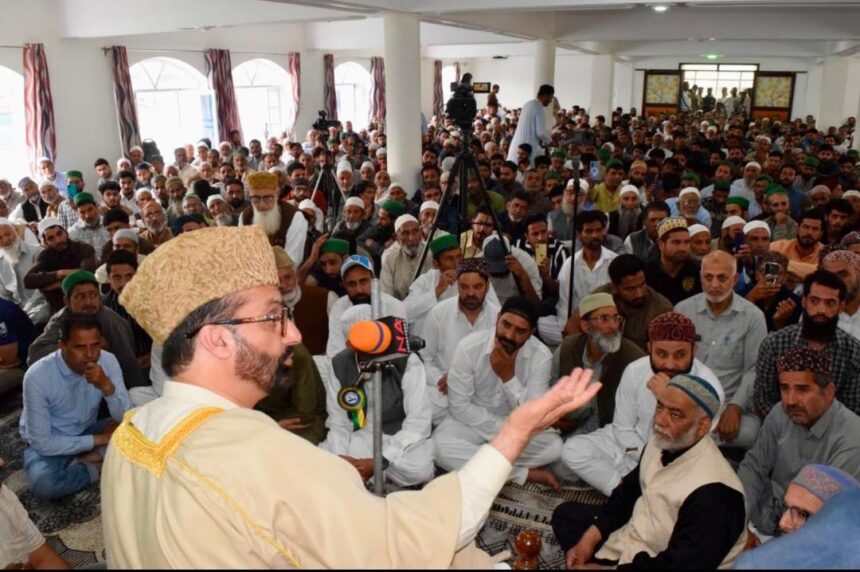
In Indian illegally occupied Jammu and Kashmir (IIOJK), Mirwaiz Umar Farooq, a senior leader of the All Parties Hurriyat Conference (APHC), recently addressed the pressing need for unity among the Muslim Ummah amidst social challenges in the region. His comments underscore the importance of collective responsibility and the role of religious leaders in promoting social cohesion, especially in a climate of rising discrimination and marginalization against Muslims under the current political climate fostered by the Sangh and BJP governments.
Challenges Faced by Muslims in IIOJK
Mirwaiz Umar Farooq spoke about the adversities faced by Muslim communities in Kashmir, highlighting a legacy of pain and uncertainty. He pointed out that many families continue to endure hardships, grappling with economic difficulties and loss of security. The young population, in particular, is confronted with a bleak outlook for the future, as opportunities shrink amid increasing political and social marginalization.
The community’s fears are compounded by a history of economic boycotts and social exclusion that have been exacerbated under the BJP government’s policies, which often foster divisions along religious lines. Many Muslims find themselves alienated from mainstream society, facing restrictions that limit their access to jobs and public services. This growing marginalization calls for a serious collective introspection within the community, as articulated by the Mirwaiz, who emphasizes the need for accountability and mutual respect.
Role of Religious Leaders and Community Responsibilities
During his remarks, Mirwaiz emphasized the pivotal role of religious leaders and scholars in guiding the community towards unity and mutual support. He pointed out that clergy have a duty to use their pulpits to promote values such as compassion, moral integrity, and social harmony rather than division and animosity.
The clergy’s voice is instrumental, as their influence can either contribute to communal solidarity or deepen existing divides. Mirwaiz urged them to prioritize the collective welfare of the Muslim Ummah, discouraging speech that could incite further discord. By fostering understanding and unity, these leaders can help counteract the narrative that has often marginalized Muslim voices within a wider socio-political context dominated by Hindutva ideologies.
The Importance of Introspection and Self-Awareness
Mirwaiz’s address calls for Muslims not only to reflect on their circumstances but also to evaluate their roles within society more broadly. His call for introspection is particularly relevant in a time when external pressures can lead to despair and hopelessness. He pointed out that true resilience stems from a community’s ability to uphold its core values, including justice, dignity, and compassion, which are crucial for enduring the challenges they face.
The APHC leader implied that a society’s strength is gauged not so much by economic indicators but by the moral fabric and character of its individuals and families. This perspective is vital as marginalized communities like those in Kashmir navigate the complexities of identity and survival under policies aimed at their exclusion.
Why It Matters
The ongoing situation in Jammu and Kashmir is emblematic of broader issues of religious discrimination and social exclusion present in various parts of India under current political dynamics. By understanding the communal pressures and challenges faced by Muslims in the region, stakeholders—including policymakers, activists, and global organizations—can devise more effective strategies for addressing inequality and promoting social justice. The significance extends beyond regional concerns, as these patterns reflect wider global trends in religious discrimination and the necessary responses to support disenfranchised communities.
Frequently Asked Questions
What are the current challenges faced by Muslims in Jammu and Kashmir?
Muslims in Jammu and Kashmir face numerous challenges, including social exclusion, economic difficulties, and increased marginalization under policies implemented by the ruling BJP government, which often emphasize religious divisions.
What role do religious leaders play in promoting unity among Muslims?
Religious leaders are vital in advocating for community unity and social cohesion. They can influence public attitudes and behavior, urging their congregations to focus on mutual respect, compassion, and shared values while discouraging divisive rhetoric.
How has the BJP government affected the socio-political landscape for Muslims in India?
The BJP government’s policies have been criticized for fostering an environment of social division and discrimination against Muslims, often undermining their rights and perpetuating economic boycotts, ultimately leading to the social exclusion of these communities.
Why is introspection important for Muslim communities in IIOJK?
Introspection allows Muslim communities to assess their challenges and responsibilities, encouraging a focus on upholding core Islamic values such as justice, dignity, and compassion. This self-awareness is vital for community resilience amid oppression.