
South Africa Accuses Israel of Violating International Court of Justice Directives
South Africa has formally accused Israel of ignoring legally binding directives from the International Court of Justice (ICJ) concerning the ongoing conflict in Gaza. The South African government has submitted a dossier that details what it says are continued violations, emphasizing the humanitarian implications for the Palestinian people.
Documenting Violations and Humanitarian Impact
The South African Department of International Relations and Cooperation stated that after reviewing the situation, it concluded that Israel has not complied with three specific orders issued by the ICJ during its proceedings related to the Gaza conflict. According to the dossier, the casualty figures amass to at least 73,407 Palestinian deaths and 174,335 injuries reported by August 2023, which South Africa claims reflects over 10% of the Palestinian population. This alarming statistic underscores the dire humanitarian situation unfolding in the region.
Despite a declared ceasefire, the dossier alleges that Israeli military operations continue to result in Palestinian casualties, with reports indicating that an average of one Palestinian child has been killed every day since the truce was established. Furthermore, the situation for Palestinian women has worsened, evidenced by a more than threefold rise in reported miscarriages in 2026, attributed to adverse conflict-related conditions.
Claims of Systematic Violation of Rights
South Africa has also cited serious allegations against Israel concerning the treatment of Palestinians. The dossier accuses Israeli forces of arbitrary detentions, deportations, and infliction of torture as well as sexual and gender-based violence upon detainees. These claims, coupled with reports of local journalists being killed and restrictions imposed on investigative bodies from the United Nations, highlight significant barriers to documenting human rights violations in Gaza. The South African government warns that without intervention, the rights of Palestinians may face irreversible destruction before the ICJ reaches its final ruling.
Legal Actions and ICJ Proceedings
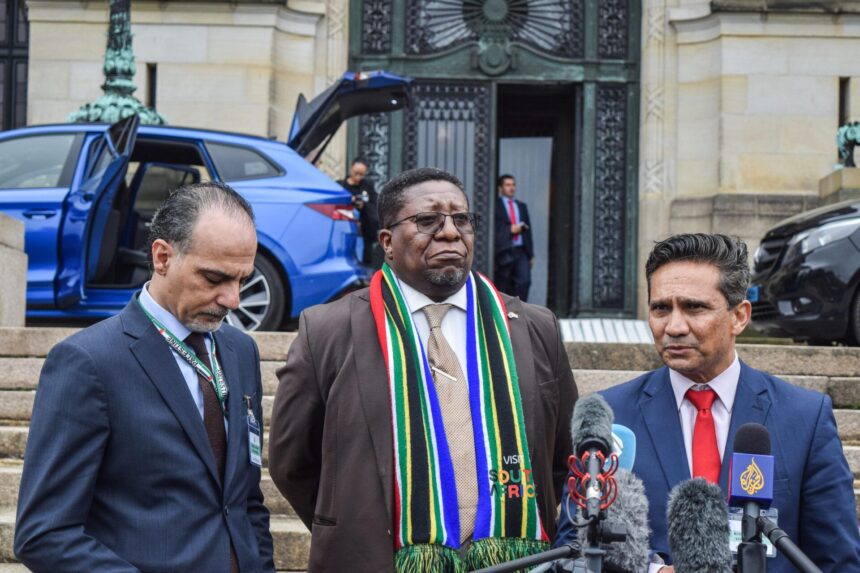
South Africa initially brought its case against Israel before the ICJ on December 29, 2023, alleging violations of the 1948 Genocide Convention. Urging for provisional measures, Pretoria highlighted the urgent need for protection of Palestinian civilians under the convention. The ICJ has since issued orders on January 26, March 28, and May 24, 2024, which mandated Israel to undertake measures aimed at preventing acts that contravene the Genocide Convention and to ensure the protection of Palestinians. These measures included specific directives concerning military operations in Rafah and requirements for periodic reporting to the court on compliance efforts.
Why It Matters
The allegations and legal actions initiated by South Africa against Israel underscore the international community’s growing concern over human rights violations during armed conflicts. This situation is not only a critical humanitarian issue but also presents broader implications for international law and the credibility of judicial bodies like the ICJ. Should the court’s authority be disregarded, it could set a troubling precedent that undermines global efforts to address violations of international humanitarian law and human rights protections.
Frequently Asked Questions
What are the main allegations made by South Africa against Israel?
South Africa accuses Israel of failing to comply with ICJ directives regarding the protection of Palestinian civilians and alleges systematic violations of human rights, including arbitrary detention, torture, and high civilian casualties in Gaza.
What does the ICJ mandate concerning the Genocide Convention?
The ICJ mandated Israel to take measures to prevent acts prohibited by the Genocide Convention and to ensure the safety and protection of Palestinian people, as outlined in its orders issued throughout early 2024.
How has the humanitarian situation in Gaza been characterized?
The humanitarian situation has been described as dire, with significant casualties reported, including tens of thousands of deaths and injuries, particularly affecting women and children amidst continuing military operations.
What could be the implications of South Africa’s actions for future international relations?
South Africa’s case may influence how states and international bodies respond to alleged human rights violations in conflict zones, potentially affecting diplomatic relations and international law enforcement strategies.