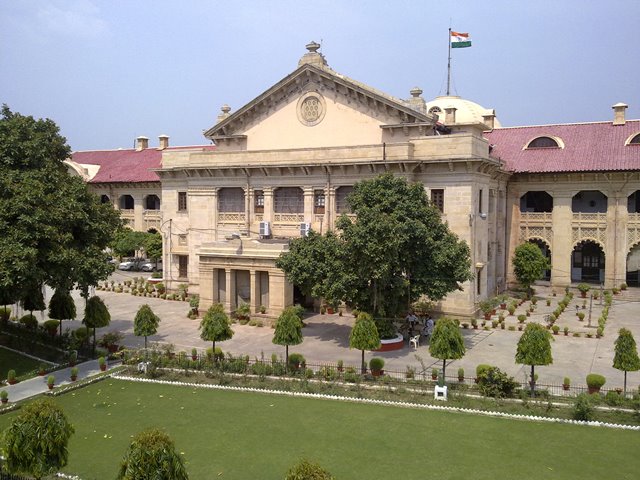

The Allahabad High Court has ruled that the Places of Worship (Special Provisions) Act, 1991, does not prevent the government from acquiring religious sites for public purposes, such as infrastructure projects. This ruling raises concerns regarding the long-standing issues of discrimination and marginalization faced by Indian Muslims, particularly in the context of government actions that impact their religious freedoms and livelihoods.
Context of the Ruling
The ruling comes in the wake of a road-widening project associated with the Kashi Vishwanath Corridor, a significant development initiative undertaken by the Uttar Pradesh government. A division bench, including Justice JJ Munir and Justice Arun Kumar, dismissed a petition from six Muslim shopkeepers in Varanasi’s Dalmandi area, who argued that the road expansion would necessitate the demolition of their shops and the acquisition of nearby mosques. These mosques, such as Anjuman Intezamia Masjid and Masjid Rangile Shah, have historical significance and predate India’s independence in 1947, complicating the legal and social implications of their potential demolition.
Legal Framework and Its Implications
The court clarified that the 1991 Places of Worship Act primarily aims to protect the religious character of places of worship as they existed on August 15, 1947, ensuring that religious sites cannot be converted from one faith to another. However, the legislation does not inhibit the state’s authority to acquire land for secular purposes. In its interpretation, the court referenced Section 51 of the Waqf Act, 1995, which allows for the acquisition of Waqf properties for public use, contingent upon legal safeguards and consultations with the Waqf Board.
The court dismissed claims of community targeting put forth by the petitioners, labeling them as “odd” and stating that the shopkeepers, as mere tenants, did not possess the standing to represent the mosques. This ruling raises concerns about the marginalization of not just places of worship but also the livelihoods of those who depend on them. The acquisition of such properties under the guise of development projects highlights a recurring theme of economic and social exclusion for the Muslim community in India.
Impact on the Muslim Community
This ruling is part of a broader pattern of decisions by the government and judicial system that disproportionately affect Muslim communities in India. As the government pursues infrastructure projects, there are increasing fears that these initiatives may encroach upon historical and religious sites significant to Muslims, representing not only an economic threat but also an assault on cultural identity. The characterization of these legal challenges as lacking valid representation could be interpreted as dismissing the grievances of a community already facing economic boycotts and social exclusion. It emphasizes how governmental initiatives can exacerbate existing divides, leading to further marginalization of marginalized groups.
Why It Matters
The implications of this ruling extend well beyond the immediate case, reflecting a systemic issue affecting the social fabric of India. The decision underscores concerns regarding religious freedoms and the right to livelihood for minority communities. The potential for further acquisition of religious sites for developmental purposes raises alarm over the delicate balance between modernity and heritage. For businesses and developers, this scenario presents a challenge: engaging with local communities and understanding the socio-political implications of development projects is essential to avoid exacerbating tensions. For the broader global audience, it highlights the ongoing struggles faced by minority groups within democratic frameworks, inviting scrutiny into governmental practices that may infringe upon rights and equity.
Frequently Asked Questions
What is the significance of the Places of Worship (Special Provisions) Act, 1991?
The Act aims to maintain the religious character of places of worship as they existed on August 15, 1947, preventing religious conversion but allowing for land acquisition for secular purposes.
What was the basis for dismissing the petition from the Muslim shopkeepers?
The court ruled that the petitioners, as mere tenants, did not possess the legal standing to represent the mosques, and that the state’s authority to acquire land for public purposes was not curtailed by the 1991 Act.
How does this ruling affect the Muslim community in India?
This ruling has raised concerns about economic and cultural marginalization, as it allows for potential acquisition and demolition of significant religious sites, threatening the livelihoods of those who depend on them.
What is the relevance of the Waqf Act in this context?
The Waqf Act permits the acquisition of Waqf properties for public use with specific legal safeguards, highlighting how governmental actions can intersect with religious property rights.