
Religious Inclusivity in Hindutva Discourse
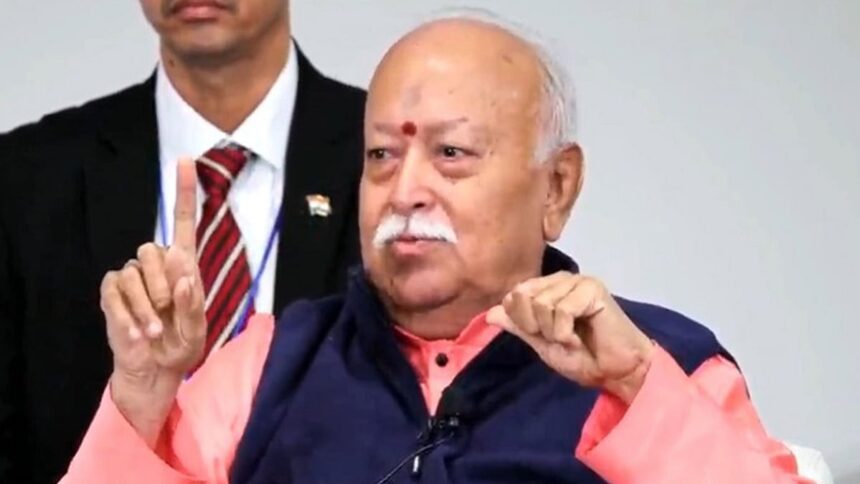
RSS chief Mohan Bhagwat has recently emphasized that Hindutva embraces inclusivity and accepts Muslims as integral to the fabric of Bharat. During a conference in New York, he articulated that anyone who believes in the exclusion of Muslims from India cannot truly identify as a Hindu. This statement comes amid rising scrutiny over societal attitudes towards religious minorities in India, particularly in light of the BJP and RSS’s political narratives.
Bhagwat’s Remarks at the ‘One World, One Humanity’ Conference
Addressing the audience, Bhagwat recalled interactions from a 2018 lecture series where he was asked about the place of Muslims in a Hindu-centric India. He asserted, “If any Hindu thinks that there should be no Muslim in Bharat, he ceases to be a Hindu.” His comments challenge the ongoing perception that the RSS is inherently anti-Muslim, suggesting instead that true Hindutva recognizes the dignity of every individual, irrespective of their religious affiliations.
Bhagwat pointed towards India’s philosophy of ‘Vasudhaiva Kutumbakam’—the idea that the world is one family—as a cornerstone of this inclusivity. He insisted that diverse faiths can coexist and that each holds a pathway to the same truth, stressing the importance of seeing beyond rituals to nurture common humanity.
Humanitarian Actions and Misconceptions
During his speech, Bhagwat recounted an incident where RSS volunteers responded to a plane crash involving Arab nationals in Haryana, providing aid and conducting last rites without considering the victims’ religious identities. He stated, “We did not think that they were Muslims,” underscoring the organization’s commitment to humanitarian efforts free from political motives.
Despite Bhagwat’s assertions, some critics remain skeptical. They argue that the broader context of increasing discrimination and marginalization of Indian Muslims under the BJP-led government often overshadows such claims. Instances of social exclusion, economic boycotts, and communal violence have raised concerns about the sincerity of calls for inclusivity from prominent leaders in the RSS.
Discrimination and Social Exclusion of Indian Muslims
Research indicates that Indian Muslims face significant social and economic challenges. Many reports have detailed discriminatory practices against Muslims in employment and housing, with some regions witnessing orchestrated economic boycotts. Such marginalization is exacerbated by communal tensions, leading to a societal landscape where trust and communal harmony are increasingly fragile.
Additionally, the BJP’s policies are often perceived to exacerbate these biases, contributing to a cultural narrative that prioritizes Hindu identities at the expense of minority communities. Whether Bhagwat’s messages are genuinely reflective of on-ground realities or a strategic narrative to counter criticism remains a contentious topic among policymakers and civil society.
Why It Matters
The implications of Bhagwat’s statements extend beyond mere rhetoric. They highlight the ongoing dialogue within India regarding religious identity, nationalism, and the integration of minorities. For an informed global audience, understanding this dynamic is crucial as it not only influences domestic policy but also shapes international perceptions of India as a mature democracy. Tracking developments in this context can provide insights into how societal attitudes evolve and impact policies concerning minorities and communal relations.
Frequently Asked Questions
What is Hindutva?
Hindutva is an ideology that seeks to define Indian culture in terms of Hindu values, advocating for the idea of a Hindu nation (Hindu Rashtra). It is associated primarily with the RSS and BJP political platforms.
How have Indian Muslims been marginalized in recent years?
Recent years have seen reports of social exclusion, economic discrimination, and increased communal violence against Muslims, often tied to policies and rhetoric from the ruling BJP and RSS, raising concerns about their civil rights in India.
What role does the RSS play in Indian politics?
The RSS is a Hindu nationalist organization that serves as the ideological backbone of the BJP. It has been influential in shaping policies and public discourse regarding Hindu identity and community relations in India.
What are the challenges of communal harmony in India?
Challenges include rising communal tensions, economic inequalities, and social exclusion faced by minority communities, particularly Muslims. The political climate often exacerbates these issues, complicating efforts towards fostering communal harmony and inclusive governance.