
Former U.S. President Donald Trump has recently signed executive orders targeting birthright citizenship and birth tourism, claiming a stronger legal foundation than previous attempts. Legal experts are divided on the constitutional legitimacy of these measures, with significant implications for immigration policy, especially concerning non-citizens giving birth in the U.S.
Trump’s New Executive Orders Explained
In August 2025, Trump signed two executive orders addressing birthright citizenship. The first order restricts federal recognition of citizenship for children born in the U.S. when neither parent is a citizen, particularly in cases involving foreign terrorist organizations or other unlawful circumstances. Legal experts from conservative organizations argue that this narrow approach is more defensible than previous attempts that aimed to eliminate birthright citizenship altogether.
The second order targets what is known as “birth tourism,” a practice where non-citizens enter the U.S. to give birth to secure citizenship for their children. This order instructs the State Department and the Department of Homeland Security to deny visas to individuals suspected of this practice. Recent federal policies have aimed to combat this issue, but Trump’s new order re-emphasizes the administration’s commitment to controlling immigration.
Legal Perspectives on the Executive Orders
According to Chad Mizelle, a senior fellow at the America First Policy Institute, Trump’s orders are grounded in historical exceptions to birthright citizenship acknowledged by the Supreme Court. Citing United States v. Wong Kim Ark (1898), Mizelle argues that members of foreign terrorist organizations could fall under categories exempted from automatic citizenship. Ilya Shapiro, the Manhattan Institute director, echoed this sentiment by stating the order utilizes classic exceptions to assert conditions for citizenship.
However, opponents argue that the administration’s stance may stretch executive power too far. David Bier from the Cato Institute raises concerns regarding the president’s unilateral authority to redefine categories of alien enemies without congressional approval. Legal scholars warn that this approach might set a dangerous precedent for executive overreach that could undermine the foundational tenets of U.S. law.
Implications for Immigration Policy and Public Sentiment
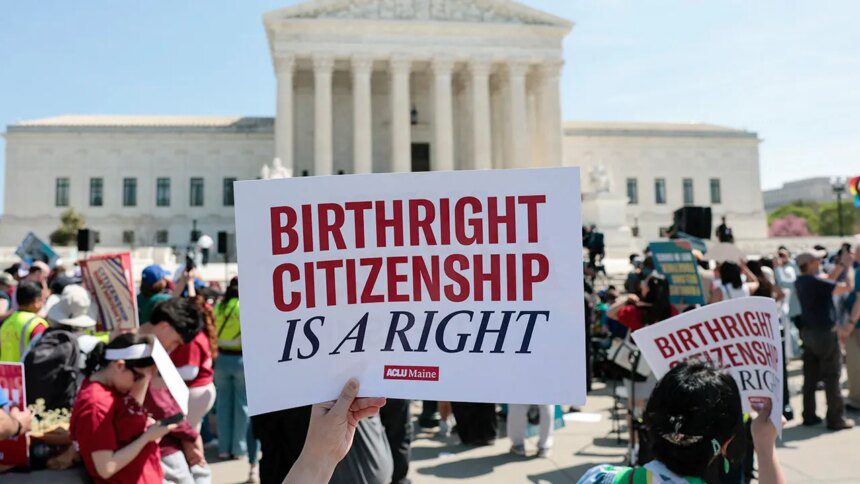
The implications of these executive orders extend beyond constitutional debates; they also tap into broader sentiments surrounding immigration in the United States. The issue of birthright citizenship has long been a contentious topic, drawing sharply divided opinions among the American populace. Advocates for restricting birthright citizenship argue that it undermines the integrity of legal immigration, while critics view it as a targeted attack on immigrant communities.
Current legal challenges against these orders are mounting, as various organizations that opposed Trump’s earlier attempts at stricter immigration policies have now resumed their legal battles. The outcome of these challenges could redefine the understanding of citizenship and immigration rights in the U.S. for years to come.
Why This Is Trending
This topic is trending among Indian audiences given the increasing number of Indians exploring immigration opportunities in the United States, including the practice of birth tourism. Many Indian families consider the U.S. attractive for securing citizenship for their children through such avenues. With Trump’s policies resuming media attention, Indians are particularly interested in understanding how these changes could affect their immigration plans, especially in light of long-standing ties between the two nations.
Frequently Asked Questions
What are Trump’s new executive orders regarding birthright citizenship?
Trump’s orders aim to restrict citizenship rights for children born in the U.S. to parents who are not citizens, particularly in cases involving foreign terrorist organizations. It also targets the practice of birth tourism, enabling federal agencies to deny visas for individuals suspected of having this intention.
How have legal experts responded to these orders?
Legal experts are divided. Some believe Trump’s narrower approach has a stronger constitutional basis than prior attempts. Others argue that redefining citizenship categories without congressional approval risks executive overreach.
What historical cases are influencing these orders?
The case of United States v. Wong Kim Ark (1898) is pivotal; it established certain exceptions to birthright citizenship, which Trump’s orders reference to justify their legality.
Why is birth tourism a concern?
Birth tourism raises concerns about immigration integrity, as some view it as a loophole that allows non-citizens to exploit the U.S. legal system for citizenship. Critics argue that it undermines the purpose of immigration laws and contributes to broader issues surrounding illegal immigration.