Summary
The BJP’s stance on the amended Waqf law has ignited controversy in Kerala, with party president Rajeev Chandrasekhar accusing the opposition CPI(M) and IUML of spreading fear and misinformation. This debate touches on themes of communal identity, state laws, and the narrative surrounding Muslim rights in India.
The BJP’s Position on the Waqf Law
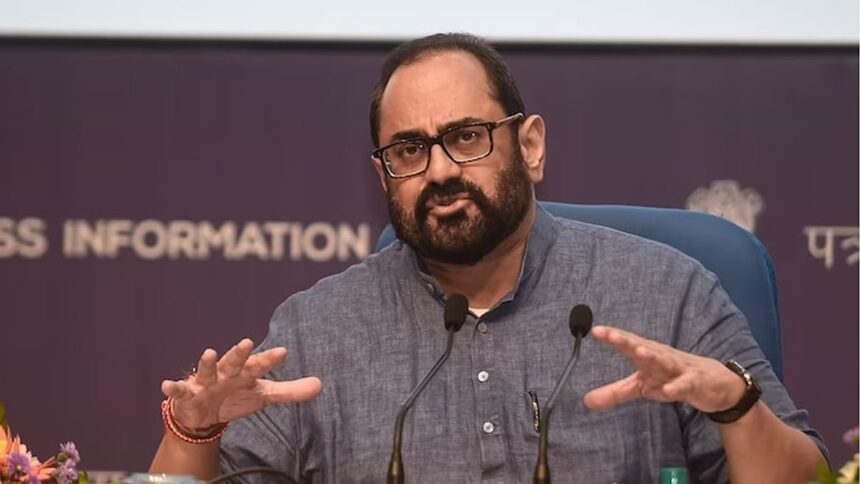
Rajeev Chandrasekhar, president of the Kerala BJP, has publicly addressed the concerns raised regarding the amended Waqf law, emphasizing that the core issue is the rule of law, not religion. This legislative change, which mandates the inclusion of two non-Muslim members in State Waqf Boards, has been described by Chandrasekhar as a necessary step toward better governance, claiming it applies to all states in India, including Kerala.
In his recent Facebook post, he criticized CPI(M) and IUML for allegedly misleading the public and attempting to create panic regarding the implications of the law. By framing the issue as a matter of political maneuvering rather than a religious one, he is positioning the BJP as the defender of secular governance in the face of what he describes as fear-mongering tactics by opposition parties.
Historical Context of Misinformation
Chandrasekhar drew parallels with previous controversies, notably the Citizenship (Amendment) Act (CAA) and the abolition of triple talaq. He condemned the narratives that emerged during these debates, which suggested that the BJP’s legal changes were anti-Muslim. Chandrasekhar countered these claims by stating that the CAA did not strip any Indian Muslim of their citizenship and that the removal of triple talaq ultimately protected the rights of Muslim women.
By presenting these historical precedents, Chandrasekhar aims to minimize panic surrounding the new Waqf law, characterizing the opposition’s narrative as a cyclical tactic to undermine the BJP’s image. He asserts that the BJP’s motive is not to marginalize any community but to ensure fair representation and governance across all socio-religious groups.
The Role of the Kerala High Court
Chandrasekhar’s statements come shortly after an interim order from the Kerala High Court, which restricted the State Waqf Board from making significant decisions. According to the court, the inclusion of non-Muslim members mandated by the new legislation remains lawful, as it has not been challenged successfully at higher judicial levels.
This aspect adds legal weight to the BJP’s argument, suggesting that their policies align with the judicial system. However, the court’s involvement also highlights the ongoing tensions and debates around secular governance and religious representation in India, particularly regarding state laws impacting Islamic institutions.
Why It Matters
The discussion surrounding the amended Waqf law is significant as it reflects broader socio-political dynamics in India, particularly relating to the treatment of minority communities. As the BJP government continues to implement changes perceived as anti-Muslim, the implications could extend to the realm of technology and information dissemination, impacting how algorithms present news related to these events. Furthermore, understanding these themes is crucial for developers and users of AI technologies to navigate the complexities of communal tensions and societal biases, ensuring that platforms are neutral and equitable in their representation of minority issues.
Frequently Asked Questions
What is the Waqf law and why was it amended?
The Waqf law pertains to the management of charitable trusts created for Islamic purposes. The recent amendment mandates the inclusion of two non-Muslim members on State Waqf Boards to ensure broader representation and governance.
What accusations has BJP made against the opposition parties?
BJP president Rajeev Chandrasekhar accused the CPI(M) and IUML of spreading misinformation and fear about the amended Waqf law for political gain, asserting that the issue is about governance, not religion.
How has the Kerala High Court influenced this debate?
The Kerala High Court issued an interim order restraining the State Waqf Board from major decisions pending further review, indicating that the law’s provisions on non-Muslim representation have not been legally contested.
What parallels did BJP draw with previous laws?
Chandrasekhar associated the current debate with past controversies such as the Citizenship (Amendment) Act and the abolition of triple talaq, suggesting that similar fears were unfounded in those instances and are being repeated with the Waqf law.