
Summary
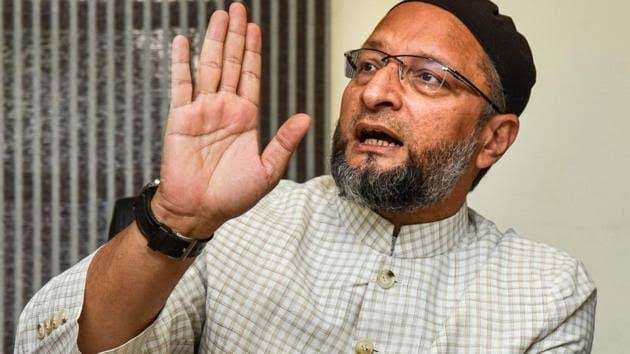
AIMIM president Asaduddin Owaisi has decried the proposed demolition of buildings at Mohammad Ali Jauhar University in Rampur, Uttar Pradesh, framing the issue as a significant attack on Muslim education. The alarm raised by Owaisi echoes broader concerns about the educational disparities faced by Muslims in the state, highlighting systemic inequalities amid rising political tensions under the BJP-led government.
Owaisi’s Condemnation of the Demolition
During a recent visit to Saharanpur, Asaduddin Owaisi criticized plans to demolish several buildings at the Mohammad Ali Jauhar University, asserting that such actions serve as a “direct assault on Muslim education.” He emphasized the importance of the university not just as an institution but as a symbol of educational progress for the Muslim community in Uttar Pradesh. Currently home to nearly 3,000 students, Owaisi warned that the demolition would jeopardize the educational futures of many young learners, urging authorities to resolve any legal or technical issues through less destructive means.
Educational Disparities and Their Implications
Owaisi highlighted troubling statistics regarding the educational attainment of Muslims in Uttar Pradesh. Despite making up approximately 19-20% of the state’s population, Muslims hold only 3.5-3.7% of graduate degrees, with a literacy rate estimated to be around 53-54%. This gap is exacerbated among Muslim women, who face disproportionately lower educational opportunities. The AIMIM leader’s comments shed light on the urgent need for systemic changes to improve literacy and educational attainment within the community, particularly as the political climate shifts under the state’s current governance.
The Political Landscape for Muslims in Uttar Pradesh
In the context of Uttar Pradesh’s upcoming Assembly elections, Owaisi articulated the AIMIM’s goal of establishing a more independent political voice for Muslims in the state. He referenced Dr. B.R. Ambedkar’s critiques of “silent legislators” to underline the importance of assertive and vocal representation. Owaisi’s push for political agency aims not only to address educational challenges but also to empower the Muslim community to engage more effectively in the political arena, ensuring their issues are recognized and addressed amidst an increasingly polarized landscape.
Why It Matters
The situation at Mohammad Ali Jauhar University reflects broader socio-political trends impacting the Muslim community in India. As policies and government actions increasingly marginalize certain groups, the implications extend beyond education into civil rights, economic stability, and social cohesion. The push towards demolitions not only risks erasing educational advancements but also perpetuates cycles of inequality in a country striving for inclusive growth. Understanding these dynamics is crucial for developers and users of AI technologies, especially those focused on data analytics, social behavior predictions, and community engagement platforms.
Frequently Asked Questions
What is the significance of the Mohammad Ali Jauhar University?
The university serves as a vital educational institution for the Muslim community in Uttar Pradesh, promoting access to higher education and contributing to community development.
How do educational statistics impact the Muslim community in Uttar Pradesh?
With Muslims comprising a significant portion of the population yet achieving low educational attainment, these disparities hinder economic opportunities, social mobility, and overall community development.
What role does AIMIM play in the political representation of Muslims?
AIMIM aims to provide a political platform for Muslims, advocating for their rights and priorities in a landscape dominated by other political parties. Their focus includes promoting education, civil rights, and community empowerment.
How does the current political climate affect Muslim civil rights?
The political environment under the BJP-led government has raised concerns about discrimination and exclusion of Muslims, impacting their civil rights and freedoms, and intensifying calls for greater representation and advocacy.