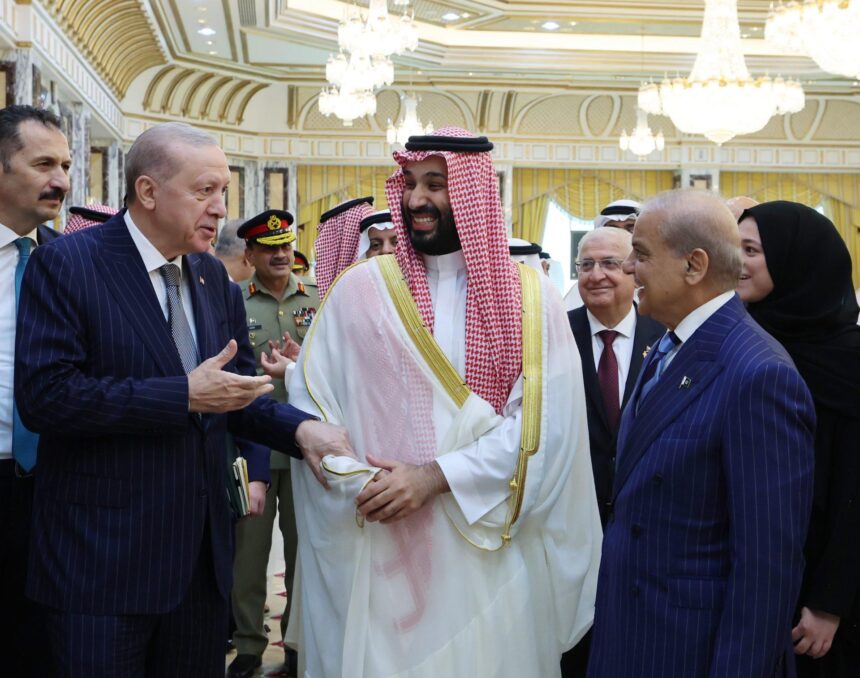

By Dr. Ansar Jamil
The recent Makkah Joint Defence Agreement, signed by Saudi Arabia, Turkiye, and Pakistan, rests upon a foundation of strategic ambiguity rather than explicit military commitment. While some observers label it as an “Islamic NATO,” the agreement’s nuanced design reflects a broader geopolitical reassessment within the region.
Understanding the Makkah Joint Defence Agreement
The Makkah Joint Defence Agreement, signed on 7 August, poses unanswered questions about military commitments, particularly regarding the nuclear deterrent capacity of Pakistan and whether Turkish or Pakistani forces would engage in direct conflict. This ambiguity is a key feature of the pact; it is a deliberate strategy that serves to deter potential adversaries by keeping them guessing about the exact obligations of the member states.
Unlike traditional alliance frameworks, the Makkah pact appears designed less for immediate operationalization and more for consolidating existing relationships between the three nations. Pakistan has historically benefitted from financial and military support from Saudi Arabia and Turkiye, and this agreement aims to enlarge and formalize these ties into a publicly acknowledged framework, increasing their deterrent value without necessarily committing to direct military action.
Geopolitical Context: Shifts in Global Power Dynamics
The signing of this pact cannot be disentangled from current global dynamics. As the United States finds itself overstretched with ongoing conflicts in Ukraine and Iran, its credibility as a regional security guarantor is being questioned. Gulf states, witnessing the effectiveness of American deterrence wane, are increasingly shifting towards diversifying their own security arrangements.
The recent diplomatic attempts by the U.S. have signaled a reluctance to engage fully in conflicts involving Israel and its regional neighbors. The disconnect has led Gulf nations to seek alternative alliances, which is a primary impetus for the Makkah pact. This realignment suggests a recasting of traditional security arrangements in favor of self-reliance among Middle Eastern states.
Regional Aspirations: Pakistan’s Strategic Maturity
From a regional perspective, the Makkah Joint Defence Agreement signifies a turning point for Pakistan. With recent tensions in its eastern border and a demonstrated capacity for military restraint on its western front, Islamabad is emerging as a credible actor on the geopolitical stage. Rather than escalating conflicts with ground troops, Pakistan has shown it can engage in diplomatic dialogues, even hosting U.S.–Iran talks while managing its military concerns.
This dual capability indicates a nuanced grasp of regional politics and military obligations—an essential trait for managing complex relationships within the Makkah pact. Furthermore, Pakistan’s collaboration with Turkiye and Saudi Arabia reflects a common interest in countering perceived threats while maintaining a flexible, non-committal diplomatic stance. These evolving dynamics also serve as a reminder of the necessity for collective security frameworks in an increasingly volatile environment.
Why It Matters
The Makkah Joint Defence Agreement underscores the shifting landscape of international relations wherein traditional power dynamics are being challenged. The ambiguity serves as both a stabilizing and destabilizing factor; while it can create a deterrent effect among adversaries, it also risks precipitating miscalculations where nations misinterpret one another’s intentions. For Pakistan, this pact represents a moment of strategic maturity that could facilitate broader regional cooperation. Nevertheless, the intricate balance of power and the reliance on ambiguous commitments could complicate future international engagements, particularly in relation to Iran.
Frequently Asked Questions
What is the Makkah Joint Defence Agreement?
The Makkah Joint Defence Agreement is a pact signed by Saudi Arabia, Turkiye, and Pakistan aimed at formalizing military cooperation and defense commitments among the three nations.
Why is ambiguity a significant feature of this agreement?
Ambiguity acts as a strategic deterrent, keeping potential adversaries uncertain about the specific obligations of member states, making it harder for them to plan countermeasures.
What impact does the agreement have on U.S. influence in the region?
The agreement indicates a potential decline in U.S. influence, as Gulf nations seek alternative security arrangements in light of perceived shortcomings in American support.
How does this pact affect the geopolitical landscape in South Asia?
The pact could shift power dynamics, as it encourages collaboration among key Muslim nations while allowing Pakistan to emerge more prominently as a regional player. However, direct involvement in South Asian conflicts remains unlikely.