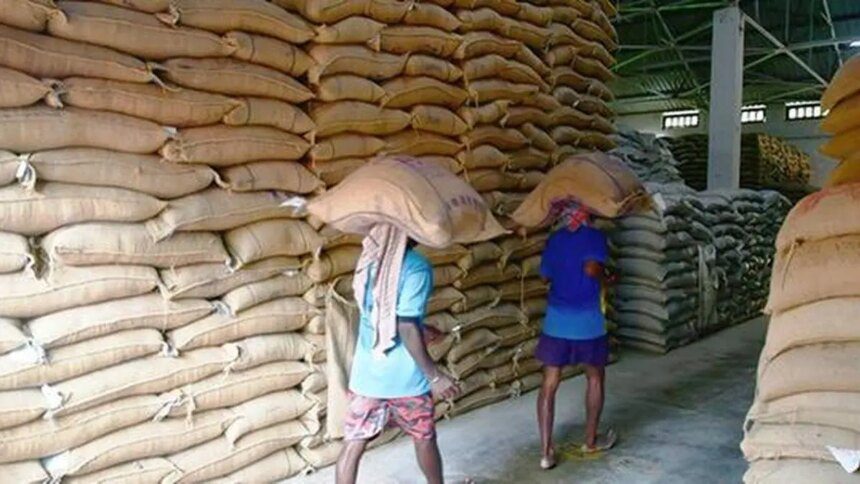

The Indian government is significantly increasing its supply of rice for ethanol production, reserving 72 lakh tonnes (lt) for distilleries and allocating an additional 55 lt of fully broken rice for market sale. This move aims to bolster the country’s biofuel sector and enhance self-sufficiency in energy sources, amidst a push towards higher blending targets to mitigate reliance on imported fossil fuels.
Government Initiatives to Boost Ethanol Production
The Indian Center has ramped up its support for grain-based ethanol production, which aligns with its broader sustainability goals. For the 2026-27 ethanol season, the Food Ministry has reserved 72 lt of rice, up from the previous allocation of 52 lt. This initiative is in response to the government’s mandate for oil marketing companies (OMCs) to procure ethanol, thereby promoting agricultural usage of surplus grain stocks.
The government is adopting various strategies to maintain a steady supply chain for ethanol. An additional allocation of 55 lt of 100 percent broken rice is being made available through e-auction, allowing ethanol producers the flexibly to procure raw materials at competitive rates. Such measures are expected to improve the profitability of biofuel production for distilleries, thereby fueling investment in sustainable energy.
Financial Implications for Stakeholders
The financial dynamics of this initiative are noteworthy. The fixed procurement pricing set at ₹58.5 per litre for ethanol from FCI rice and ₹64 for that from broken rice underscores a structured monetary framework to boost industry engagement. The ability of ethanol distillers to utilize FCI’s broken rice without restrictions offers a lucrative opportunity to enhance their production economics.
The government is also set to auction rice to state governments and community kitchens for ₹2,320 to ₹2,390 per quintal during July-October and later in the year, promising a price mechanism that could adapt to market conditions. However, national co-operatives have had allocations deferred, which may lead to temporary instability in market supply.
The Current Market Landscape and Future Trends
As India grapples with fluctuating agricultural outputs due to varying monsoon conditions, the shift towards grain-based ethanol provides a contingency buffer against potential shortfalls in sugarcane and maize supplies. The expected annual ethanol production is nearly 2,000 crore litres, with OMCs requiring approximately 1,050-1,100 crore litres to meet the 20 percent blending target.
In this context, the rice from central stocks represents a crucial mechanism to overcome supply disruptions. It allows for diversification in feedstock for ethanol production while ensuring resource optimization amid changing climatic conditions. This proactive strategy is indicative of a robust agricultural policy aimed not only at energy independence but also at bolstering rural economies linked to agriculture.
What This Means
The government’s enhanced focus on biofuel production demonstrates its intent to transition towards sustainable energy solutions while simultaneously supporting agricultural sectors. This policy shift not only paves the way for enhanced domestic ethanol production but also shows potential to stabilize rural economies as farmers may experience increased demand for their crops. Moreover, by ensuring a steady supply of biofuels, India moves closer to its climate commitments, reducing carbon footprints associated with fossil fuel consumption.
Frequently Asked Questions
What is the current ethanol blending target in India?
The current ethanol blending target in India is set at 20 percent, with ongoing evaluations for potential increases as the market matures.
How will the new rice allocations impact ethanol prices?
The new rice allocations are likely to stabilize the pricing of ethanol due to the consistent supply of raw materials, creating competitive pricing scenarios in the biofuel market.
When will the ethanol made from these rice allocations be available?
The ethanol produced from the newly allocated rice will be available in the 2026-27 supply year, specifically between November 2026 and October 2027.
How does this initiative affect farmers?
This initiative could positively impact farmers by creating additional demand for rice and ensuring better income, as food grains become valuable sources for biofuel production.