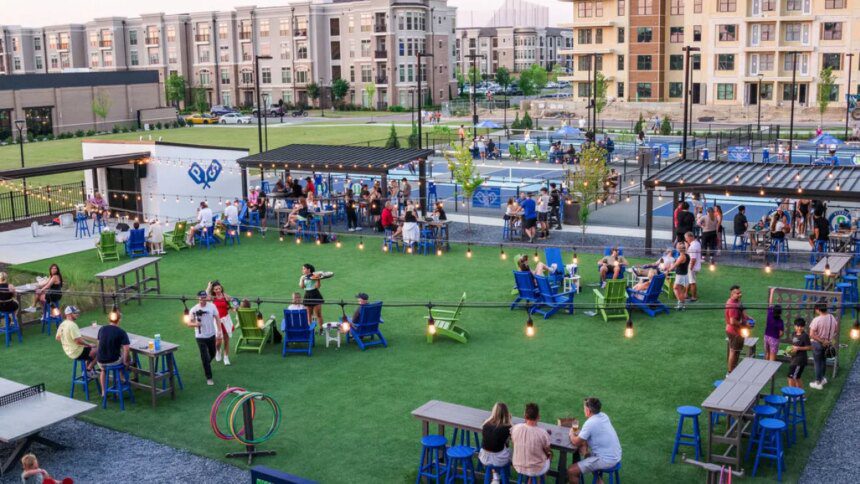

The Rise of Eatertainment: A New Business Model
In an evolving landscape that marries dining with entertainment, investors are increasingly favoring “eatertainment” concepts over traditional restaurants. Such venues, often featuring activities like pickleball, bowling, or other recreational sports, provide a more sustainable and engaging experience for consumers, while generating longer visitation times and increased revenue opportunities.
Innovative Uses of Space
As traditional retail continues to grapple with declines in foot traffic, eatertainment venues are filling the void by populating large, often abandoned spaces. Indoor pickleball facilities, for example, can occupy anywhere from 30,000 to 70,000 square feet, making them ideal candidates for repurposing defunct big-box retail locations. In India, as malls and departmental stores also face closures, such innovative repurposing could provide a viable solution for urban spaces lacking recreational options.
Jeff Lichtenstein, CEO of Echo Commercial Properties, notes that in regions with limited indoor sports facilities, such as parts of South Florida, pickleball venues draw consumers not just for the sport, but for the accompanying amenities and dining options. Given India’s booming urban population, similar venues could thrive in metropolitan areas, attracting families and communities looking for leisurely activities, especially during extreme weather conditions.
The Customer Experience Factor
Modern consumers increasingly seek value when dining out, and that extends beyond just food. According to a 2019 SevenRooms study, 21% of Americans are willing to spend more at eatertainment venues than at traditional restaurants. Maeve Webster, president of Menu Matters, points out that these venues offer more than meals—they create social experiences.
In India, where social dining has deep cultural roots, the introduction of eatertainment concepts could resonate well with families and friends looking for more than just a meal. With platforms like OpenTable reporting a nearly 46% rise in experiential dining, Indian entrepreneurs could explore similar avenues, merging culinary offerings with engaging activities that foster social connections.
Recurring Revenue Models
Private equity interest in these eatertainment venues is not merely speculative; investors are leaning into business models that emphasize recurring revenue streams. Monthly memberships in popular settings range from $75 to $149, offering discounts and perks. Bhasin, an industry expert, believes that such subscription models allow businesses to forecast revenues accurately, although affordability remains a concern.
In India, where the allure of recreational memberships like gym subscriptions or country clubs is significant, the adaptation of such models for the eatertainment segment may provide inclusivity while balancing business success with affordability for the average consumer. For Indian audience, this could mean more accessible leisure options, blending affordability with engagement.
What This Means
The growth of eatertainment in the West serves as an enlightening case study for Indian entrepreneurs. As the Indian economy continues to expand, with growing disposable incomes and changing consumer habits, there is ample opportunity for similar models. Investment in multifunctional venues could address urban space challenges and provide local communities with their long-sought-after experiences. Furthermore, as the demand for experiential options rises, stakeholders must find ways to keep these ventures financially accessible to a broader segment of the population.
Frequently Asked Questions
What is eatertainment?
Eatertainment refers to venues that combine dining with entertainment activities, offering guests a multifaceted experience that goes beyond food.
How does pickleball fit into eatertainment?
Pickleball, a racket sport, is incorporated into eatertainment models by providing a recreational activity that enhances the dining experience and draws in continuous foot traffic.
Why are investors interested in eatertainment venues?
Investors find eatertainment appealing due to the sustainable revenue streams created by activities that encourage guest longevity, coupled with the ability to repurpose large retail spaces.
How can these concepts be adapted in India?
Indian entrepreneurs can adapt eatertainment by integrating local cuisine with popular activities, thereby catering to family values and social dining traditions while capitalizing on current market trends.