
Summary
A harrowing incident in Beawar district, Rajasthan has brought to light the ongoing issues of communal violence and discrimination against Muslims in India. Three Muslim labourers were allegedly abducted and brutally assaulted by a group, highlighting the precarious situation for minority communities under current socio-political dynamics influenced by the ruling BJP and its affiliated organizations.
Details of the Incident
On June 28, three Muslim labourers—Sajid Khan, Junaid Khan, and Sahil—were reportedly kidnapped and tortured after completing a mechanical repair job at a mine owned by Muklesh Mali in Jhutha village. Upon requesting payment in the early hours, the workers were instead confronted by Mali and several accomplices who violently forced them into a vehicle.
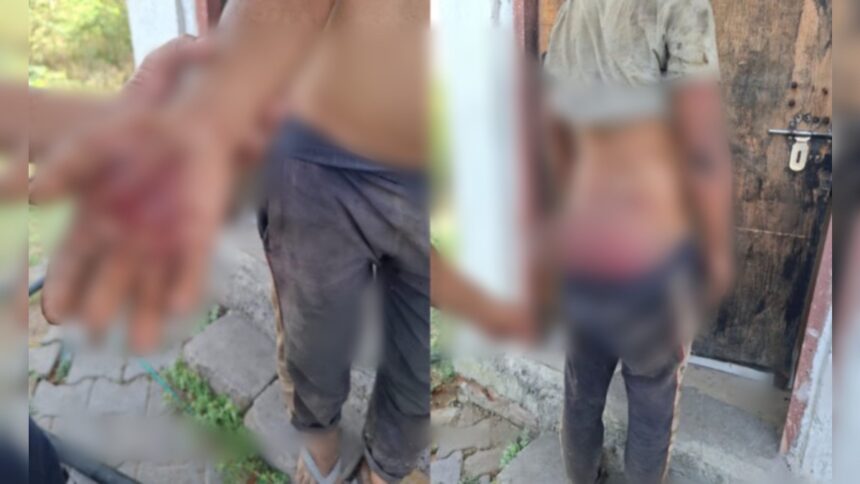
Once at a secluded location, the victims were subjected to severe physical abuse, during which the assailants made communal slurs and demanded that the men chant “Jai Shri Ram” at gunpoint. Junaid suffered significant injuries, including heavy bleeding, and the attackers went to the extent of destroying the victims’ mobile phones to thwart any chance of escape or seeking assistance. Accusations against the assailants included severe physical and sexual torture, necessitating urgent medical intervention.
Legal Action and Community Response
Following the brutality, an FIR was filed against the attackers, citing various charges under the Bharatiya Nyaya Sanhita, including unlawful assembly and kidnapping. While law enforcement has arrested three individuals, the primary accused, Muklesh Mali, remains at large. Victims reported initial negligence from police when they first approached authorities, raising alarms about potential systemic bias against Muslim communities.
The incident has garnered widespread condemnation from rights advocates, including Rahmat Kathat, a representative for the victims, who characterized the assault as an affront to humanity and a threat to societal harmony. This situation encapsulates broader issues where minority groups are often marginalized in societal narratives and, in this case, subjected to violence that reinforces existing communal divides.
The Broader Context
This incident is not an isolated case but part of a troubling trend observed in various regions of India, especially in areas administered by the BJP and its affiliates, which have been perceived as fostering an environment of intolerance. Reports of attacks on the Muslim community have increased, raising concerns regarding the government’s commitment to secularism and the protection of minority rights.
In a political landscape characterized by polarization, such acts of violence further alienate minority populations, impeding their socio-economic opportunities. They also stoke fears and mistrust, contradicting the principles of a democratic and multi-religious society. The implications for communal harmony in India are profound, as such violence can lead to long-lasting scars and divisions within society.
Why It Matters
The situation underscores critical issues regarding social justice and human rights within the Indian context. The treatment of Muslim minorities reflects broader disparities that can hinder social cohesion and economic opportunity. For an increasingly aware global audience, such incidents serve as important markers of how governance and societal acceptance can directly affect the lives of marginalized communities. This scenario invites scrutiny of the accountability mechanisms available in a democratic state and underscores the need for robust legal frameworks to protect victims of communal violence.
Frequently Asked Questions
What happened to the three Muslim labourers in Rajasthan?
They were abducted, brutally assaulted, and forced to chant religious slogans at gunpoint after demanding payment for work they had completed at a mine.
Who is responsible for the attack on these labourers?
The primary accused is Muklesh Mali, who allegedly orchestrated the kidnapping along with several accomplices. Some individuals have been arrested, but he remains at large.
What laws have been invoked against the accused in this case?
The accused face charges under multiple sections of the Bharatiya Nyaya Sanhita, including unlawful assembly and kidnapping.
What has been the community’s response to this incident?
The attack has drawn strong condemnation from rights advocates, who view it as a serious violation of human rights and a threat to communal harmony in India.