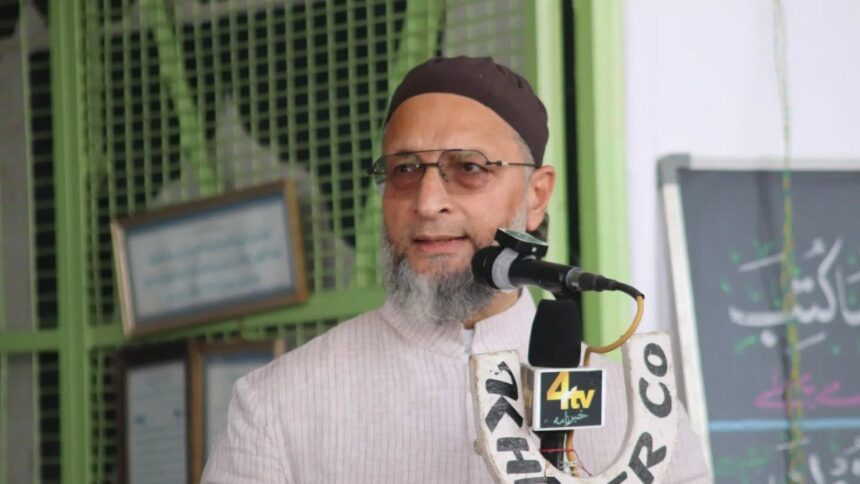

The proposed demolition of buildings at Mohammad Ali Jauhar University in Rampur, Uttar Pradesh, has sparked criticism from AIMIM president Asaduddin Owaisi, who calls it an attack on Muslim education. Owaisi emphasizes that this move affects not just an educational institution, but the broader educational advancement of the Muslim community.
Context of the Demolition Proposal
AIMIM president and Hyderabad MP Asaduddin Owaisi publicly condemned the demolition proposal during a visit to Saharanpur. He argues that the move reflects a concerning trend impacting educational institutions that serve the Muslim community. Owaisi contends that with Muslims constituting approximately 19–20% of Uttar Pradesh’s population, their representation in higher education is disproportionately low, with only around 3.5–3.7% achieving graduate status. The implications of demolishing university buildings extend far beyond the physical structures, threatening to curtail access to education for thousands of students.
Disparities in Educational Outcomes
Owaisi highlighted alarming educational disparities facing Muslims in Uttar Pradesh. He noted that the literacy rate among Muslims hovers around 53–54%, indicating significant barriers to educational achievement, particularly for Muslim women, who experience even lower literacy rates. The AIMIM president firmly stated that the demolition of Jauhar University buildings would adversely impact the future of about 3,000 currently enrolled students. He advocates for the resolution of any alleged legal or technical irregularities through processes like regularization rather than resorting to demolition, which he views as a step backward for the community’s educational prospects.
Political Implications for Uttar Pradesh
In addition to his concerns about the university, Owaisi addressed the upcoming Uttar Pradesh Assembly elections. He expressed that the AIMIM’s objective is to facilitate the formation of an independent political identity within the Muslim community, enhancing representation and enabling elected officials to advocate for issues that directly affect them. In referencing Dr. B.R. Ambedkar’s insights on the role of legislators, Owaisi underscored the importance of vocal representation in contemporary politics, implying that silence in governance equates to ignoring the community’s needs.
Why It Matters
The situation surrounding the demolition of Mohammad Ali Jauhar University underscores broader trends of discrimination and marginalization faced by Indian Muslims. Such actions not only threaten educational institutions but also highlight systemic inequalities in access to education. These disparities further perpetuate economic and social exclusion, making it difficult for Muslims to achieve parity in Indian society. The growing scrutiny on these actions reflects a critical moment in India’s political landscape, with potential ramifications for communal relations and democratic representation.
Frequently Asked Questions
What is Mohammad Ali Jauhar University?
Mohammad Ali Jauhar University is a higher education institution located in Rampur, Uttar Pradesh, dedicated to providing educational opportunities primarily for the Muslim community.
Why is the demolition of university buildings controversial?
The proposed demolition is viewed as a direct attack on Muslim education, potentially affecting the academic futures of thousands of students and reflecting broader issues of discrimination and marginalization.
What are the current educational statistics for Muslims in Uttar Pradesh?
Around 19-20% of Uttar Pradesh’s population is Muslim, yet only approximately 3.5-3.7% of this demographic are graduates, with a literacy rate of 53-54% overall, which is lower for Muslim women.
What are the political objectives of Asaduddin Owaisi and the AIMIM in Uttar Pradesh?
Owaisi and the AIMIM aim to empower the Muslim community by fostering an independent political identity, advocating for their rights, and promoting issues that affect their welfare ahead of the upcoming assembly elections.