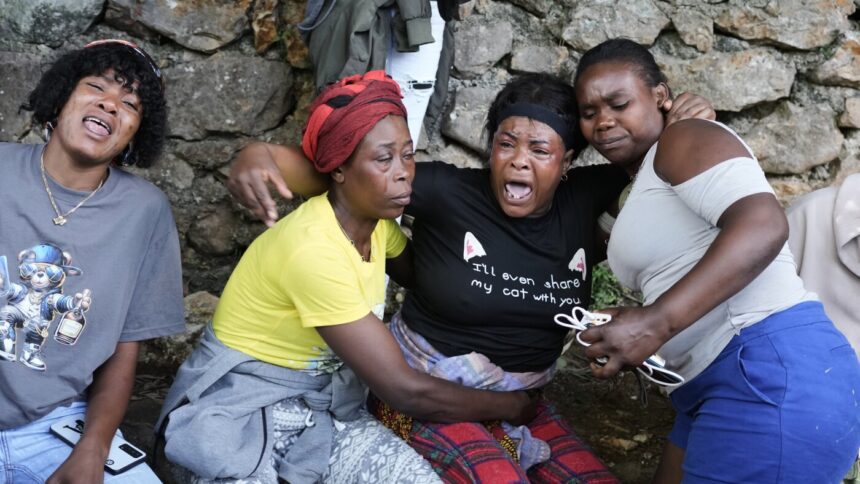

In a shocking display of escalating violence, at least 47 people were killed and over 50 kidnapped in a gang attack in Kenscoff, a community near Port-au-Prince, Haiti. The United Nations characterized this as one of the largest mass kidnappings in recent years, highlighting the dire security situation in the nation.
The Attack in Kenscoff: A Dire Situation Unfolds
This brutal assault on Sunday has shattered the hope that security conditions in Haiti were improving. The attack saw armed gangs targeting a once-safe neighborhood, leading to widespread panic and despair among the residents. Romain Le Cour, head of the Haiti Observatory at the Global Initiative Against Transnational Organized Crime, described the incident as a significant political and security test for the Haitian government and its allies.
Marc Paul, a resident who witnessed the horror, shared his traumatic experience, which included fleeing past the dead bodies of his neighbors. As gangs continue to exert authority, they contribute to the growing perception that the government and police can’t protect their citizens.
Threats and Hostage Situations Escalate
The gravity of the situation is compounded by threats made by gang leaders against hostages. A gang member identifying himself as Izo 2 has openly threatened to kill captives if any gang members are harmed during police efforts to regain control. This grim ultimatum underlines the precarious nature of negotiations between authorities and criminal elements.
Kenscoff has suffered recurrent gang violence, with this latest incident being the deadliest yet. The United Nations reported that some of the victims sought refuge in a church compound, only to be executed there—a chilling reminder of the lengths gangs will go to assert their dominance.
Government Responses and Public Outcry
The Haitian government faces mounting criticism for its handling of security in Kenscoff and across the country. People are increasingly voicing their disbelief over claims of a protective police presence in the area, especially since the attack went largely unchallenged by security forces. In response to public pressure, Haiti’s National Police has initiated an investigation to ascertain the circumstances surrounding the attack, focusing on potential negligence or complicity.
Haitian officials have acknowledged that gangs now control around 70% of Port-au-Prince, greatly exacerbating the public’s safety concerns. A striking 1.5 million people have been displaced due to the ongoing violence, leading to a community fractured by fear and desperation.
Why This Is Trending
This situation has gained attention in India and globally, highlighting the increasing volatility in regions once considered stable. Indians, particularly those interested in international affairs, have become conscious of the alarming rise in global gang violence and its humanitarian implications. As news of the gang attack spreads, it raises questions on the international community’s role in supporting nations grappling with internal conflicts.
Frequently Asked Questions
What led to the attack in Kenscoff?
The attack was perpetrated by armed gangs during a period of escalating violence in Haiti, particularly as they sought to expand their territory and control over strategic regions.
What is the status of the kidnapped individuals?
As of now, more than 50 individuals remain kidnapped, and the gang leader has threatened their lives if any gang members are harmed during police operations.
What is the Haitian government’s response to the violence?
The Haitian government has ordered an investigation to determine the circumstances of the attack while also deploying additional police units to affected areas to enhance security.
How does this situation affect regional security?
The growing power of gangs in Haiti poses a significant challenge not only for national stability but also for broader regional security, emphasizing the need for international intervention and support.