
Summary
In a recent incident in Mumbai’s Parel area, three Muslim individuals were booked following a communal clash during the Milad-un-Nabi procession, which took place in a predominantly Hindu neighborhood. The event escalated from an exchange of slogans into a violent altercation, highlighting ongoing tensions and social exclusion affecting the Muslim community in India.
Details of the Incident
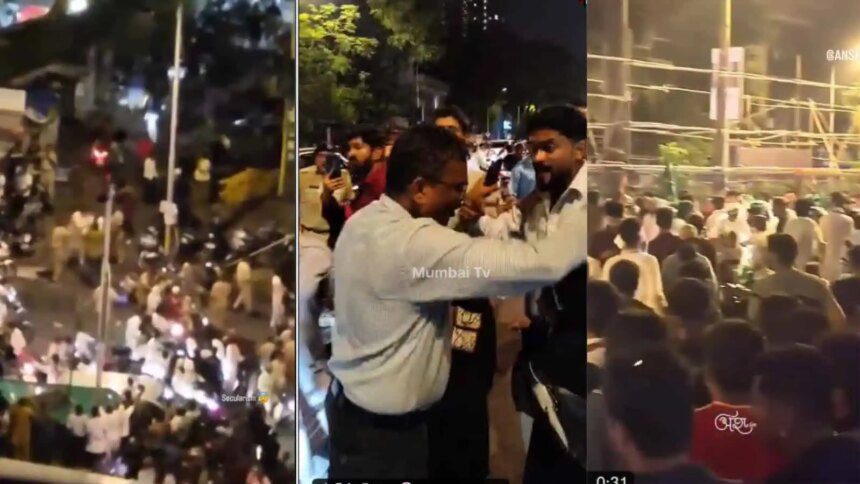
The clash occurred on Wednesday night, August 26, when a procession celebrating Milad-un-Nabi, the Prophet Muhammad’s birthday, went through an area known for its Hindu majority. Authorities reported that three young men—Rehan Masood Sayyad, Adil Khan Ahmed Khan, both aged 19, and Miraj Mohammad Firoz Rais, 18—have been booked in connection with the violence. A manhunt is currently underway to capture these individuals and to identify others involved in the incident.
According to police statements, the clash may have been incited by an exchange of slogans, leading to a verbal dispute that escalated into physical confrontation. Local media reported that the two groups resorted to stone-pelting, and videos surfaced showing law enforcement using lathis to disperse the participants. Eyewitness accounts reveal that while the Hindu group alleged that the Muslim procession participants instigated the clash by entering their territory, Muslims asserted that their religious ceremony was disrespected by onlookers.
The Role of Social Media
In addition to the physical confrontation, the role of social media played a significant part in the aftermath of the events. Far-right accounts posted videos detailing the treatment of Muslim individuals following the clash. In one disturbing clip, two young men were allegedly forced to apologize and perform demeaning acts while being compelled to chant “Jai Shri Ram,” a slogan commonly associated with Hindutva ideologies. Such displays raise concerns about the normalization of public humiliation and harassment against minority communities in India.
The prevalence of these videos can contribute to increasing polarization within society, as each community shares its narrative, thus fueling ongoing conflicts. Reports indicate that social media platforms have become a battleground for the contestation of communal identities, further deepening the sense of exclusion experienced by minorities, particularly Muslims.
Community and Government Response
The government response to incidents like these has further raised concerns among Muslim communities regarding safety and fair treatment. Authorities have urged caution against spreading misinformation on social media while investigating the specific triggers of such communal clashes. However, historical patterns have shown that the interests of minority communities are often overshadowed by majoritarian narratives.
Muslim community leaders and activists have expressed their alarm regarding increased marginalization and discrimination. They argue that the current political climate, heavily influenced by the ideologies of the BJP and associated organizations, has fostered an environment where communal violence is more likely. As tensions rise, they call for urgent action to promote dialogue and peace-building efforts to address underlying grievances.
Why It Matters
The events in Mumbai are emblematic of broader trends in India, where the marginalization of Muslim communities has become more pronounced. This not only impacts the social fabric of the nation but also affects economic opportunities, as social exclusion can limit access to jobs and education for minorities. For developers and users in the AI industry, understanding these socio-political dynamics is crucial for creating algorithms and platforms that are inclusive and mitigate biases. AI can play a role in addressing discrimination if it is designed with an awareness of such complexities and the need for equitable representation.
Frequently Asked Questions
What triggered the communal clash in Mumbai?
The clash reportedly began as an exchange of slogans between two groups during the Milad-un-Nabi procession, escalating into verbal disputes and physical confrontations.
Who were involved in the conflict?
Three individuals, all young Muslims, have been booked by the police. Authorities are also conducting a manhunt for additional suspects involved in the altercation.
How has social media influenced the situation?
Social media has become a platform for both communities to share their narratives. Videos posted online have circulated widely, contributing to polarization and potentially fueling further tensions in society.
What is the government doing about the situation?
Authorities are investigating the clash while cautioning against misinformation on social media. However, community leaders express concerns about systemic marginalization and demand more proactive measures from the government to ensure safety and justice.