
Summary
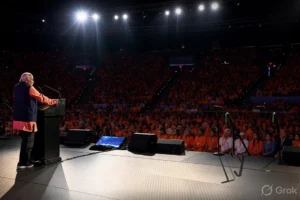
The recent speech by RSS chief Mohan Bhagwat in New York, asserting that anyone who opposes the presence of Muslims in India is not truly Hindu, has drawn sharp criticism from opposition parties in India. They have labeled his remarks as hypocritical, questioning why such statements were made abroad instead of addressing communal tensions within India.
Critique from Political Leaders
The speech occurred during the ‘One World, One Humanity’ conference and was intended to promote Hindu-Muslim harmony. However, several leaders from opposition parties quickly condemned Bhagwat’s statements. Sanjay Raut of Shiv Sena (UBT) emphasized that Bhagwat should voice such sentiments in India rather than the U.S., deeming it contradictory and termed “dhong” (hypocrisy) in Hinduism. Raut added, “You speak another thing in India, and speak quite differently when there is a protest against you in New York.”
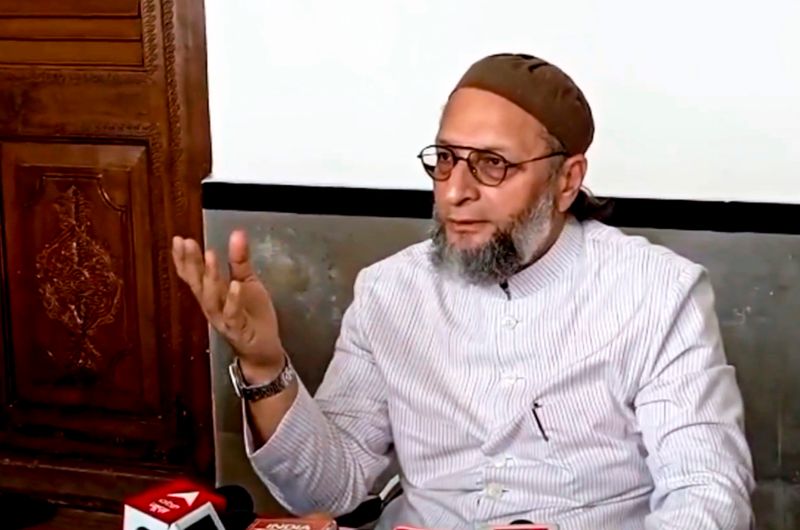
Asaduddin Owaisi, the chief of AIMIM, criticized the duality of RSS narratives, suggesting that Bhagwat’s audience in America is juxtaposed against the realities faced by Muslims in India, especially recalling communal riots in Gujarat. He accused the RSS of using rhetoric that caters to global perceptions while neglecting the lived realities of marginalized communities in India. Owaisi stated, “This is the oldest trick in the RSS playbook: some words are for the world, and some are for its own members.”
Responses to Addressing Communal Politics
Aligning with the criticism, AAP leader Saurabh Bhardwaj called for Bhagwat to direct his message towards Indian leaders who engage in communal rhetoric. He pointed out that figures such as Anurag Thakur and Yogi Adityanath frequently make statements that incite division between Hindus and Muslims. Bhardwaj challenged Bhagwat to bring his message of unity to the political figures that often promote discord in India.
RJD MP Manoj Jha echoed similar sentiments, questioning the timing and location of Bhagwat’s remarks, which seem to diverge from the reality of anti-Muslim sentiments in Indian politics. He urged Bhagwat to maintain consistency in his message when dealing with communal tensions abroad and at home.
Protests Reflecting Public Sentiment
Outside the Madison Square Garden event, protesters rallied with slogans such as “The RSS has got to go,” showcasing public disapproval of the organization deemed responsible for promoting division within Indian society. This event was part of a broader global outreach by the RSS, marking its centenary celebration and including engagements in Canada and the UK.
Many observers are questioning the contradiction of advocating for harmony abroad while various reports and analyses indicate a systematic marginalization of Muslims within India. Rajya Sabha member Sagarika Ghose of TMC highlighted this hypocrisy, stating, “The sheer hypocrisy and duplicitousness of it all.” She pointed towards the RSS’s campaign against liberal democracy and individual freedoms in India while preaching harmony in liberal democracies abroad.
Why It Matters
The reactions to Bhagwat’s speech serve as a reflection of the ongoing tensions between the ruling BJP government and various minority communities in India, particularly Muslims. These controversies illustrate a broader pattern of social and economic marginalization that has implications for India’s democratic integrity. Understanding the dynamics at play is crucial not only for Indian citizens but also for the international community monitoring developments in human rights and communal harmony in one of the world’s largest democracies. The dichotomy of rhetoric abroad versus actions at home emphasizes the need for accountability and consistency in leadership.
Frequently Asked Questions
What was the main message of Mohan Bhagwat’s speech?
Bhagwat stated that anyone who believes there should be no Muslims in Bharat (India) is not a true Hindu, promoting the idea of coexistence.
Why were opposition leaders critical of Bhagwat’s remarks?
Opposition leaders criticized Bhagwat for making such statements in the U.S. rather than addressing communal tensions directly in India, labeling his remarks as hypocritical.
What historical context did critics provide regarding the RSS?
Critics referenced historical events, particularly communal riots such as those in Gujarat, to highlight the dissonance between Bhagwat’s words and the RSS’s actions in India.
What impact do these events have on Indian society?
These events exacerbate tensions between communities and raise concerns regarding the erosion of democratic values and individual rights for minority groups in India.