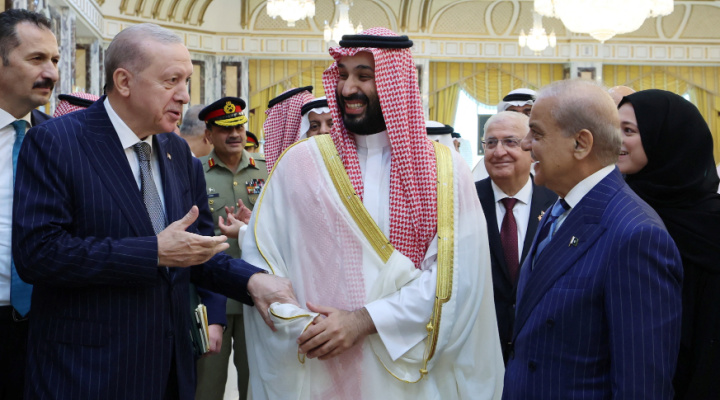

Saudi-Turkish-Pakistani Defense Pact Raises Concerns for Israel
A newly signed defense agreement among Saudi Arabia, Turkey, and Pakistan, dubbed the “Muslim NATO,” has generated significant apprehension within Israeli circles. Senior officials have described the pact as a military alliance aimed at Israel, though experts suggest it may be more declarative than substantive, signaling the complexities of regional geopolitics.
Details of the Pact
The joint defense agreement was finalized in Mecca on August 7, 2026, stipulating that an armed attack on any one of the three nations would be regarded as an aggressor act against all members. The pact outlines plans for enhanced political and military collaboration, joint exercises, and expanded defensive cooperation. Despite assurances from the signatories that the pact is defensive and not targeted at any single country, concerns about Iranian threats have emerged as a driving force behind this collaboration.
Reactions from Israeli Officials
Israeli officials have expressed notable alarm regarding the implications of this new alliance. A senior official remarked that the pact specifically targets Israel, highlighting a perceived deterioration in Israel’s standing in the region. Yisrael Beytenu leader Avigdor Liberman criticized the agreement as evidence of Israel’s weakening regional influence, which he attributes to the current government’s policies under Benjamin Netanyahu.
Expert Perspectives on the Pact’s Impact
Prof. Eitan Shamir, director of the Begin-Sadat Center for Strategic Studies, offered a guarded assessment, emphasizing that, while the pact may generate concern, it does not currently pose an immediate threat to Israel. He describes the agreement as “more declarative than substantive,” akin to past agreements made by Arab states that had minimal practical impact. Asher Fredman, from the Misgav Institute for National Security, concurs, noting that existing defense agreements have yet to effectively deter Iranian aggression.
Why It Matters
The implications of the Saudi-Turkish-Pakistani pact extend beyond immediate military considerations. It reflects a shift in regional alliances that may reshape security dynamics, particularly in the context of U.S. influence. Both Shamir and Fredman highlight that this agreement serves as a signal to the United States, indicating that regional players may seek alternative security arrangements if perceived U.S. protection falters. As regional threats evolve, so too do the strategies employed by nations navigating the complex web of alliances.
Frequently Asked Questions
What is the “Muslim NATO” pact?
The “Muslim NATO” pact refers to a joint defense agreement signed by Saudi Arabia, Turkey, and Pakistan, committing them to mutual defense and increased military cooperation.
Why are Israeli officials concerned about this pact?
Israeli officials are concerned that the pact is aimed at countering Israeli influence in the region, viewing it as a potential threat to their national security.
What are the main objectives of the pact?
The pact aims to provide mutual military support in the event of an attack against any of the member countries and to enhance political and military coordination among them.
Will the pact lead to immediate military actions against Iran?
Experts believe that, while the agreement is concerning, it is unlikely to result in immediate military confrontations with Iran, as the interests of the member countries are not fully aligned.