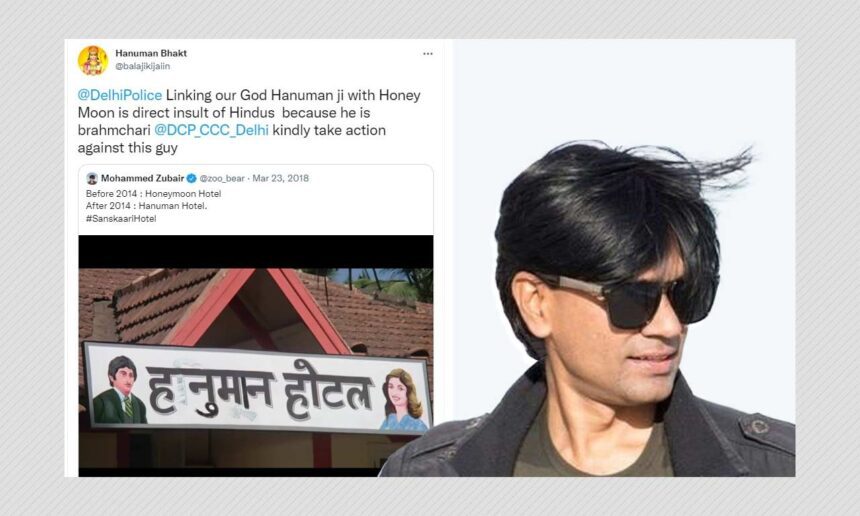

The recent arrest of Mohammed Zubair, co-founder of Alt News, has stirred significant controversy in India, centered around allegations of “hurting religious sentiments.” Following his arrest, a Twitter account named @balajikijaiin, which filed the complaint against Zubair, gained attention due to its suspicious activity and alleged connections to right-wing groups. This situation raises questions about the authenticity of online accounts and their roles in political disputes in India.
Background on Mohammed Zubair’s Arrest
Mohammed Zubair was arrested by the Delhi police after a complaint was filed against him by an anonymous Twitter user, which claimed that his 2018 tweet “hurt religious sentiments.” This tweet referred to a signboard changed from “Honeymoon Hotel” to “Hanuman Hotel,” a humoristic reference from a 1983 film. Despite the innocence of the joke, it incited a strong reaction from specific online communities.
Following Zubair’s arrest, the account @balajikijaiin, which had very few prior interactions and followers, suddenly became more active, thus raising questions about its motives and authenticity. The account’s sudden rise seemed orchestrated, given its history of inactivity and minimal engagement prior to the incident.
The Mysterious Twitter Handle
The @balajikijaiin account, created on October 19, 2021, only became active after the complaint against Zubair. Initially, it had only two followers and one tweet—suggesting it might be a sock-puppet account. However, after filing the complaint, its activity increased significantly, reaching over 1500 followers in just a few days.
Critics have pointed out that the account began to follow numerous journalists and political figures across both ends of the spectrum, which some interpret as an attempt to obscure its political leanings. This tactic raises questions about who operates such accounts and what agenda they pursue in the politically charged atmosphere of Indian social media.
Links to Right-Wing Groups
An investigation by political commentator Saket Gokhale revealed further connections between the @balajikijaiin account and right-wing entities. Gokhale noted that the account liked a tweet from Signpost India, a marketing agency with links to BJP’s digital strategies during elections.
The same office address for Signpost India was associated with social media firms linked to the BJP, which led to speculations about the account being part of a larger agenda to silence dissenting voices online. This revelation casts doubt on the legitimacy of the complaint against Zubair and raises alarms about the manipulation of social media platforms to influence political narratives.
Why This Matters
The incident surrounding Zubair’s arrest and the subsequent activities of @balajikijaiin highlight the ongoing struggle for credibility and freedom of expression in India. With social media becoming a battleground for political confrontations, the authenticity of accounts becomes pivotal. Citizens are increasingly calling for transparency regarding anonymously run accounts that can incite legal actions against individuals for seemingly trivial social media interactions. This case illustrates the fine balance between protecting religious sentiment and stifling freedom of speech—a core democratic value. Moreover, the implications of coordinated online harassment through fake accounts present a pressing concern rooted in larger discussions about social media governance.
Frequently Asked Questions
What was Mohammed Zubair arrested for?
Mohammed Zubair was arrested for allegedly “hurting religious sentiments” due to a 2018 tweet that referenced a humorous film scene about a signboard change from ‘Honeymoon Hotel’ to ‘Hanuman Hotel.’
Who is behind the account @balajikijaiin?
The true identity behind the @balajikijaiin account remains unclear, but it has been linked to right-wing political agendas and has shown suspicious activity following Zubair’s arrest.
Why is this incident significant for free speech in India?
This incident raises concerns about the abuse of legal processes to suppress free speech. It highlights how social media can be used as a tool for political maneuvering and silencing dissenting voices.
What does this case tell us about social media in India?
The case underscores the challenges posed by fake accounts and coordinated attacks on individuals for their online activities. It emphasizes the need for greater transparency and accountability in the digital realm.