
Muslims in Madhya Pradesh Face Ongoing Challenges in Exercising Religious Freedoms
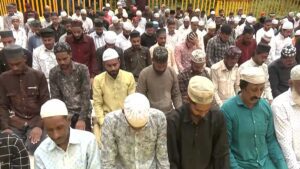
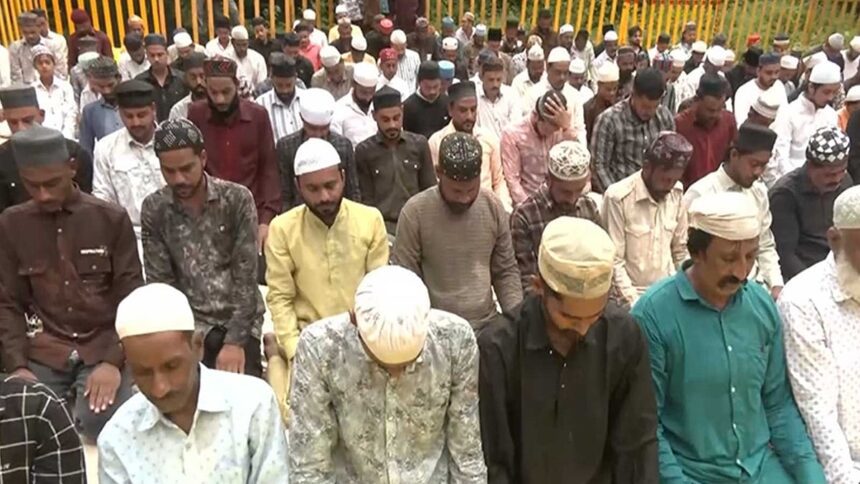
In a significant yet contentious development, around 150 Muslim men were allowed to perform Friday namaz on government land adjacent to the Bhojshala complex in Dhar, Madhya Pradesh. This marks the first such prayer following a ruling by the Madhya Pradesh High Court in May designating the site as a Saraswati Temple, illustrating the complex interplay between religious practices and legal decisions in the region.
Recent Legal Developments and Public Response
On May 15, the Madhya Pradesh High Court ruled that the Bhojshala complex, which is a protected monument by the Archaeological Survey of India (ASI), is a Saraswati Temple. This decision has sparked significant tensions, as it affects the ability of Muslims to observe their Friday prayers at the site, traditionally contested by both religious groups.
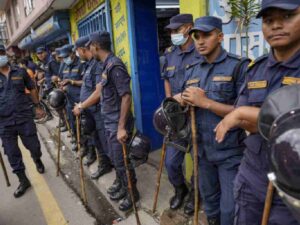
Following this ruling, a Supreme Court directive allowed Muslims to offer prayers on Khasra Number 612, a piece of unused government land nearby. Dhar’s Sub-Divisional Magistrate Rajkumar Haldhar confirmed that the prayer was conducted under secure conditions, emphasizing the court’s role in facilitating religious observance. However, residents of the neighboring Vikram Nagar locality expressed opposition, falsely claiming ownership of the land and raising concerns about the administration’s decision. Haldhar dismissed their claims, reiterating that it is government property.
Previous Court Orders and Ongoing Disputes
The legal battle has been complex, with the Supreme Court previously ordering the state government to provide an open space for Friday prayers until the case is resolved. On July 14, tensions escalated as the Muslim community alleged that the administration proposed a site 1.3 kilometers away from the Bhojshala complex, complicating their ability to freely worship. The recent Supreme Court ruling on Thursday reaffirmed the rights of Muslims to offer prayers at the dargah adjacent to the disputed complex, yet stopped short of restoring previous arrangements, illustrating the ongoing nature of this religious dispute.
The court’s decision illustrates broader societal challenges, as it attempts to mediate between differing community claims and historical grievances. The situation reflects a wider context where both historical insecurity and ongoing discrimination against Muslim communities in India continue to manifest publicly and legally.
Religious and Social Ramifications
This ongoing situation reflects not just a localized grievance but a national discourse about religious freedoms and community relations in India. The tensions surrounding the Bhojshala complex highlight how historical claims can complicate contemporary religious practices, as well as the role of state and judicial systems in mediating these disputes. Such cases contribute to a growing narrative of marginalization faced by Muslim communities in the country, exacerbated by a political climate characterized by rising Hindu nationalism.
As religious practices often intersect with community identity, the restrictions faced by Muslims seeking to observe their rituals serve to underline broader societal divisions. Each ruling or administrative decision acts as a potential flashpoint for further discord, reflecting deep-seated issues of discrimination, social exclusion, and economic boycotts against Muslim populations.
Why It Matters
The ongoing situation in Madhya Pradesh serves as a microcosm of the complexities involved in freedom of worship in India. Legal rulings affecting religious practices can set precedents that influence similar cases nationwide. This case highlights the importance of protecting minority rights and ensuring equitable access to religious observances. For AI developers and users, these developments underscore the necessity to create technologies that promote inclusivity and equality, particularly in environments fraught with social tensions.
Frequently Asked Questions
What is the significance of the Bhojshala complex?
The Bhojshala complex is a historical site that has been subject to legal disputes regarding its designation as either a temple or a mosque, reflecting broader religious and communal tensions in India.
What did the Supreme Court rule recently regarding Friday prayers?
The Supreme Court permitted Muslim worshippers to conduct Friday prayers on government land adjacent to the Bhojshala complex, while ensuring that prayers are held between 1 pm and 3 pm under police supervision.
Why were local residents opposed to the recent Muslim prayers?
Residents from the neighboring Vikram Nagar locality opposed the decision, claiming ownership of the land where the prayers were held, despite the land being designated as government property by the authorities.
How have previous legal rulings impacted the situation?
Previous rulings by the Supreme Court directed the Madhya Pradesh government to ensure Muslims could access areas for prayers, although compliance issues have arisen, leading to disputes over the adequacy of the provided spaces.