
Opposition Grows to RSS Chief Bhagwat’s Visit to New York
The planned appearance of Mohan Bhagwat, the chief of the Rashtriya Swayamsevak Sangh (RSS), in New York has sparked significant backlash from a coalition of religious and civil rights organizations. This controversy, centering on themes of Hindu nationalism, minority rights, and the political implications of Bhagwat’s message, underscores the complexities surrounding attempts to present such ideologies as “universal”.
Local and Federal Backlash Against Hindu Nationalism
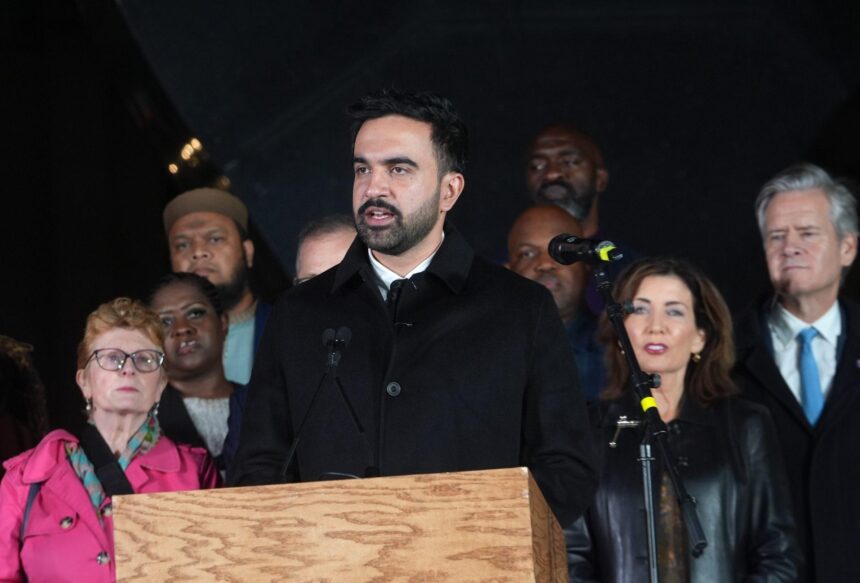
The event, scheduled to take place at Madison Square Garden and marketed as a “Universal Oneness Celebration,” has drawn strong opposition from various political figures and organizations. New York Mayor Zohran Mamdani has expressed his disapproval, labeling the RSS’s vision as “exclusionary” and misaligned with the pluralistic ideals of India. He noted that while he might not have the authority to cancel a private gathering, his stance reflects a larger concern about the venue being used to promote Hindu nationalism.
Groups including the Indian American Muslim Council and the Sikh Council of New York have echoed the mayor’s concerns, urging public figures to condemn Bhagwat’s appearance. Critics argue that such an event risks legitimizing an ideology known for contributing to the marginalization of various religious minorities within India.
The US Commission on International Religious Freedom’s Intervention
The criticism has extended to the federal level, with the US Commission on International Religious Freedom (USCIRF) urging the revocation of Bhagwat’s US visa and calling for targeted sanctions against RSS members linked to religious-freedom violations. This intervention speaks to broader issues—ensuring that individuals or organizations promoting ideologies perceived as harmful to religious freedom do not find refuge in international platforms.
The USCIRF has voiced ongoing concerns regarding the state of religious minorities in India. While its recommendations are non-binding, the commission’s attention to Bhagwat’s visit highlights the intersection of international human rights advocacy and domestic politics, particularly concerning the treatment of minorities in India.
Historical Context of RSS Ideology
The backlash against Bhagwat’s appearance is rooted in historical perspectives on the RSS’s ideology. Scholars have pointed out similarities between the RSS’s core principles and early European fascist movements, especially regarding its emphasis on cultural and national homogeneity. Political scientist Christophe Jaffrelot has indicated that while the RSS displays a “fascistic dimension,” it represents a unique form of Indian anti-liberal nationalism.
This complicated ideological history raises more profound questions about the legitimacy of promoting Hindu nationalism on global platforms. Opponents argue that identifying and critiquing these ideological underpinnings is crucial to ensuring that they are not presented deceptively as mere cultural expressions of religious harmony.
Why It Matters
The controversy surrounding Bhagwat’s event in New York speaks volumes about the global implications of local ideologies. As organizations like the USCIRF intervene, the situation illustrates how domestic issues in India can reverberate on an international scale. This case serves to highlight the significance of safeguarding religious pluralism and human rights across borders. It becomes imperative for developers, particularly in the AI space, to be aware of the potential for ideological biases and discrimination manifesting through technology, which can further marginalize vulnerable communities.
Frequently Asked Questions
What is the RSS and why is it controversial?
The Rashtriya Swayamsevak Sangh (RSS) is a Hindu nationalist organization associated with India’s ruling Bharatiya Janata Party (BJP). It is controversial due to its perceived ties to the marginalization of religious minorities in India and its promotion of a Hindu majoritarian ideology.
Why is Mohan Bhagwat’s visit significant?
Bhagwat’s visit to New York has ignited discussions about the representation of Hindu nationalism in an international context. Critics argue that it could legitimize exclusionary ideologies that threaten religious pluralism.
What has the US government said about the RSS?
The US Commission on International Religious Freedom has called for sanctions against RSS members and has urged the revocation of Bhagwat’s US visa, citing concerns over religious freedom violations in India.
How are Indian diaspora communities reacting?
Responses within the Indian diaspora are mixed, with some organizations defending Bhagwat and accusing critics of anti-Hindu bias, while others express concern over the ideological implications of his visit.