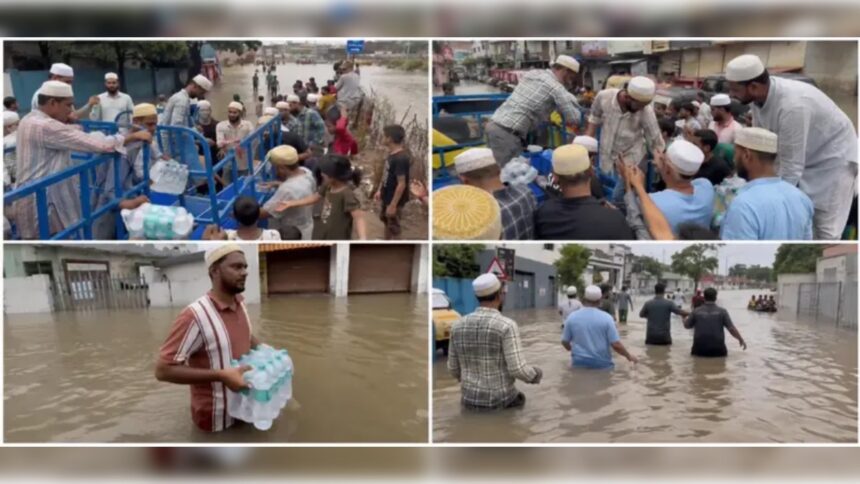

Recent devastating floods in Gujarat have showcased the vital role of Muslim youths and community organizations in rescue and relief operations, revealing a context of communal resilience amid political and social tensions. While the crisis has affected thousands, it has also highlighted the need for solidarity across communal lines, especially as the state grapples with ongoing issues of marginalization.
The Impact of the Floods in Gujarat
In the wake of heavy rains and floods, Gujarat has suffered significant loss, with 23 fatalities reported and the city of Surat receiving a staggering 358 mm of rainfall in just 24 hours. This deluge has resulted in widespread flooding that has displaced thousands of residents. Government figures indicate that over 3,400 individuals were rescued in Surat alone, while statewide, 7,522 people are currently housed in relief camps, and 3,711 have been evacuated from flood-affected areas. Despite the scale of this disaster, structural challenges make the recovery process more complicated in a politically charged environment.
Community Response: A Portrait of Solidarity
In a remarkable display of community spirit, Muslim volunteers, alongside various religious institutions and social organizations, have mobilized to aid those impacted by the floods. In districts such as Ahmedabad, Vadodara, and Bharuch, these volunteers utilized boats to rescue stranded individuals. Mosques and madrasas were quickly repurposed into shelters, providing food, clean drinking water, and medical supplies to people regardless of their religious or caste backgrounds. The establishment of large-scale kitchens by community trusts illustrates the commitment to humanitarian aid within the region. Volunteers have also played pivotal roles in coordinating relief efforts, working alongside government agencies in medical camp operations and sanitation drives.
Government Response and Challenges
The Gujarat state government, under Deputy Chief Minister Harsh Sanghavi, has initiated rehabilitation efforts by providing financial assistance to families who have lost household belongings. Currently, ₹6,800 is allocated to families identified through door-to-door surveys, with more than 20 percent of eligible beneficiaries receiving aid. Special measures have been taken to ensure support for migrant workers from Uttar Pradesh and Bihar. However, the broader context of social exclusion faced by Muslims under the BJP-led government complicates this narrative. The involvement of police in rescue operations, even in predominantly Muslim areas, raises questions about the nature of these interventions, as communities remain wary of state policies that historically marginalize them.
Why It Matters
This moment highlights the significant interplay between communal solidarity and governmental responses during crises in Gujarat. The swift action by Muslim communities to provide aid not only alleviates immediate distress but also raises awareness about the social dynamics at play in a region where discrimination persists. The resilience exhibited amidst adversity can serve as a model for collaboration across communities, emphasizing the need for inclusive governance that recognizes and addresses historical disparities. Understanding this situation contributes to a broader comprehension of how social dynamics influence disaster response and recovery, which could inform future policies and practices in crisis management.
Frequently Asked Questions
What caused the flooding in Gujarat?
Heavy rainfall resulting in approximately 358 mm of precipitation in Surat over 24 hours triggered the catastrophic flooding across the state.
How are Muslim communities contributing to relief efforts?
Muslim youths, religious institutions, and social organizations have been instrumental in rescue operations, providing shelter, food, and medical aid to those affected by the floods regardless of their background.
What support is the government offering to flood victims?
The state government is providing financial assistance of ₹6,800 to families with damaged household goods, along with special attention to migrant workers affected by the floods.
What are the broader implications of this flooding crisis?
This crisis illustrates not only the urgent need for effective disaster response but also highlights the underlying social tensions in Gujarat, showcasing the importance of community solidarity amidst ongoing marginalization of specific groups.