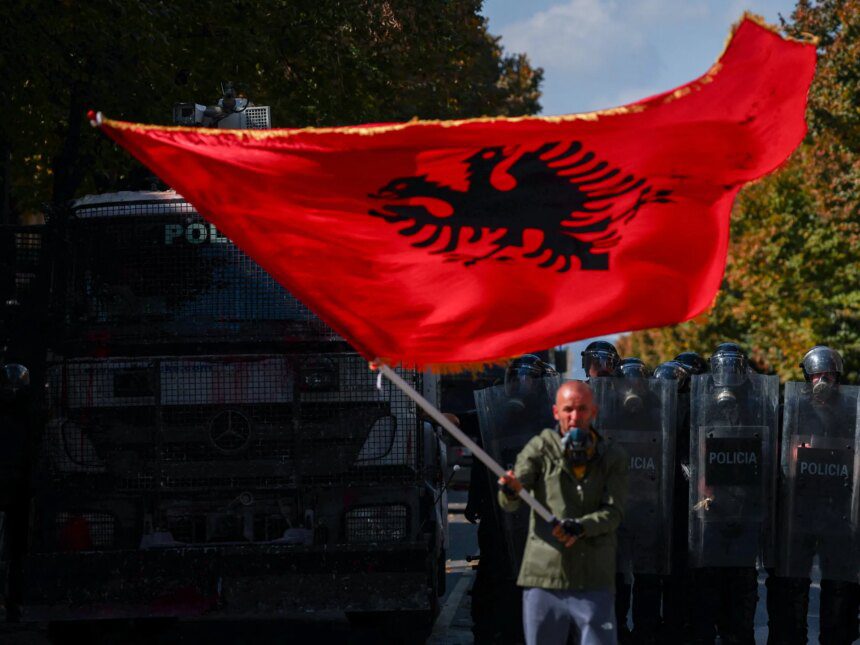

In Albania’s capital, Tirana, escalating antigovernment protests have resulted in violent clashes between demonstrators and riot police. Thousands are rallying against Prime Minister Edi Rama, demanding his resignation amid growing discontent over poor university conditions, high tuition fees, and widespread corruption.
Background of the Protests
The unrest that erupted this week is a culmination of mounting frustrations in Albania, particularly among the youth and student population. The demonstrations began on Tuesday, coinciding with concerns that have persisted over several months regarding government policies. Key issues include inadequate facilities at universities, which many believe are a hindrance to quality education, along with escalating tuition fees that are increasingly unaffordable for many families.
Additionally, the protests have been fueled by deep-seated grievances related to corruption within the government. Many Albanians feel that their leaders are detached from the realities facing ordinary citizens, with rampant corruption eroding public trust. A controversial resort development linked to Donald Trump’s family has also added fuel to the fire, with claims that it threatens local environments and communities. The culmination of these factors has stirred significant discontent, leading to the current wave of protests.
The Scale of the Unrest
The protests have drawn thousands of participants, indicating a significant mobilization of the populace against the government. As clashes unfolded, riot police responded with force, leading to confrontations that have turned violent. This has raised concerns about public safety and the right to peaceful assembly in Albania.
Local news outlets report injuries on both sides, as protesters became increasingly frustrated with police responses and sought to express their dissatisfaction more vehemently. This outbreak of violence marks a critical moment in Albanian politics, highlighting the delicate balance between governmental authority and public discontent. It’s notable that similar protests have been seen in various countries, where citizens express dissatisfaction with their leaders, indicative of a larger global trend.
Socio-Economic Implications
The growing unrest in Albania has serious social and economic implications, not just for the Balkan nation, but potentially for the broader region. High youth unemployment, which stands at alarming levels, exacerbates frustrations among the younger demographic. This dissatisfaction often translates into political instability, which can deter foreign investment and economic growth.
For Indian investors and companies looking to expand into Eastern Europe, the situation in Albania serves as a cautionary tale about the risks associated with political instability. Understanding the socio-economic landscape is crucial for businesses considering investments in emerging markets. Moreover, the protests underscore the importance of addressing public grievances to foster a stable business environment.
What This Means
The ongoing unrest in Albania presents important lessons for other nations, including India. It highlights the potential consequences when governments fail to address the needs of their citizens. In societies where economic opportunities are limited, and corruption is rampant, protests can arise rapidly and escalate quickly. For India, which has its own challenges with youth employment and political representation, this situation serves as a reminder of the need for government accountability and public engagement to stave off discontent and unrest.
Frequently Asked Questions
What are the main reasons for the protests in Albania?
The protests are primarily driven by discontent regarding poor university conditions, high tuition fees, and widespread corruption within the government.
How have the police responded to the protests?
Riot police have clashed with protesters, using force to disperse crowds as tensions escalated, leading to injuries on both sides.
What are the broader implications of these protests?
The unrest in Albania may deter foreign investment and economic growth, highlighting the importance of addressing public grievances to maintain stability.
How do these protests reflect global trends?
These protests are reflective of a larger global trend where citizens in various nations express dissatisfaction with their leaders, often due to political corruption and economic challenges.