
The Unseen Contributions of Community Leaders
The narrative around the Milwaukee Islamic Dawah Center’s food pantry officially credited former executive director Will Perry for its founding. However, Dr. Waheed Ahmed, a pivotal figure in the establishment of Milwaukee’s Muslim community, has called for a more accurate representation of the pantry’s origins, emphasizing the crucial roles played by Dr. Nauman Siddiqi and the late Br. Ayyub Al-Amin.
Building a Foundation for the Community
Dr. Ahmed’s reflections highlight the often overlooked contributions of individuals dedicated to the common good. In his correspondence with the Wisconsin Muslim Journal, he clarified that the pantry’s conception and initial financing were driven by Dr. Siddiqi, who, during his fellowship at the Medical College of Wisconsin, saw the need for community support. This effort was backed by Br. Ayyub Al-Amin, who played a significant role in bringing the idea to fruition.
Dr. Ahmed conveyed the importance of recognizing these foundational efforts: “A respectable and vibrant community like ours must place the credit where it belongs,” he stated. His commitment to correct the historical record underscores the necessity for communities to honor the contributions of those who may prefer to remain in the shadows.
Connecting Generations Through Oral History
Dr. Ahmed’s desire to share the history of the Islamic Society of Milwaukee and its affiliated institutions is vital for future generations. In his words, he sees himself as one of the “old goats” eager to impart their stories before they are lost to time. This imperative speaks to the broader challenge faced by marginalized communities in ensuring their histories are recorded and celebrated.
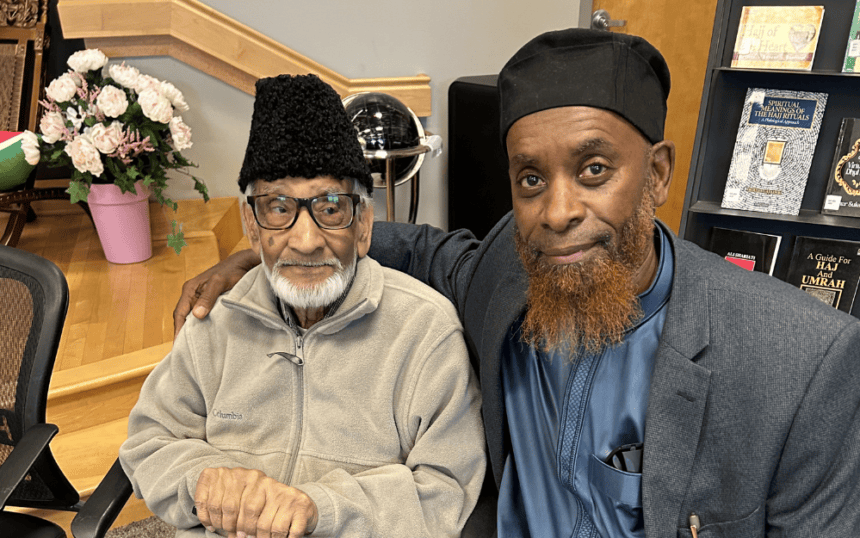
In a visit with Ahmed and his wife, Syeda, I discovered the significance of oral history as a tool for preserving community identity. His openness to sharing personal stories allows for a richer understanding of the social and cultural fabric of the early Muslim community in Milwaukee. These insights are essential not only for historical accuracy but also for fostering intergenerational connections.
The Role of Community Advocacy
The narrative surrounding the Milwaukee Islamic Dawah Center is more than just about a food pantry; it reflects ongoing challenges faced by Indian Muslims and other minority groups in securing their place in society. The initial efforts of Dr. Siddiqi and Al-Amin serve as a reminder of the power of community advocacy and action, a response necessary in the face of discrimination and exclusion.
Dr. Ahmed’s corrections and his emphasis on foundational figures exhibit an essential aspect of community resilience: the need to advocate for truth and recognition. In times where minority voices are often sidelined, community leaders play a crucial role in amplifying narratives that merit acknowledgment, fostering a sense of belonging and solidarity.
Why It Matters
The significance of accurately documenting the contributions of community leaders like Dr. Ahmed, Dr. Siddiqi, and Al-Amin cannot be overstated. This becomes even more crucial in an era where minority communities, including Indian Muslims, face systematic challenges such as economic exclusion, social discrimination, and underrepresentation in mainstream narratives. By preserving and honoring their contributions, communities can encourage resilience and empowerment. Furthermore, acknowledging the historical richness of diverse communities contributes to a more equitable social landscape, fostering understanding and respect among different cultural groups.
Frequently Asked Questions
Who founded the Milwaukee Islamic Dawah Center’s food pantry?
The food pantry was conceived and initially financed by Dr. Nauman Siddiqi, assisted by Br. Ayyub Al-Amin. Will Perry was credited later as an executive director but was not its founder.
Why is it important to correct historical narratives?
Correcting historical narratives ensures that all contributions are recognized, preserving the legacy of individuals who have significantly impacted their communities. It promotes a fuller understanding of cultural histories.
How can oral histories contribute to community identity?
Oral histories provide a means to capture personal narratives and experiences, fostering intergenerational connections and preserving cultural legacies within communities.
What challenges do marginalized communities face today?
Marginalized communities often encounter discrimination, social exclusion, and economic boycotts, making it essential to document their contributions and advocate for equitable representation in society.