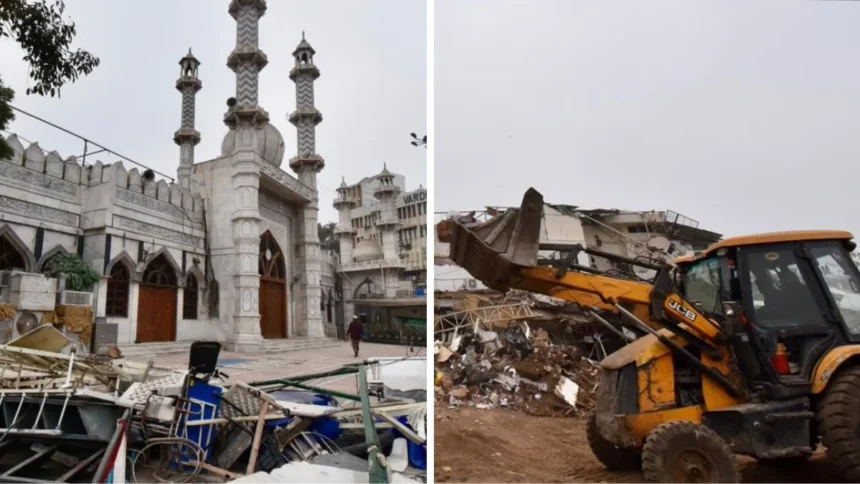

On January 7, 2025, a routine demolition operation in Chandni Mahal, Old Delhi, escalated into a violent confrontation, highlighting the implications of urban policy enforcement in a context laden with communal tensions and social exclusion. This incident, which involved an anti-encroachment drive near the Faiz-e-Ilahi Masjid, reflects the complex interplay between legality, local governance, and community rights, particularly concerning marginalized groups such as Indian Muslims.
The Background: Legal Triggers for Demolition
The roots of this demolition operation can be traced back to a legal proceeding initiated by Preet Sirohi, who petitioned the Delhi High Court to address alleged encroachments on land adjacent to the Faiz-e-Ilahi Masjid. Following a joint survey conducted by multiple agencies, the court confirmed findings that revealed significant public land encroachment for commercial use, prompting an order for action against the encroachments.
Specifically, the authorities indicated that 36,428 square feet of land was unlawfully utilized for non-religious commercial activities, including a wedding hall and diagnostic center. The Delhi High Court stipulated that the mosque management committee would be given a chance to defend the usage of the land before any arrests or demolitions were made. However, the Municipal Corporation of Delhi (MCD) dismissed the committee’s claims that the structures served charitable purposes, reinforcing the narrative of encroachment and misuse of public resources.
Escalation of Tensions: The January 7 Incident
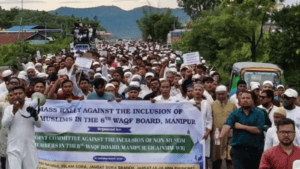
On the morning of January 7, as MCD teams prepared to commence demolition, a heavy police presence was deployed. Authorities fueled concerns by barricading roads and utilizing an anti-riot vehicle. Despite announcements urging the crowd to disperse, residents, allegedly sympathetic to the mosque management’s struggle, gathered and resisted, leading to clashes with police. The situation deteriorated into violence, prompting the police to use tear gas to disperse the assembly.
The police report cites that around 30-35 individuals engaged in stone-pelting, with several officers sustaining injuries during the clash. While the authorities framed their response as lawful enforcement of a court order, local representatives claimed that the unrest stemmed from accusations against outsiders influencing the situation, indicating a fracture between local sentiment and governance.
Political Fallout and Community Implications
The violent confrontation has triggered a nuanced political debate, with leaders across the spectrum commenting on the police’s handling of the situation. Congress leaders expressed that the events could have been managed differently, while the BJP highlighted that the court validated the actions taken by the MCD. Delhi Home Minister Ashish Sood asserted that the mosque remained untouched, framing the operation strictly as a response to unlawful activities.
This incident is emblematic of broader concerns surrounding the marginalization of Muslim communities in India. The encroachments cited in the legal claims often arise in contexts where informal economies operate without formal recognition, exacerbating the economic vulnerability of minorities. The mosque management’s argument for the significant historical importance of their property and associated grievances underscores the urgency of addressing urban policy impacts on marginalized communities.
Why It Matters
This incident demonstrates the critical intersection between governance, legality, and community relations in diverse urban environments. It raises pertinent questions about the treatment of minority communities under urban policy frameworks, especially in light of increased encroachment drives across many Indian cities. The backlash following the demolition operation illustrates the community’s resistance to perceived state overreach, where historical and socio-economic contexts often complicate legal interpretations. For policymakers, urban planners, and community activists, recognizing the broader implications of such operations is vital for fostering inclusive urban governance that respects historical claims and community needs.
Frequently Asked Questions
What triggered the demolition at Faiz-e-Ilahi Masjid?
A petition by Preet Sirohi initiated a legal process that led to a court-mandated demolition of alleged encroachments on public land adjacent to the mosque, as confirmed by a joint survey.
What was the community’s response to the demolition attempt?
Local residents gathered near police barricades to protest the demolition, leading to a violent clash with law enforcement where stone-pelting and injuries occurred on both sides.
How do legal actions impact the neighboring communities?
Legal actions like this often exacerbate tensions in communities where informal economies operate, leading to feelings of marginalization and fear of further displacement among local populations.
What are the political implications of this incident?
The incident has sparked widespread political debate, with varying interpretations of law enforcement’s appropriateness and implications for communal harmony, reflecting the deeper societal cleavages in India.