
The recent comments by Pakistan President Asif Ali Zardari regarding alleged threats to historic Muslim religious sites in India have triggered a strong response from India’s Ministry of External Affairs (MEA). The MEA condemned these remarks as absurd, highlighting Pakistan’s own troubling human rights record and asserting India’s sovereignty over its internal affairs.
MEA’s Rebuttal to Pakistan’s Claims
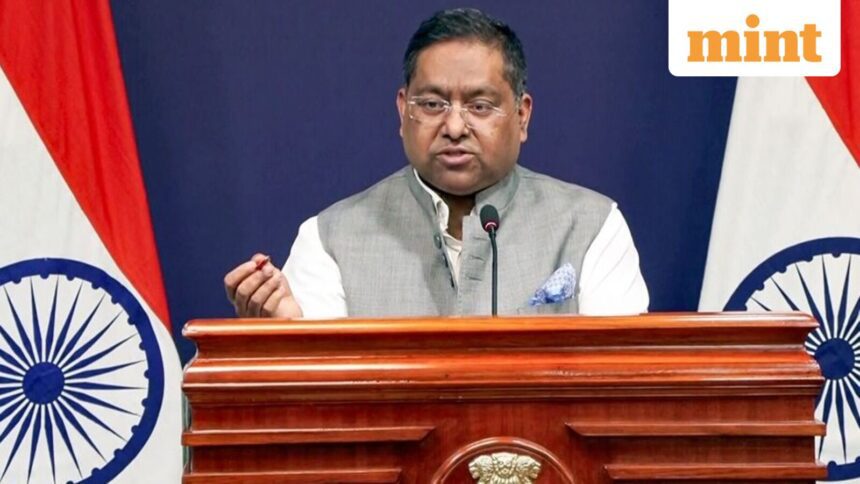
In response to Zardari’s assertions, MEA Spokesperson Randhir Jaiswal stated that India “categorically rejects” the claimed threats to Muslim religious sites, emphasizing that Pakistan has “no locus standi” to comment on India’s internal matters. The remarks from Zardari were deemed an unwarranted interference, reflecting a political strategy from Pakistan that seeks to undermine India’s stability.
Context of the Controversy
Zardari’s comments specifically referenced the historic Masjid Ganj Shaheeda in Varanasi, which he claimed faced demolition threats amid the expansion of the nearby Kashi Railway Station. Such assertions come at a time when various religious and historic structures in India are subjected to scrutiny amid urban redevelopment projects, causing increasing tension between various communities.
The MASJID Ganj Shaheeda, believed to be over 1,000 years old, has been a subject of contention as the Intajamia Masjid Committee refutes claims that it occupies encroached land. They argue that the mosque pre-dates railway operations in the area, asserting their community’s right to retain heritage structures. The MEA’s spokesperson pointedly noted the irony of Pakistan criticizing India’s approach to minority rights while itself facing accusations of systemic discrimination and violence against its own minorities.
Political Implications and Broader Narrative
The interactions between Indian and Pakistani officials often feed into the larger narratives of political identity and religious nationalism both countries experience. The MEA’s response serves to assert India’s control over its internal matters while simultaneously scrutinizing Pakistan’s human rights record. The Indian government has accused Pakistan of adopting a policy of bigotry, which they believe undermines genuine dialogue between the two nations.
This incident reflects a wider trend of deepening societal divides and emphasizes the challenges in maintaining communal harmony within India, particularly for its Muslim population. As urban developments advance, tensions can escalate, leaving minority communities vulnerable to displacement and marginalization.
Why It Matters
This situation underscores the complexities at the intersection of religion, politics, and urban development in India. The handling of religious sites and subsequent political rhetoric can have significant implications for social cohesion. The MEA’s dismissal of comments from Pakistan reveals a broader geopolitical struggle where narratives are weaponized to gain domestic and international support. It highlights the need for careful negotiation around community heritage sites to ensure that inclusivity prevails amid rapid modernization.
Frequently Asked Questions
What did Asif Ali Zardari say about Muslim religious sites in India?
Zardari claimed that historic Muslim religious sites in India, particularly the Masjid Ganj Shaheeda in Varanasi, face threats of demolition, urging Indian authorities to protect such cultural heritage.
How did the Indian government respond to these claims?
The Ministry of External Affairs (MEA) categorically rejected the comments as absurd and an unwarranted interference in India’s internal affairs, asserting Pakistan’s lack of standing to comment on such issues.
What implications do these remarks have for India’s Muslim community?
The remarks and subsequent reactions highlight ongoing tensions regarding the treatment of minority communities in India, particularly in the face of urban expansion and redevelopment, which can marginalize historical and cultural sites significant to these communities.
Why are religious sites often at the center of political controversies in India?
Religious sites can symbolize cultural identity and community history. In the context of rapid urban development, their preservation can become intertwined with political narratives, often leading to disputes that reflect broader societal tensions regarding identity and belonging in a diverse nation like India.