
Demand for Muslim Graveyard Land Sparks Protest in Ulhasnagar
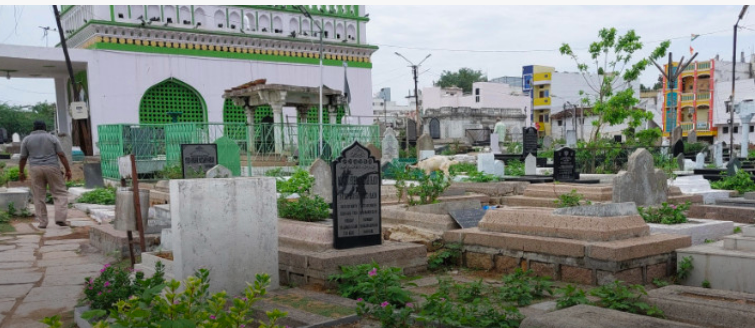
In a significant escalation of longstanding grievances, hundreds of protesters gathered outside the Municipal Corporation headquarters in Ulhasnagar, Maharashtra, to demand the allocation of land reserved for a Muslim graveyard. This demonstration coincides with an ongoing indefinite hunger strike, reflecting deep community frustration with political promises that have yet to materialize.
Protest Summary and Background
The protest, highlighted by Kashmir Media Service, revolves around the unresolved demand for the use of land designated for a Muslim graveyard. Years of delays and unfulfilled assurances from government officials have galvanized community members to rally in support of their rights. Participants repeatedly emphasized that meaningful steps must be taken to address the issue of burial land, which they regard as a fundamental aspect of dignity and community rights.
The assembly outside the Municipal Corporation office saw participants passionately chanting slogans demanding action. Protesters expressed a collective sentiment that the administration continues to stall, relying on empty promises rather than providing concrete solutions. This frustration is compounded by a lack of transparency regarding the decision-making process related to community land use.
Political Promises and Community Rights
Abdul Ghaffar Shaikh, president of the Maharashtra Pragami Muslim Samaj Sanghatna and among the hunger strikers, articulated the profound issues at stake, asserting, “This is not merely a piece of land. It is a matter connected with the constitutional rights, dignity, and basic needs of the Muslim community.” His comments resonate widely within the community which feels increasingly marginalized.
Despite previous commitments from the Municipal Commissioner to resolve the graveyard issue promptly, the promised land at Kailash Colony, Camp No. 5, remains unavailable. The community’s patience is wearing thin, leading to renewed hunger strikes similar to those conducted in the previous year, which also failed to yield results. Videos of unfulfilled electoral promises are circulating on social media, highlighting the disconnect between political rhetoric and action.
Challenges During the Protest
The peaceful demonstration faced brief tension when members of Hindu organizations arrived and shouted religious slogans. However, this did not escalate into violence, and the protesters maintained their composure throughout. Activists like Anil Sinha stressed that “pressure from communal elements is obstructing the handover of the land,” indicating the complexities and social dynamics surrounding the issue.
Protest organizers noted the critical need for the Muslim community’s voices to be heard and considered in municipal planning and decision-making. They reiterated their commitment to peaceful protest, underscoring the sensitivity of the context and their intention to avoid confrontation.
Why It Matters
The events in Ulhasnagar illustrate broader systemic issues affecting religious minorities in India, particularly under the current governance framework. The significance of land rights connects deeply with community identity and social cohesion. Economic boycotts and social exclusion have often surged in contexts where minority voices are ignored or suppressed. For developers, urban planners, and policymakers, these dynamics stress the importance of inclusive practices and transparency in decision-making processes, especially when addressing land use and communal rights. Failure to do so can lead to further marginalization and social unrest within affected communities.
Frequently Asked Questions
What is the significance of the land reserved for the Muslim graveyard?
The land is seen as essential for fulfilling the burial needs of the Muslim community, which ties into broader issues of identity, dignity, and rights under constitutional protections.
Why have previous assurances from authorities not materialized?
Repeated assurances have been made by local officials, but bureaucratic delays and communal pressures have hindered action, frustrating community members who feel ignored.
What was the community’s response to the pro-Hindu slogans during the protest?
Despite encountering opposing groups, the Muslim community protesters remained peaceful, emphasizing their intent to advocate for their rights without resorting to violence.
How does this situation reflect broader trends in India?
The Ulhasnagar incident is part of a larger narrative regarding the challenges faced by religious minorities in India, highlighting issues of discrimination, social exclusion, and the need for inclusive governance.