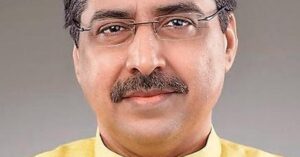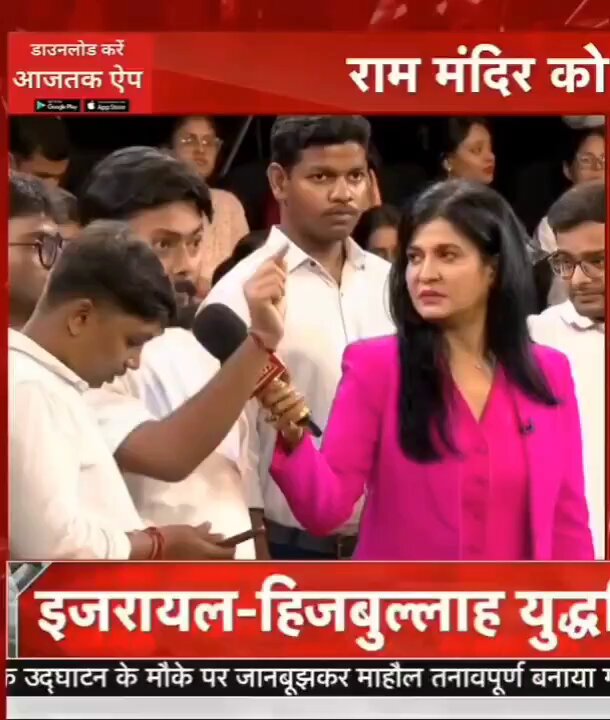

Recently, prominent Indian political commentator Mohammed Zubair criticized the professional integrity of mainstream TV journalists in India, particularly pointing to the practices employed by channels like Aaj Tak. He highlighted concerns about biased audience participation during a debate on the Ram Mandir donation issue, illustrating how certain media activities may pose harm to the democratic discourse in the country.
Context of the Debate
The Ram Mandir donation controversy has been a significant issue in Indian politics, symbolizing a larger ideological struggle. Aaj Tak, a leading news channel, organized a debate that aimed to engage a younger audience, often referred to as “Gen Z.” While the intention to include this demographic is commendable, the execution raised questions about neutrality. The opportunity for younger individuals to voice concerns was overshadowed by the apparent bias presented during the discussion.
Dissecting Audience Participation
During the debate, Zubair observed that the young men handed microphones repeatedly were not randomly selected participants. Deepak Kashyap Mishra, one of the individuals, has a well-documented track record of engaging in debates with a bias that favors the ruling Bharatiya Janata Party (BJP). Another participant, Shreyansh, is linked to the Akhil Bharatiya Vidyarthi Parishad (ABVP), a student wing known for its pro-BJP stance. Such affiliations indicate a premeditated strategy of forming a hostile environment for opposition voices rather than fostering a balanced discussion.
Core Issues with Channel Editing
Zubair pointed to a systematic approach adopted by the network that operates on three distinct levels. Firstly, Aaj Tak curates topics selectively intended to corner opposition parties while praising the ruling government. Secondly, anchors like Anjana Om Kashyap are known for their aggressive questioning, steering conversations to safeguard the government from scrutiny. Finally, the channel’s choice of audience members appears manipulated, comprising individuals affiliated with pro-government organizations, further diminishing any semblance of impartiality.
Why This Matters
The assertions made by Zubair highlight a broader concern about the integrity of media in India. With the rise of partisan journalism, the public’s trust in news outlets is at stake. The biases demonstrated in debates fuel a divisive political atmosphere, making it difficult for constructive dialogue to occur between differing ideologies. As viewers, the consumption of information should empower them to make informed decisions; however, when media spaces are manipulated, this essential objective is undermined. This trend poses a direct threat to democracy by polarizing the electorate and skewing public perceptions based on curated narratives.
Frequently Asked Questions
What is the Ram Mandir donation controversy?
The Ram Mandir donation controversy involves fundraising efforts for the construction of a temple at the contested site in Ayodhya, believed to be the birthplace of Lord Ram. It has been a focal point in Hindu-Muslim tensions and has significant political implications.
Who is Mohammed Zubair?
Mohammed Zubair is a prominent Indian political commentator and activist known for his critical views on mainstream media practices and government policies. He often utilizes social media platforms to address issues pertaining to democratic discourse in India.
What role do media and journalists play in democracy?
Journalists serve as watchdogs in democracy, offering accountability and transparency through unbiased reporting. They play a critical role in informing the public, making their integrity essential for fostering a well-informed electorate.
Why is audience manipulation in news broadcasts a concern?
When media organizations manipulate audience participation, it compromises the integrity of the discourse. It undermines the public’s ability to engage with diverse viewpoints and can lead to a skewed representation of political realities, negatively impacting democratic processes.