
Growing Tensions Amid Mosque Demolitions in Pune
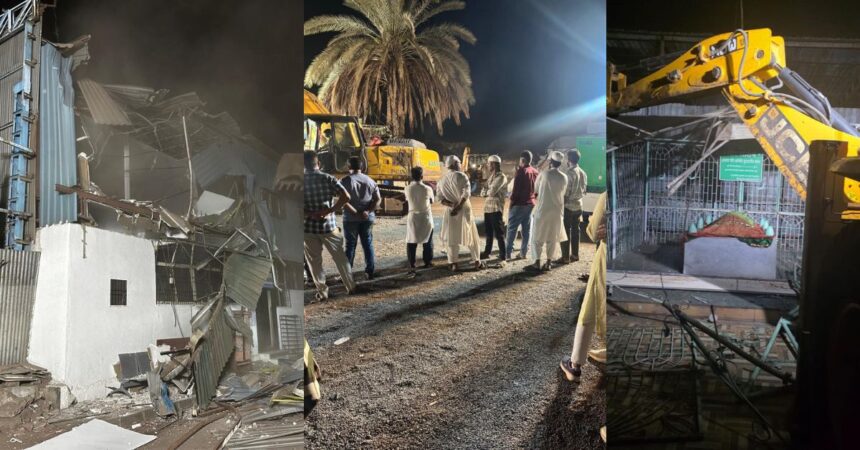
The demolition of 18 mosques in Pune district, Maharashtra, has ignited anxiety and resentment within the local Muslim community. Five mosques have already been razed under claims of being “unauthorised” structures, raising concerns about possible discrimination against Muslim religious sites.
Context of the Demolition Drives
The Pimpri Chinchwad Municipal Corporation (PCMC) initiated demolition actions in the Kudalwadi area of Chikhali, citing alleged unauthorised buildings as the basis for its operations. Amidst escalating tensions, clashes erupted between police and residents, leading law enforcement to employ baton charges to control the situation. This escalation highlights the mounting frustrations among local Muslims feeling targeted by sweeping municipal measures.
The notice to demolish these religious structures stems from a larger sweep initiated in April 2025, when the PCMC served notices to 31 religious sites in the area. Local organizations, particularly the Raza Academy, have responded by seeking intervention from influential political figures like Prakash Ambedkar, underscoring concerns over the potential for further targeted demolitions.
Legal Efforts and Community Response
Niyaz Siddiqui, president of the Raza Masjid Trust, reported that six mosques have legally challenged the demolition notices before the Waqf Board. Siddiqui emphasizes that these mosques occupy land owned by private individuals or registered trusts, contesting the municipal corporation’s authority to demolish them.
Local residents have criticized what they see as selective enforcement by the PCMC. Many argue that while unauthorized structures exist throughout the city, the demolition efforts disproportionately target Muslim places of worship. This perception of discrimination deepens existing fears within the community and raises questions about the motivations behind the municipal actions.
Political Dynamics and Local Impact
The issue at hand reflects broader political dynamics in India, particularly under the auspices of the ruling Bharatiya Janata Party (BJP) and organizations affiliated with the Rashtriya Swayamsevak Sangh (RSS). Muslim communities have long voiced concerns about marginalization and selective enforcement of laws that disproportionately impact them.
The targeting of religious sites can be viewed as part of a wider pattern of discrimination that threatens the fabric of India’s secular claims. Political leaders’ responses to these incidents will be critical in determining whether communal tensions escalate or whether measures will be taken to ensure equitable treatment of all religious groups.
Why It Matters
The implications of these demolitions extend beyond local communities, raising significant questions about religious freedoms and minority rights in India. For developers and policymakers, it underscores the need for clear regulations that ensure equitable treatment of all religious structures, regardless of community affiliations. The perception of discriminatory practices can hinder social cohesion and economic viability in diverse regions, impacting local and national stability.
Frequently Asked Questions
What is the reason behind the demolition of the mosques in Pune?
The Pimpri Chinchwad Municipal Corporation (PCMC) claims that the mosques are unauthorized structures, prompting the demolition actions as part of a broader initiative to remove illegal buildings in the area.
How many mosques have already been demolished?
As of now, five mosques have been demolished, with 18 total under scrutiny from the municipal authorities.
What are the local residents’ opinions on these demolitions?
Local residents express concerns that the demolitions are part of a selective enforcement targeting Muslim places of worship while allowing other unauthorized structures to remain intact across the city.
What actions are being taken to contest the demolitions?
Some mosque authorities, such as the Raza Masjid Trust, have legally challenged the demolition notices before the Waqf Board, asserting that the mosques are situated on land owned by individuals or registered trusts.