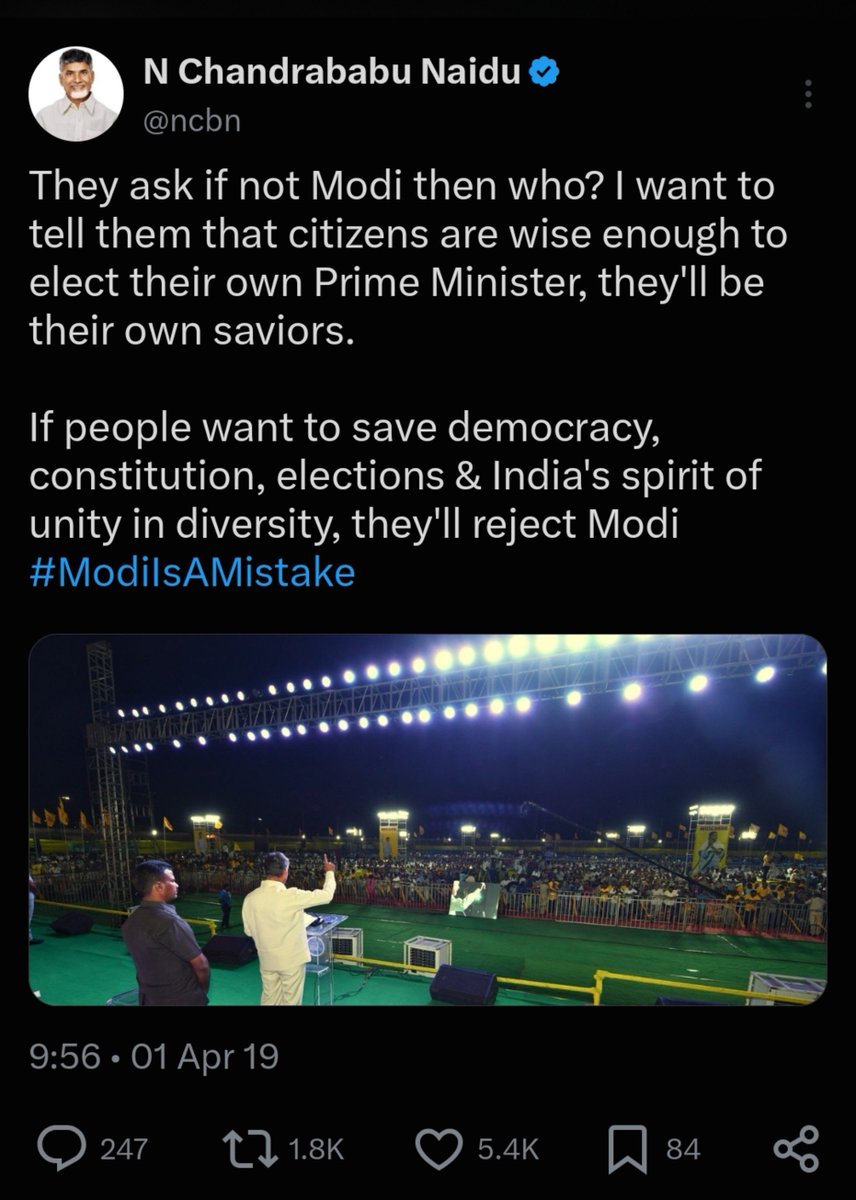

Chandrababu Naidu’s shifting stance on Prime Minister Narendra Modi has drawn attention in Indian political discourse. Initially, Naidu labeled Modi a “hardcore terrorist” in 2019, but by 2026, he was praising Modi’s leadership and urging the nation to recognize his contributions. This dramatic transformation highlights the complexities of political alliances in India.
Context: Chandrababu Naidu’s Critique of Modi
In 2019, during a politically charged environment, Chandrababu Naidu publicly criticized Modi, specifically referencing the Godhra train burning incident in 2002. Naidu claimed that Modi’s leadership was unfit due to his alleged role and the ensuing violence, which he stated resulted in the death of around 2000 people. This critique was part of Naidu’s broader electoral strategy aimed at rallying support against Modi and the Bharatiya Janata Party (BJP) in the Telugu Desam Party’s (TDP) stronghold of Andhra Pradesh.
Naidu’s statement emphasized a moral position, appealing to the electorate’s sentiment against what he portrayed as Modi’s misgovernance. He called for Modi’s resignation, positioning himself as a responsible national leader willing to speak against injustice, irrespective of the political consequences for his party.
Changing Dynamics: 2026 Praise for Modi
Fast forward to 2026, Naidu’s narrative dramatically shifted. In a notable turnaround, he began to champion Modi’s leadership, asserting that “the nation is blessed with his leadership” and acknowledging Modi as “the tallest leader in the world.” This pivot can be interpreted through various lenses: as a pragmatic political maneuver or as a reflection of changing alliances in the evolving political landscape.
By advocating for Modi, Naidu aims to align himself with a popular figure in Indian politics, potentially hoping to gain favor from Modi’s supporters and establish a favorable political atmosphere for the TDP. The contrasting statements from Naidu reveal the transactional nature of political alliances, where historical grievances can be overlooked for strategic advantages as electoral landscapes shift.
Electoral Implications and Political Strategy
Naidu’s dual narratives depict the larger trend of political pragmatism overshadowing ideological consistency in Indian politics. Many regional leaders, including Naidu, often re-evaluate their alliances based on the changing political tides. By endorsing Modi in 2026, Naidu strategically positions himself as a consensus builder, possibly seeking to create a coalition that could challenge existing political narratives.
This reshaping of relationships is not uncommon in Indian politics, where short-term electoral gains often take precedence over long-standing ideological confrontations. Such instances reveal a flexible but often unpredictable political environment, where leaders are compelled to adapt their rhetoric and allegiances based on prevailing circumstances.
Why This Matters
The significance of Chandrababu Naidu’s transition from a critic to a supporter of Narendra Modi reflects broader trends in Indian politics. It underscores the volatility of political relationships and the necessity for leaders to remain adaptable. For voters, this dynamic raises questions about loyalty, credibility, and the intentions behind political endorsements.
Naidu’s evolving statements may influence voter perceptions significantly in upcoming elections, particularly in Andhra Pradesh. As the electorate becomes more aware of such shifts, leader integrity and consistency will be critical factors in voter decision-making. This scenario illustrates how changing political landscapes demand that leaders navigate their messages carefully to maintain relevance and voter trust.
Frequently Asked Questions
What did Chandrababu Naidu say about Narendra Modi in 2019?
In 2019, Naidu called Narendra Modi a “hardcore terrorist” and demanded his resignation over the events surrounding the Godhra train burning incident and its aftermath.
How has Naidu’s stance on Modi changed by 2026?
By 2026, Naidu praised Modi as the “tallest leader in the world” and argued that the nation cannot imagine a prosperous future without his leadership.
What implications does Naidu’s shift have for his political career?
Naidu’s shift signifies a strategic maneuver to potentially align with Modi’s popularity, aiming to leverage it for electoral gain in Andhra Pradesh.
Why is this shift significant in Indian politics?
This shift reflects the broader tendency for political leaders to adapt their positions based on changing electoral landscapes, emphasizing the complexities of allegiance and strategy in Indian democracy.